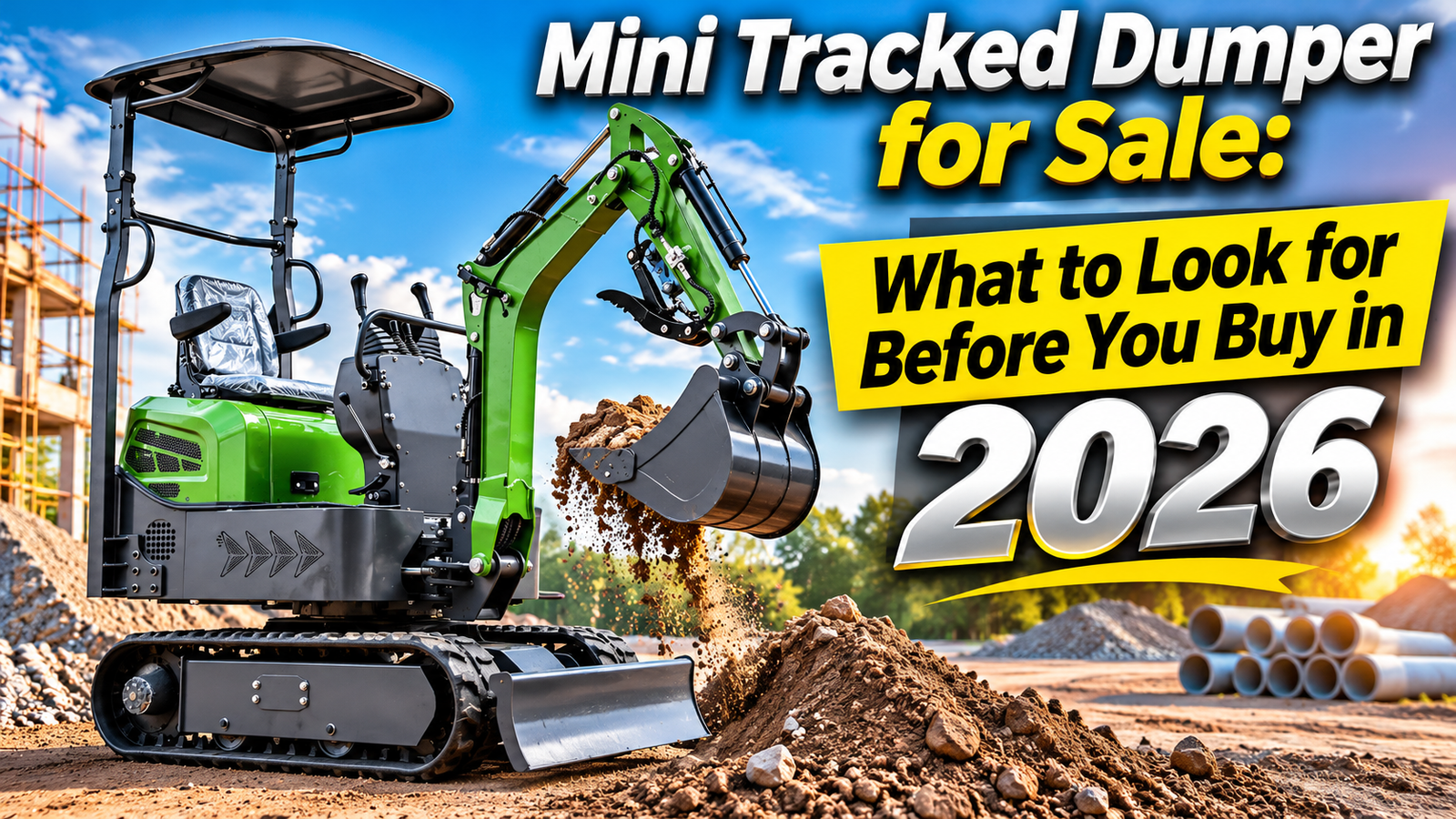
Mini Tracked Dumper for Sale: What to Look for Before You Buy in 2026
If you’ve ever spent a long day pushing a heavy wheelbarrow through thick mud, you already know why mini tracked dumpers are taking over job sites in 2026. Whether you call it a crawler dumper, a motorized wheelbarrow, or a tracked dumper, these machines are absolute game-changers.
Unlike wheeled dumpers that just spin out or sink the second the ground gets soft, tracked dumpers grip the earth. They distribute their weight across rubber or steel tracks, meaning they can crawl up slopes, power through slush, and roll over delicate turf without tearing it to shreds.
Lately, it’s not just the big construction crews buying them up; landscapers, solo builders, and home renovators are realizing how much time and backache these machines save, especially when working in tight residential spaces.
What to Look for Before Pulling the Trigger
When it comes to purchasing a mini tracked dumper, it is not enough to just choose the option that is the least expensive on the lot. In the event that you manage to get the specifications incorrect, you will wind up with a system that is perpetually sluggish or breaks down. The following is what is really important:
1. Payload Capacity (make sure you don’t overdo it)
It’s the most important one. If you carry 700 kilograms of debris on a regular basis, you shouldn’t purchase a machine that weighs 500 kilograms and hope that it would magically “power through.” You are going to quickly wear down the drivetrain. On average, this year’s models are capable of handling loads ranging from 300 kg to a hefty 1,500 kg. Invest in a little bit more capacity than you believe you will need. Additionally, have a look at the size of the bucket. Having a larger bucket will result in fewer trips, but this is only the case if the engine is capable of lifting it when it is completely filled.
2. The Right Tracks and Clearance
The Appropriate Courses of Action and Clearance If you want to avoid damaging a customer’s grass, rubber tracks are the best option for 90 percent of the projects. Wide tracks provide greater buoyancy in the mud, but narrow tracks are just what you need if you have to fit through a regular garden gate that is three feet tall. Ensure that the machine has enough ground clearance as well (aim for at least 6 inches) so that you do not end up in a situation where you are out of control on rough terrain.
3. Do you know how it dumps?
Take into consideration the destination of your soil. In order to drop stacks on the ground, a front-tip bucket of the typical kind is sufficient. Spending the additional money on a hydraulic high-tip type is recommended, however, if you are placing things into a tall trash (also known as a skip) or over a retaining wall. Instead of having to shovel the same soil repeatedly, you won’t have to do that.
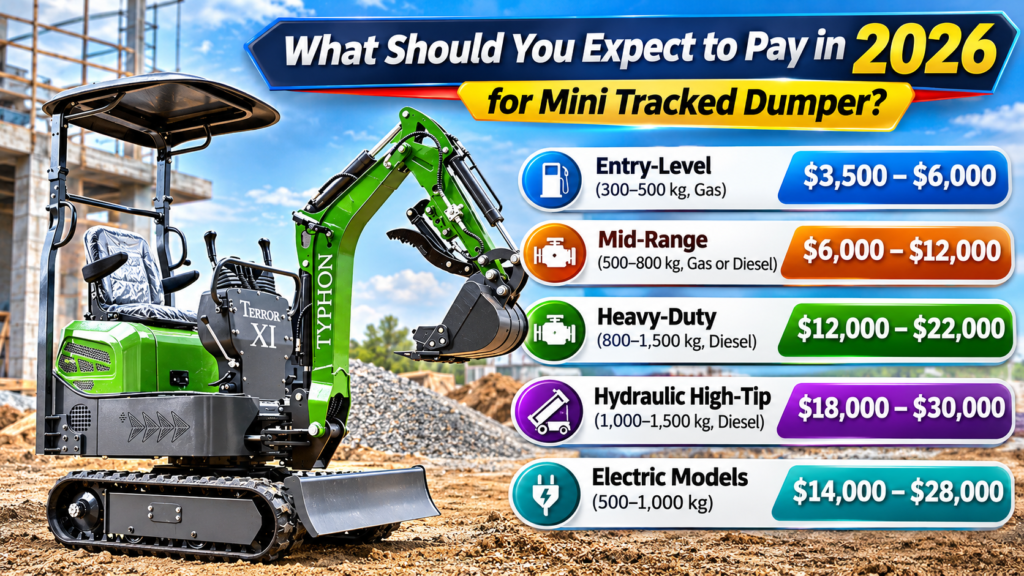
What Should You Expect to Pay in 2026 for Mini Tracked Dumper?
Prices bounce around based on brand, payload, and whether it runs on gas or diesel. Here’s a rough breakdown of what the market looks like right now:
- Entry-Level (300–500 kg, Gas): $3,500 – $6,000
- Mid-Range (500–800 kg, Gas or Diesel): $6,000 – $12,000
- Heavy-Duty (800–1,500 kg, Diesel): $12,000 – $22,000
- Hydraulic High-Tip (1,000–1,500 kg, Diesel): $18,000 – $30,000
- Electric Models (500–1,000 kg): $14,000 – $28,000
If you’re on a budget, going used can save you 30% to 50%, but you have to know what to look for.
Gas, Diesel, or Electric? Which is the best Mini Tracked Dumper:
Choosing your power source dictates how the machine runs and what it costs to keep it going over the years.
- Gas (Petrol): These are cheaper to buy, easy to maintain, and start right up in the cold. A lot of landscapers swear by models with Honda engines (like the Baumalight DT515RH) because they’re practically bulletproof. They’re great for light to medium-duty work.
- Diesel: If you’re running this thing all day, every day, get a diesel. They cost more upfront but give you way more low-end torque, better fuel efficiency, and longer engine life under heavy loads.
- Electric: These are getting really popular for indoor demolition or jobs in strict noise-controlled neighborhoods. No fumes, zero noise, and cheap to run. The catch? You have to remember to charge them, and the initial price tag can be a bit steep.
New vs. Used (and Where to Look)
Should you buy brand new? If you’re a commercial crew using it every single day, yes. You want the warranty, the fresh hydraulics, and zero headaches. You can typically find great selections through local specialist dealers who will actually service the machine when it inevitably needs a tune-up.
If you only need it occasionally, buying used makes a lot of sense. You can browse platforms like Machinery Online—which is basically a massive hub right now for finding verified equipment dealers across the country.
A quick warning on used machines: If you are purchasing second-hand machinery, you should always be sure to inspect the rubber tracks first. It may seem to be a good deal to purchase a used mini tracked dumper until you learn that it will need a track replacement the following week. The cost of this repair may range anywhere from $500 to $2,000, depending on the model. You should also check for leaks in the hydraulics.
Common Queries – Mini Tracked Dumper
Will they be able to climb difficult hills?
In a word, yes. The majority of high-quality tracked dumpers are certified to climb slopes ranging from 20 to 30 degrees safely. Before you do something ridiculous, you should review the specifications sheet.
Were they difficult to keep up with?
No, not really. You are able to successfully maintain a gas-powered small dumper if you are familiar with the maintenance of a riding lawnmower. Just make sure you don’t forget to check the track tension every fifty hours of operation.
Why don’t you simply use a dumper that has wheels?
In addition to tearing up the ground, wheels sink. When conditions become muddy or uneven, tracks will provide you with the necessary grip by floating over the top of the surface.
Conclusion – Mini Tracked Dumper for Sale
When selecting a tiny tracked dumper, you must align its capacity, width, tracks and dumping configuration to your real task. The appropriate machine moves material effectively while negotiating your site’s access and ground conditions; the incorrect one adds delays and maintenance expenses.
Before buying, measure the width of your narrowest entry point, estimate your average and heaviest loads, and determine where the material has to be dumped. Then evaluate the new vs. used possibilities, check any used machine thoroughly and make sure that local servicing is accessible. If you’re looking for a Mini Tracked Dumper for sale, utilize these specifications to help restrict your options and ask for a hands on trial before you commit.

