Asphalt Pavers: The Practical Buyer’s Field Guide for Road Projects
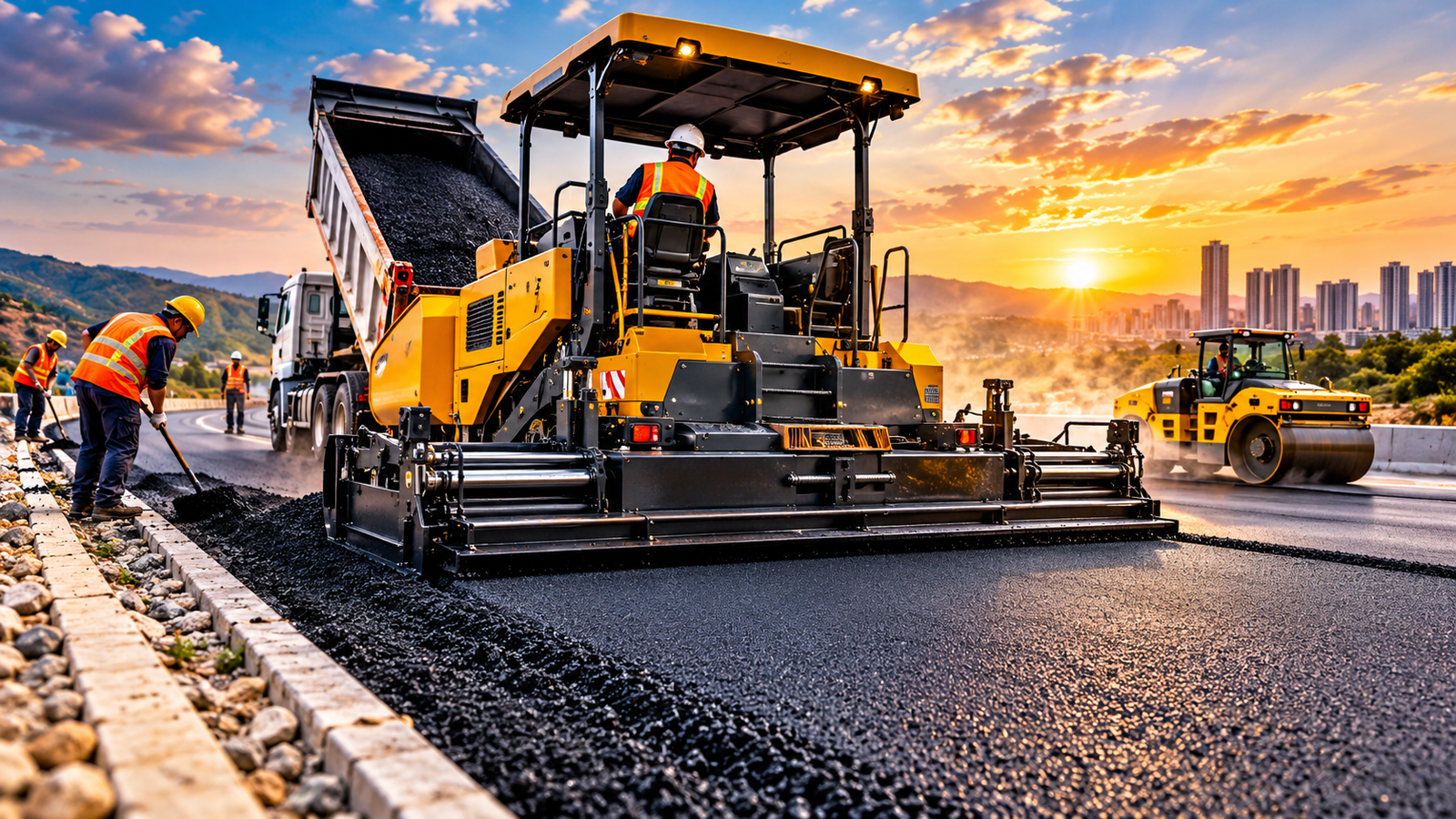
Buying a road paver isn’t like buying a utility tractor or a mini excavator. It is easily one of the most unforgiving capital investments an infrastructure contractor will ever make. If a loader goes down on site, you lose cycle time; if your paver stalls mid-pull or fails to lay down an even mat, you are looking at cold joints, severe aggregate segregation, density failures on state DOT core tests, and costly midnight tear-outs.
Hot-mix asphalt (HMA) gives you one shot to get compaction right before it drops below 80°C and locks up. When you are bidding on tight-margin highway expansions, city street rehabilitation, or heavy commercial developments, putting the right asphalt pavers behind your haul fleet is the difference between earning early-completion ride quality bonuses or bleeding cash in liquidated damages.
The machinery market today has moved far beyond simple mechanical screeds and direct diesel drives. Between variable-width hydraulic screeds, electric heating setups, integrated tamper bars, and automated 3D stringless grade systems, comparing machines on paper can feel overwhelming.
At Machinery.online, we track equipment specs, real-world field feedback, and live market pricing to help paving outfits cut through brochure hype. Whether you’re shopping for a compact trench-patching machine or a 13-meter highway crawler, here is the field-tested breakdown of what actually matters before signing a purchase order.
Top Features of Asphalt Pavers
1. Undercarriage Decisions: Tracked vs. Wheeled Asphalt Pavers
The first crossroads in equipment selection comes down to how your machine meets the ground: continuous crawler tracks or high-flotation pneumatic tires. This choice dictates how well the paver handles questionable subgrades, pushing heavy dump trucks, and navigating narrow city intersections.
Track-mounted asphalt pavers dominate long-distance infrastructure work because they distribute machine weight evenly, eliminating the risk of gouging soft aggregate base courses or spinning wheels while pushing an 18-wheel belly dump up a 6% highway grade.
Wheeled rigs, on the other hand, are the undisputed workhorses of municipal patching and urban streets, giving operators the agility to roll off a completed block and drive straight to the next pull without calling a heavy-haul flatbed.
- Tractive Effort on Rough Sub-Bases: Rubber-coated steel tracks provide continuous ground contact that bites into loose crushed stone and slick tack coats, preventing machine slip when tandem haul trucks back into the push rollers.
- Urban Transit and Maneuverability: Wheeled models hit road travel speeds up to 20 km/h and turn on tight radiuses, making them far better suited for dodging manholes, cul-de-sacs, and curbs without scuffing the fresh binder course.
- Lifecycle Undercarriage Costs: Tracks demand disciplined maintenance—monitoring track tension, idler wear, and bogie rollers—whereas pneumatic tires carry lower initial acquisition costs and simple roadside replacement.
2. Choosing Screed Technology: Where Pavement Quality Is Won or Lost
If the tractor unit is the muscle, the screed is the brains of the entire operation. Everything behind the engine simply serves to feed this heavy floating metal assembly. The screed irons out the asphalt mix, sets initial grade and cross-slope, and delivers anywhere from 75% to nearly 90% pre-compaction before your breakdown rollers even roll out. If your screed flexes under load, heats unevenly, or lacks sufficient tamper impact, no amount of finish rolling will rescue your mat from roughness penalties or water pooling.
- Hydraulic Extensible vs. Rigid Fixed Screeds: Hydraulic screeds extend and retract on the fly from fingertip controls at the screed console, which is indispensable for variable-width city roads, while heavy bolt-on fixed screeds offer the rigid frame needed for ultra-wide, dead-flat highway pulls.
- Modern Electric Screed Heating: Electric heating systems powered by onboard tractor-driven generators have replaced diesel burners, distributing consistent thermal energy across the sole plates and preventing bitumen pickup without fire hazards or diesel fume washouts.
- High-Compaction Tamper Bars: Dual or single high-frequency mechanical tamper bars strike the mix just ahead of the screed plate, driving down aggregate stones to build early density so heavy rollers can finish the surface without crushing aggregate edges.
3. Material Handling: Hoppers, Slat Conveyors, and Augers
A paver only lays a flawless mat if you keep a continuous, uniform head of material resting against the face of the screed. Running the screed hungry causes dips and tears in the pavement, while overloading the auger chamber creates cold spots and center-line aggregate segregation.
Asphalt pavers rely on a robust receiving hopper up front to take truck dumps, dual variable-speed flight conveyors in the belly to pull mix back, and large-diameter cast augers to distribute the mix evenly out to the screed end gates. Getting these mechanics right ensures your paving speed matches your asphalt plant’s trucking cycles without stop-and-go stutter marks.
- Sizing Hopper Volume to Truck Cycles: Opting for hoppers with 10 to 15-ton capacities provides a reliable buffer during truck swaps, allowing operators to keep the tractor crawling forward at a steady 3 to 5 meters per minute without coming to a dead stop.
- Independent Proportional Feed: Dual ultrasonic or sonic paddle sensors mounted over the auger tunnel track mix height continuously, speeding up or slowing down left and right conveyors independently to prevent material starve on wide curves.
- Reversible Auger Assemblies: Hydraulically raised and reversible augers let crews lift the auger shafts to clear curbs or reverse outer flighting, pulling aggregate back toward the center to avoid coarse stone buildup along the road edge.
4. Technical Benchmarks Across Machine Classes
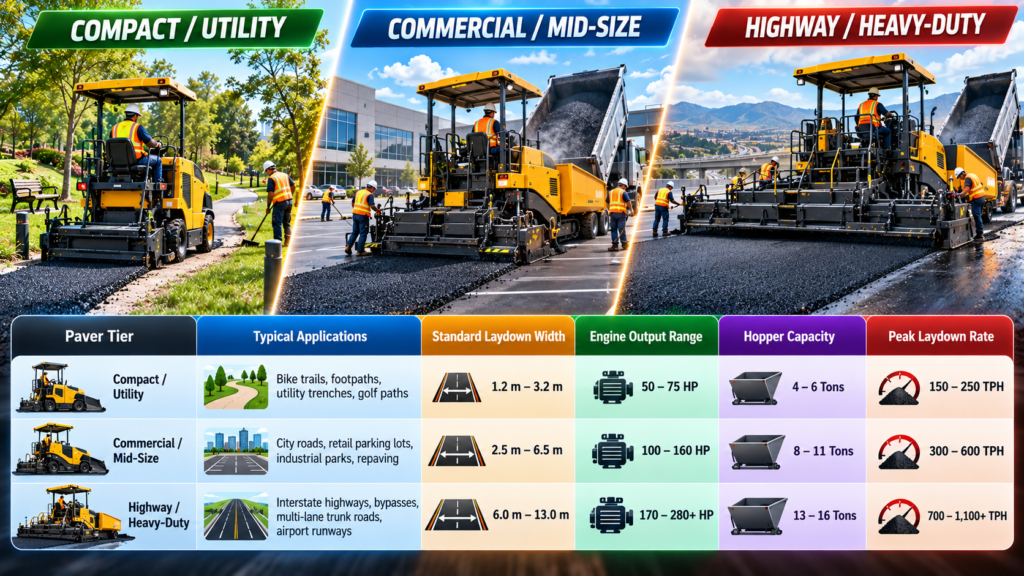
Before browsing equipment inventories on Machinery.online, align your company’s primary bidding profile with the proper machinery tier. Over-specifying burns excess diesel and requires costly heavy transport, while under-specifying forces a utility tractor to run wide highway passes, resulting in screed deflection and chronic engine strain.
Table: Asphalt Pavers Tier Features
| Paver Tier | Typical Applications | Standard Laydown Width | Engine Output Range | Hopper Capacity | Peak Laydown Rate |
| Compact / Utility | Bike trails, footpaths, utility trenches, golf paths | 1.2 m – 3.2 m | 50 – 75 HP | 4 – 6 Tons | 150 – 250 TPH |
| Commercial / Mid-Size | City roads, retail parking lots, industrial parks, repaving | 2.5 m – 6.5 m | 100 – 160 HP | 8 – 11 Tons | 300 – 600 TPH |
| Highway / Heavy-Duty | Interstate highways, bypasses, multi-lane trunk roads, airport runways | 6.0 m – 13.0 m | 170 – 280+ HP | 13 – 16 Tons | 700 – 1,100+ TPH |
- Low-RPM High-Torque Diesel Engines: Tier 4 Final and Stage V compliant diesels deliver their peak hydraulic torque down low around 1,600 to 1,800 RPM, cutting daily fuel consumption and running much quieter during urban night shifts.
- Mat Thickness Versatility: Verify the machine’s elevation range; a versatile paver must smoothly place everything from ultra-thin 15 mm stone matrix asphalt (SMA) surface coats up to dense 300 mm crushed aggregate base layers.
- Independent Hydraulic Cooling Loops: Heavy-duty variable displacement hydrostatic pumps running separate oil coolers ensure screed vibration, tamper strokes, and track motors do not overheat during scorching summer highway paving.
5. Automation, Digital Grade Controls, and 3D Paving
Gone are the days when an experienced screed man rode the cranks all shift, guessing slope by eye and chalk line. Today, departments of transportation mandate precise International Roughness Index (IRI) ratings.
Even a minor bump on a highway run can cost thousands in contract deductions. Modern asphalt pavers carry sophisticated grade-control brains that plug directly into sonic skis, laser references, or satellite-driven 3D total stations to automate tow-point hydraulic rams with millimeter accuracy.
- Multi-Sensor Sonic Averaging Skis: Modern sonic skis use four or more ultrasound transducers spanning a 9-meter beam to read the subgrade or adjacent lane, mathematically averaging out local dips and bumps so the screed maintains a level profile.
- Integrated Transverse Slope Sensors: Digital inclinometers track screed cross-fall down to fractions of a percent, instantly adjusting the hydraulic elevation cylinder on the opposite side to keep water runoff crowns dead on spec.
- Stringless 3D GNSS Paving: High-precision robotic total stations beam coordinate data directly to the paver’s computer screen, allowing the machine to pave complex super-elevated highway curves straight from a CAD model without ground survey stakes.
6. The Economics: Buying Brand New vs. Certified Pre-Owned
Deciding whether to allocate budget toward factory-fresh iron or high-hour pre-owned equipment is a delicate balance of tax depreciation, monthly debt service, and project delivery deadlines. While a brand-new paver gives you zero-hour mechanical certainty, factory warranties, and cutting-edge telematics, certified used machinery from Machinery.online frees up working capital to buy matching steel-wheel vibratory rollers or expand your trucking fleet.
- Capital Deployment: New highway-class paving trains regularly exceed half a million dollars; late-model, dealer-inspected machines often trade at 40% to 55% less, lowering your monthly financing payments significantly.
- Budgeting for Wear Package Overhauls: Whether new or used, factor abrasive wear schedules into your lifecycle costs—plan on replacing screed plates, tamper blades, floor deck liners, and auger flights every few seasons depending on aggregate hardness.
- Telematics and Remote Diagnostics: Modern factory fleet systems beam real-time hydraulic pressure data, engine thermal readings, fuel burn figures, and operator fault codes to your phone, heading off catastrophic breakdowns before they happen on the mat.
7. Job-Site Due Diligence and Inspection Protocol
If you are inspecting used asphalt pavers in a yard or auction facility, leave the sales brochure in the truck and crawl underneath the iron. A fresh coat of yellow paint frequently masks worn-out hydraulics, bent tow arms, and cracked conveyor decks. Asphalt mix is an aggressive, abrasive slurry that eats metal components from the inside out; catching these signs early protects your business from costly post-purchase surprises.
- Screed Plate Wear and Crown Alignment: Use a depth micrometer to measure plate thickness from lead to trail edge. Look for “dishing” across the sole plates and cycle the hydraulic crown mechanism to verify it doesn’t bind or bind up under pressure.
- Flight Conveyor Chains and Drive Sprockets: Inspect the conveyor floor plates underneath the chain for deep rutting. Check chain tensioners for remaining travel and look closely at the drive sprocket teeth to make sure they haven’t worn into hooked knife-edges.
- Tow Arm Bushings and Cylinder Seals: Check the pivot points where the screed pull arms connect to the tractor chassis. Any slop, ovaled pinholes, or leaking cylinder packings will introduce screed float and ruin your paving mat elevation.
Frequently Asked Questions – Asphalt Paver
What is the difference between a tracked and a wheeled asphalt paver?
Tracked asphalt pavers use full-length rubber or steel tracks that spread machine weight over a broad footprint, giving them superior flotation and push power on soft ground, steep grades, and loose sub-bases. Wheeled pavers rely on heavy pneumatic rubber tires; while they have less push traction in soft mud, they offer tighter turn radiuses, travel speeds up to 20 km/h, and eliminate the need for trailer transport between close municipal jobs.
How much does an asphalt paver machine cost?
Pricing scales widely with machine weight, screed design, and mechanical hours. Compact trench and path pavers typically cost between $40,000 and $120,000. Commercial mid-sized units for parking lots and town roads run anywhere from $130,000 to $320,000. Heavy-duty highway crawler pavers equipped with wide electric screeds range between $380,000 and over $750,000 new, while thoroughly vetted used units on Machinery.online offer reliable alternatives at substantial discounts.
How does an asphalt paver achieve pre-compaction?
An asphalt paver achieves between 75% and 90% pre-compaction using a combination of heavy screed deadweight, high-frequency vibratory eccentric weights, and mechanical tamper bars. As the tractor crawls forward, the front tamper bar strikes downward to press large stones into the binder mix, and the heated, vibrating screed sole plate glides across the surface, smoothing and locking aggregate in place before rollers arrive.
Which is better: gas/diesel heated or electrically heated screeds?
Electrically heated screeds have largely made diesel flame burners obsolete on modern road jobs. Diesel burners can cause dangerous hot spots, warping screed plates, creating fire risks, and discharging toxic exhaust fumes directly into crew breathing zones. Electric screeds utilize generator-powered heating elements that warm the entire sole plate evenly, maintain exact digital temperatures, and eliminate asphalt stick-ups without diesel overspray.
What paving width should I look for when buying an asphalt paver?
Base your screed width on the type of work that generates most of your revenue. If you primarily pave cart paths, utility cuts, and alleys, a compact screed running 1.2 m to 3.2 m is ideal. Commercial and city street contractors get the most utility from hydraulic extensible screeds operating between 2.5 m and 6.5 m. For interstate highways or large airport projects, you will need a heavy fixed or heavy-duty extensible screed running bolt-on extensions out to 10 m or 13 m wide.
What causes asphalt mat tearing behind the screed?
Surface tearing and gouges are almost always triggered by cold screed plates, wrong screed attack angles, worn tamper bars, or paving too fast for your material delivery rate. When screed plates drop below mix temperature, sticky bitumen clings to the cold steel instead of floating across it, ripping the top layer of fine aggregate and leaving open, rough blemishes in your fresh mat.
What components wear out the fastest on an asphalt paver?
The highest-wear parts on any paver are the screed sole plates, tamper blades, auger flighting segments, conveyor slat bars, and floor deck plates. These steel surfaces are in constant friction contact with hot, abrasive crushed aggregate and sticky liquid asphalt, meaning they require regular visual inspections, seasonal turn-arounds, and timely replacement to keep paving smooth.