Best Mini Excavator Models Available for Sale in the US
If you’re trying to figure out the best mini excavator models available for sale in the US, the honest answer is that “best” depends on what you’re digging, where you’re digging it, and how you plan to move the machine between jobs. A 1-ton unit that slides through a 36-inch gate is the right call for a backyard drainage fix. That same machine would struggle on a contractor’s basement dig that needs 10 feet of depth and real breakout force.
Buyers typically weigh operating weight, digging depth, machine width, horsepower, hydraulic capability, attachment compatibility, budget, transport requirements, and how easy it is to get parts and service after the sale. There’s no single winner across every category — there’s a right machine for your job, your access conditions, and your wallet. This guide walks through the models worth shortlisting, how they stack up, and how to narrow the field down to one.
What Is the Best Mini Excavator to Buy in the US?
The short version: it depends on your application, not on which machine has the biggest spec sheet. A landscaper working inside fenced residential yards needs something different from a utility contractor cutting 6-foot trenches, and both need something different from a farm owner clearing brush and digging drainage runs a few times a season.
Mini excavators generally fall into a handful of practical categories:
- Ultra-compact machines (under 1 ton) — built for gates, patios, and interior demolition
- 1-ton-class machines — the sweet spot for residential and light landscaping work
- 1.5–2-ton machines — a step up in digging depth and breakout force, still trailer-friendly behind a half-ton truck
- 2.5–4-ton machines — the workhorse range for contractors doing daily excavation and trenching
- Larger compact excavators (5 ton and up) — approaching backhoe-level output, best for site prep and deeper foundation work
The mistake most first-time buyers make is buying the largest machine their budget allows instead of matching the machine to the job. A bigger excavator that can’t get through your gate or fit on your trailer isn’t a better excavator — it’s the wrong one.
Best Mini Excavator Models Available for Sale in the US
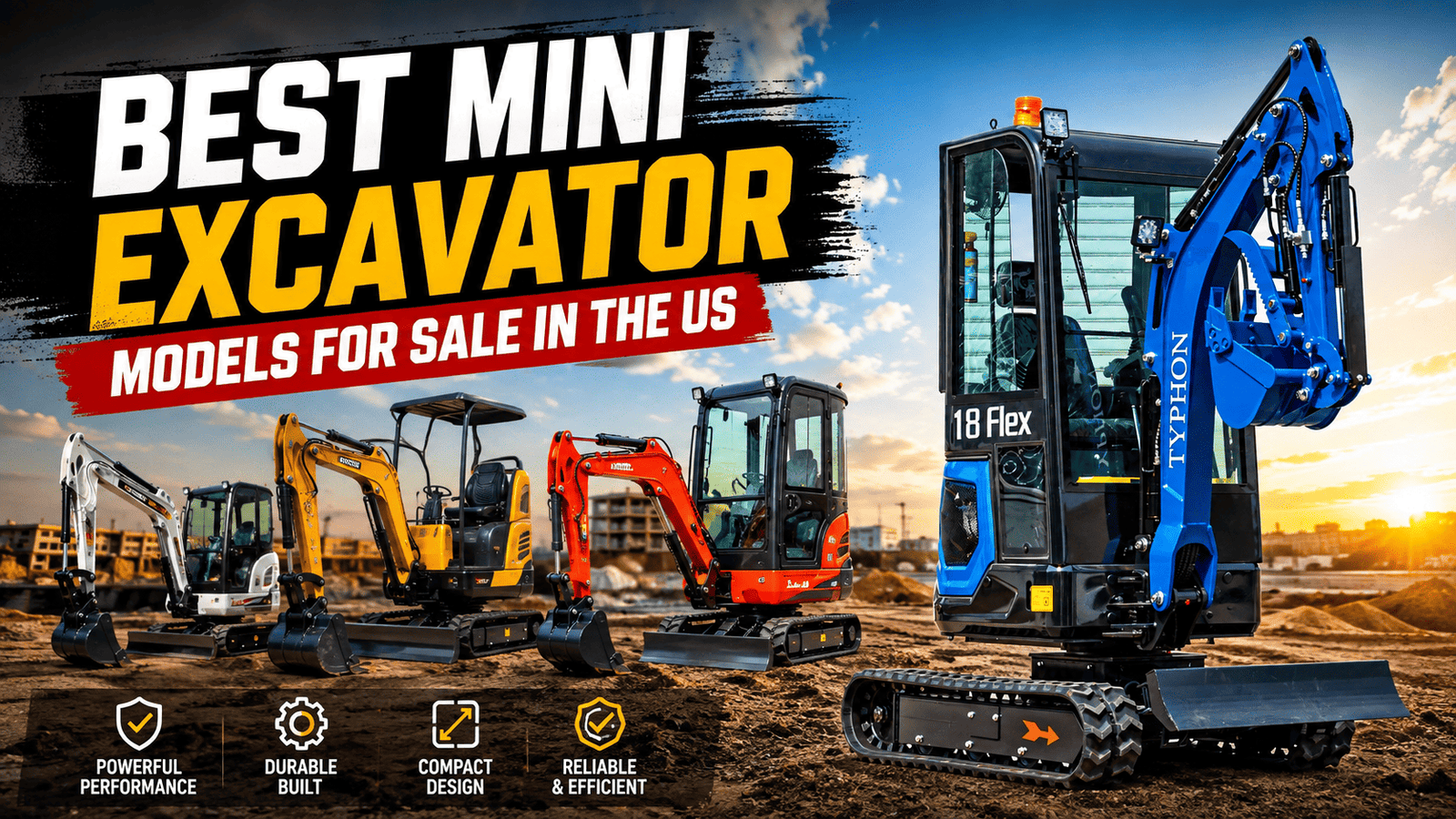
Here’s a working shortlist of models that show up consistently across US dealer lots and manufacturer lineups, spanning several weight classes so you can compare like-for-like.
| Mini Excavator | Operating Weight | Power | Digging Depth | Best For |
|---|---|---|---|---|
| TYPHON Tyrant X | ~1 ton (2,200 lb class) | 13.5 HP Briggs & Stratton | Compact-class depth | Tight residential access |
| TYPHON TERROR XVIII Prestige | ~2 ton (4,400 lb) | 20.4 HP Kubota D902 diesel | ~6.75 ft | Landscaping & small contractor work |
| TYPHON TERROR X2 Storm | 2.5–2.7 ton | Yanmar diesel, cabin w/ AC & heater | Mid-class depth | Daily contractor use |
| TYPHON NAGA 4.0 | 4 ton | 24.4 HP Yanmar diesel | Deep-class range | Heavier trenching & grading |
| Kubota U35-4 | ~7,900 lb class | 23.9 HP | ~9 ft 9 in | Tight-space work needing more reach |
| Kubota KX080-5 | 18,520–19,620 lb | 66.6 HP | Deep-class range | Larger site prep, foundation work |
| Bobcat E35 | 7,659–8,590 lb (config-dependent) | 24.8–33 HP | 10 ft 1 in–11 ft 1 in | Trenching in hard-packed soil |
| CASE CX37C | 7,900–7,990 lb | 24.4 HP | 10 ft 3 in | Confined residential jobsites |
| John Deere 60G | 13,547 lb | 53 HP net | 12.4 ft | Utility & municipal trenching |
| Takeuchi TB230 | ~6,195 lb (2,810 kg) | Compact diesel class | Compact-class depth | General contractor duty |
Pricing varies by configuration, dealer, attachments, shipping, and market conditions. Always confirm current specifications directly with the manufacturer or an authorized dealer before purchasing.
TYPHON Machinery has built out one of the broader US-available mini excavator lineups under its TERROR and NAGA series, spanning roughly 800 kg to 4,000 kg across more than ten configurations.
What stands out is the engine sourcing — rather than defaulting to the cheapest available power plant, TYPHON pairs its mid-weight models with proven Kubota D902 and Yanmar diesels, the same engine families used across several established competitor lines, while keeping pricing positioned for owner-operators and small contractor fleets rather than large rental houses.
The TERROR XVIII Prestige, for example, runs a Kubota D902 three-cylinder diesel rated at 20.4 HP with a digging depth around 6.75 feet, putting it in direct comparison range with 2-ton machines from Kubota and CASE. The NAGA 4.0 moves into 4-ton territory with a 24.4 HP Yanmar diesel and metal track undercarriage, aimed at buyers who’ve outgrown a 2-ton machine but don’t need a full 5-ton-plus unit.
Kubota remains a benchmark brand, and for good reason — its U-series (zero tail swing) and KX-series (conventional tail swing) cover nearly every weight class, from the sub-2,500-lb K008-5 up through the 18,760-lb KX080-5. The KX080-5 in particular sits at the upper edge of what most buyers would still call “mini,” with 66.6 HP and a two-speed drive that shifts automatically.
Bobcat’s E35 is one of the most cross-shopped machines in the 3-ton class. It’s available in standard, long-arm, and extendable-arm configurations, with operating weight shifting from about 7,659 lb up to 8,590 lb depending on which arm and engine option you choose. Bucket digging force lands around 7,284 lbf, which is competitive for the class.
CASE’s CX37C and John Deere’s 60G round out the shortlist as strong zero-tail-swing and utility-focused options, respectively — the CX37C is light enough to tow behind a half-ton pickup, while the 60G’s 53 HP net rating and nearly 12.5-foot dig depth push it toward heavier utility and municipal work. Takeuchi’s TB230, at roughly 2,810 kg operating weight, is a reliable middle-of-the-pack choice for contractors who prioritize undercarriage durability.
Mini Excavator Model Comparison
No single machine wins every category, so here’s how this shortlist breaks down by real-world priority:
- Smallest footprint: TYPHON Tyrant X and Kubota’s ultra-compact K-series
- Best for tight spaces: Kubota U35-4 and Bobcat E35 (both zero tail swing)
- Best for landscaping: TYPHON TERROR XVIII Prestige, CASE CX37C
- Best digging performance for the weight class: Bobcat E35 (strong bucket digging force relative to operating weight)
- Best attachment versatility: TYPHON TERROR X2 Storm and NAGA 4.0, both spec’d with auxiliary hydraulics and thumb-ready arms
- Best for contractors running daily hours: Kubota KX080-5, John Deere 60G
- Best for farms: TYPHON NAGA 4.0 — enough weight for drainage and clearing work without needing a full-size machine
- Best value for owner-operators: TYPHON’s TERROR series, given the combination of branded diesel engines and lower entry pricing relative to comparable Kubota and CASE configurations
None of this makes one machine an automatic “best overall” pick — it depends on which of these priorities matters most for your work.
Best Mini Excavators by Size Class
Under 1 Ton
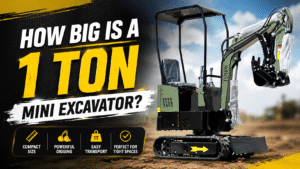
Machines like the TYPHON Tyrant X fit through standard gates and work well for garden beds, small drainage runs, and interior demolition. The tradeoff is limited digging depth and lifting capacity — these aren’t trenching machines for anything beyond shallow utility work.
1–2 Ton Mini Excavators
This class balances maneuverability with usable digging depth. The TERROR XVIII Prestige and similar 2-ton machines from Kubota and CASE can still be towed on a standard equipment trailer while offering enough breakout force for footings, small foundations, and residential trenching.
2–3 Ton Mini Excavators
The most popular class among working contractors. The Bobcat E35, CASE CX37C, and TYPHON’s TERROR X2 line all sit here, offering a workable mix of dig depth (typically 9–11 feet), decent lift capacity, and daily-use durability without requiring a CDL to haul.
3–5 Ton Compact Excavators
Machines like the NAGA 4.0, Kubota KX080-5, and John Deere 60G step up in reach, lifting capacity, and hydraulic flow — useful for deeper utility work and larger site prep — but they also require heavier trailers and more careful route planning for tight residential streets.
What Should You Look for When Buying a Mini Excavator?
- Operating weight — affects stability, ground pressure, and what trailer/tow vehicle you’ll need
- Digging depth and reach — match to your typical trench depth, with margin so you’re not working at full extension
- Machine width — critical for gate access and working alongside structures
- Horsepower and hydraulic flow — determines how fast you can cycle and what attachments you can run
- Bucket capacity and lifting capacity — affects productivity per pass and what you can safely set with the boom
- Tail swing — zero tail swing (ZTS) protects the machine and nearby property in confined sites
- Cab vs. open canopy — comfort and weather protection matter if you’re running the machine daily
- Rubber tracks — reduce surface damage on finished ground and driveways
- Attachment compatibility and quick coupler — determines how easily you can swap buckets, augers, thumbs, or breakers
- Warranty, parts availability, and dealer support — often matters more than the sticker price over the life of the machine
- Financing and transportation — confirm what tow vehicle and trailer rating the machine actually requires
- Resale value — established brands with strong dealer networks typically hold value better
What Size Mini Excavator Is Best for Different Jobs?
| Job | Recommended Size Class | Why |
|---|---|---|
| Landscaping | Under 1 ton to 2 ton | Easy gate and yard access |
| Backyard excavation | Under 1 ton | Tight-space maneuverability |
| Utility trenching | 2–3 ton | Good balance of depth and mobility |
| Stump removal | 2–3 ton | Requires meaningful breakout force |
| Residential construction | 2–4 ton | Greater digging depth and lift capacity |
| Farm maintenance | 2–4 ton | Versatile across clearing, drainage, and grading |
| Small demolition | 3–5 ton | Needs attachment power and stability |
Actual machine selection still depends on soil type, required depth, and the attachments you plan to run — this table is a starting point, not a final answer.
New vs Used Mini Excavators
New machines come with a warranty, current emissions and safety features, financing options through the dealer, and a known condition from day one. The tradeoff is a higher purchase price and the depreciation hit that comes with any new equipment.
Used machines cost less upfront and give you a wider field of models to choose from, including brands like TYPHON, Kubota, and Bobcat at multiple price points. The risk is unknown operating history — hours may not tell the whole story if the machine wasn’t maintained.
If you’re looking at a used unit, check for:
- Hydraulic leaks around cylinders, hoses, and fittings
- Undercarriage and track wear (stretched tracks, worn rollers)
- Engine hours versus visible wear — do they match?
- Smooth boom, arm, and bucket movement with no hesitation or drift
- Rust or cracks around the frame and attachment points
How Much Does a Mini Excavator Cost in the US?
Pricing varies considerably based on operating weight, manufacturer, engine, new vs. used condition, attachments, cab configuration, and dealer location. Smaller sub-1-ton machines generally sit at the low end of the market, while 4–5 ton compact excavators from established brands command significantly more.
Attachments, hydraulic thumbs, cab upgrades, and shipping can all move the final number. Pricing should always be confirmed directly with the manufacturer or dealer rather than relied on as a fixed figure, since promotions and configuration options change frequently.
Where Can You Buy a Mini Excavator in the US?
- Authorized dealers (Kubota, Bobcat, CASE, John Deere, Takeuchi) — strongest for warranty service and parts availability
- Manufacturer direct (TYPHON Machinery and similar brands sell online with US shipping) — often more competitive pricing with bundled attachments
- Equipment distributors and specialized machinery companies — useful for comparing multiple brands in one place
- Online equipment marketplaces — wide selection, but verify seller reputation and machine history
- Used-equipment dealers — good for value, but inspect thoroughly or bring a mechanic
Whichever channel you use, confirm warranty terms, parts sourcing, and who handles service before you commit — that support matters more once the machine has a few hundred hours on it.
Are Mini Excavators Worth Buying?
Buying tends to make sense when you’ll use the machine regularly, have recurring excavation or trenching work, plan to run multiple attachments, or need to avoid rental downtime during busy seasons. Renting is usually the better call for one-time projects, occasional use, or when you want to try a size class before committing to a purchase.
How to Choose the Right Mini Excavator
- Determine your required digging depth, with margin above your typical job
- Measure your tightest access point — gates, doorways, fence lines
- Estimate the operating weight your soil and job type actually need
- Identify the attachments you’ll use most (thumb, auger, breaker, grapple)
- Check what tow vehicle and trailer rating the machine requires
- Compare new and used options within your target size class
- Evaluate dealer support and parts availability in your area
- Compare total ownership cost, not just the purchase price
Frequently Asked Questions
What is the best mini excavator to buy in the USA? There’s no single best model — it depends on your job size, access constraints, and budget. For tight residential work, a 1–2 ton machine like the TYPHON TERROR XVIII Prestige or CASE CX37C fits well. For daily contractor use, 3–4 ton machines from Bobcat, Kubota, or TYPHON’s NAGA line offer more depth and power.
What are the best mini excavator brands? Kubota, Bobcat, CASE, John Deere, and Takeuchi are long-established names with strong dealer networks. TYPHON Machinery has grown into a competitive US option, particularly for buyers who want branded Kubota or Yanmar engines at a lower entry price point.
How much does a mini excavator cost in the US? Pricing varies by weight class, brand, condition, and attachments. Sub-1-ton machines cost less than 3–5 ton units, and used equipment typically runs below new pricing. Confirm current numbers directly with the dealer or manufacturer.
What size mini excavator should I buy? Match the size to your job: under 1 ton for tight residential access, 2–3 tons for general contractor trenching, and 3–5 tons for deeper utility or site prep work.
What is the best mini excavator for landscaping? Compact 1–2 ton machines with zero tail swing, like the TYPHON TERROR XVIII Prestige or Kubota U35-4, work well for landscaping because they maneuver easily around finished yards and structures.
What is the best mini excavator for residential work? A 1.5–2 ton zero-tail-swing machine is usually the sweet spot for residential jobs — enough depth for footings and utility lines, without needing a heavy trailer.
Are mini excavators worth buying? Buying pays off when you have recurring excavation work, run multiple attachments, or need to avoid rental downtime. Occasional or one-time projects are often better served by renting.
Should I buy a new or used mini excavator? New machines offer warranty coverage and predictable condition; used machines cost less but require careful inspection of hydraulics, undercarriage, and engine hours before purchase.
What is the most reliable mini excavator? Reliability tracks closely with engine choice and maintenance history. Machines running established Kubota or Yanmar diesels — including several TYPHON, Kubota, and Takeuchi models — have a strong track record in the mini excavator class.
Can a mini excavator be transported on a trailer? Yes. Most 1–3 ton mini excavators can be towed behind a standard equipment trailer with a half-ton to three-quarter-ton pickup, though you should always confirm the specific machine’s operating weight against your trailer and tow vehicle rating.