What Size Mini Excavator Is Best for Home Landscaping?
If you’ve measured your side gate twice and are still staring at a rental yard’s size chart, you’re not alone. For most residential landscaping projects, a mini excavator in the roughly 1–2 ton class hits the sweet spot between fitting through a standard gate and having enough digging power to get real work done. Bigger jobs — deep drainage runs, large stumps, a pond — often justify stepping up to a 2–3 ton machine or larger.
There’s no single “correct” size for every yard. The right answer depends on how wide your access points are, how deep you need to dig, what your soil is like, and what task you’re actually trying to finish. This guide walks through how to match a mini excavator to your specific project instead of guessing based on what the neighbor rented.
What Size Mini Excavator Is Best for Home Landscaping?
The short version: most homeowners doing general landscaping work — planting beds, small drainage lines, light grading, the occasional stump — are well served by something in the 1 to 2 ton range. Larger properties with heavier digging or bigger material to move often move up to 2–3 tons or beyond.
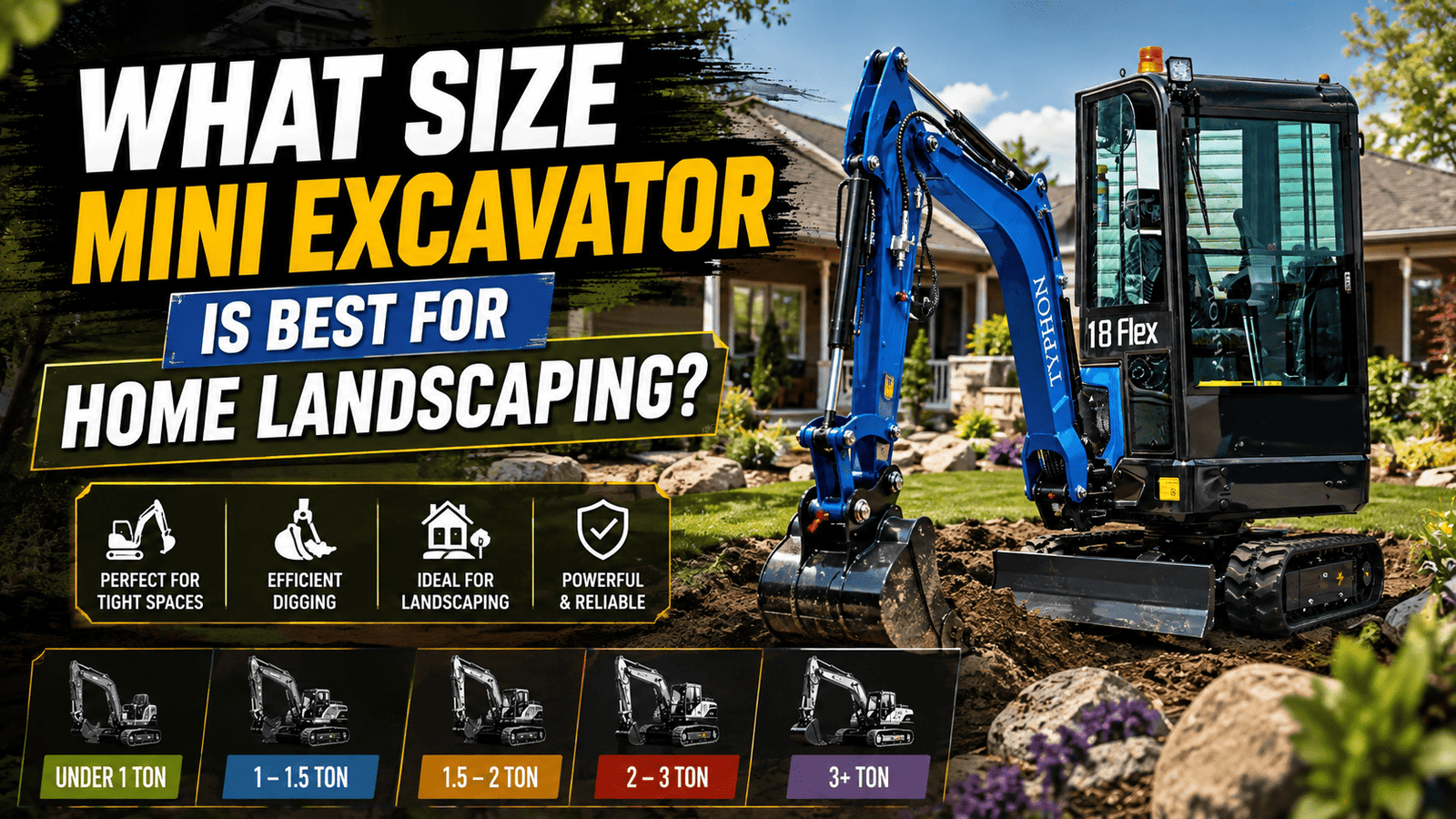
Here’s a rough breakdown of how the size classes typically shake out. Actual weight, width, and dig depth vary by manufacturer and model, so treat these as general categories rather than fixed specs.
| Mini Excavator Size | Typical Use | Access | Digging Capability | Best For |
|---|---|---|---|---|
| Under 1 ton | Light work | Excellent | Limited | Small backyard projects |
| 1–1.5 ton | Light/medium | Very good | Moderate | Landscaping |
| 1.5–2 ton | Medium | Good | Stronger | General residential work |
| 2–3 ton | Heavy residential | Moderate | High | Larger landscaping projects |
| 3+ ton | Heavy work | More limited | Very high | Large properties/construction |
As a rule, the smaller the machine, the easier it squeezes through tight side yards — but you’re trading away digging depth, breakout force, and lift capacity to get that maneuverability.
How Do You Choose the Right Mini Excavator Size?
Picking a size isn’t just about the job itself. It’s about whether the machine can physically get to the job and operate once it’s there.
Measure Your Access Width
Before you think about digging depth or bucket size, measure the narrowest point the machine has to pass through — gate, fence opening, side yard, garage door, or a tight spot on the driveway. That number often eliminates half your options before you even get to horsepower or reach. Give yourself a little breathing room beyond the machine’s published width, since mirrors, tracks, and attachments can eat into clearance.
Consider Your Digging Depth
Different landscaping tasks call for different depths. Planting beds and shallow irrigation lines don’t need much. Drainage runs, footings, retaining wall bases, and utility trenches usually go deeper — sometimes deep enough that a compact 1-ton machine can’t reach the bottom without extra effort. If your project involves anything below a couple of feet consistently, that’s usually the point where it makes sense to look at a larger class.
Think About Ground Conditions
Clay, compacted fill, rocky soil, wet ground, root balls, and sloped yards all change how hard a machine has to work to move the same volume of dirt. A small excavator with limited hydraulic flow can bog down in tough ground that a slightly larger machine handles without much fuss. If you already know your soil is difficult, it’s worth sizing up rather than fighting an undersized machine all day.
Consider the Working Space
Fitting through the gate is step one. Once the excavator is in the yard, it needs room to rotate on its undercarriage, swing the boom, dig, dump spoil, and reposition without hitting a fence, shed, or tree. A machine that technically fits through the access point can still be miserable to operate in a cramped yard if there’s no room to work once it’s inside.
Best Mini Excavator Sizes for Common Landscaping Jobs
Digging garden beds — Light work, well suited to a 1-ton or 1–1.5 ton machine with excellent maneuverability around existing landscaping.
Installing drainage — Depends on trench depth. Shallow runs suit a compact machine; deeper drainage systems often call for a 1.5–2 ton class with better reach.
Installing irrigation — A smaller machine is usually an advantage here, since irrigation trenches tend to be narrow and shallow, and a compact excavator does less collateral damage to existing turf.
Removing stumps — Stump removal benefits from extra breakout force, which usually means stepping into a 1.5–2 ton or larger machine, especially for established trees.
Removing small trees — Machine size depends on trunk diameter and root spread; stability and the right attachment (grapple or thumb) matter as much as raw size.
Building retaining walls — Excavation for footings and moving wall material typically favors a machine in the 1.5–3 ton range, depending on wall height and length.
Digging a small pond — Ponds move a lot of material relatively quickly, and a larger machine — often 2–3 tons — cuts down on the number of passes needed.
Grading and site preparation — A grading bucket or blade on a 1.5–2 ton machine covers most residential grading needs.
Fence and post work — Auger attachments pair well with smaller, highly maneuverable machines that can navigate along property lines.
Is a 1 Ton Mini Excavator Big Enough for Landscaping?
A 1-ton mini excavator can be genuinely useful for light residential work. Its main strengths are access and maneuverability — it fits through most standard gates, does minimal damage to existing turf, and is easy to transport, sometimes even on a standard trailer behind a pickup.
Where it falls short is heavier work. Deep excavation, large stump removal, dense clay, or moving significant volumes of material can push a 1-ton machine past its comfortable operating range. For light planting, small drainage lines, and tight-access jobs, it’s often plenty. For anything more demanding, it’s worth sizing up.
Is a 2 Ton Mini Excavator Better for Home Landscaping?
A 2-ton class machine sits in a middle ground that a lot of homeowners find works well for general landscaping. Compared to a 1-ton unit, it typically offers more digging depth, more hydraulic power, and better stability on uneven ground, while still being narrow enough for most residential access points.
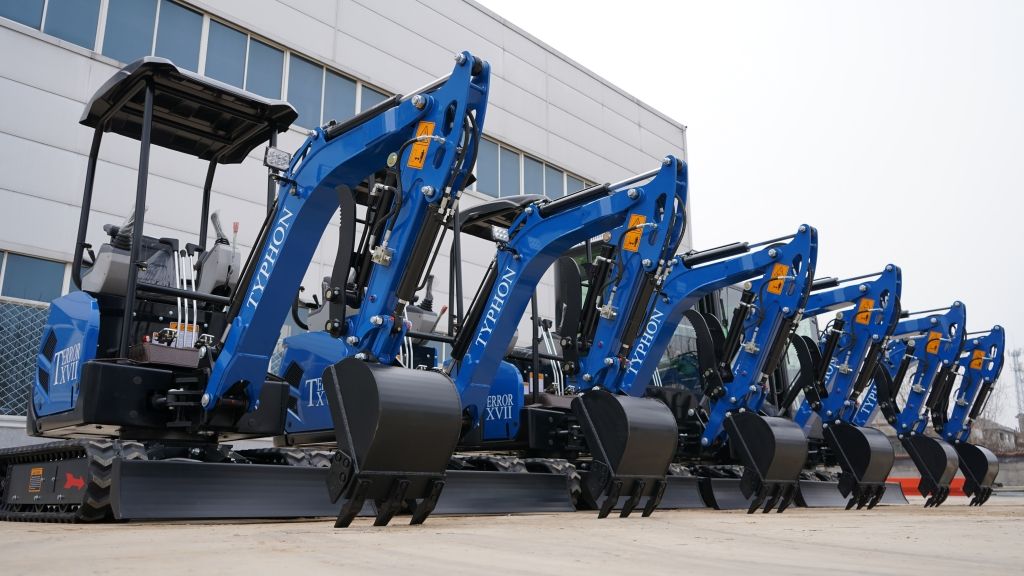
The trade-off is transportation and ground disturbance — a 2-ton machine is heavier to haul and leaves a slightly bigger footprint than a 1-ton unit. For homeowners tackling a mix of drainage, grading, and moderate digging in the same project, though, the added capability often outweighs those downsides. Several manufacturers, including TYPHON Machinery, build mini excavators in this 1.5–2 ton range specifically aimed at the residential and light-commercial market, balancing gate-width access with enough digging power for day-to-day landscaping work.
When Should You Choose a 3 Ton Mini Excavator?
Stepping up to a 3-ton mini excavator makes sense when the project outgrows what a 1–2 ton machine can comfortably handle: larger properties, deeper excavation, heavier or rockier soil, big stumps, substantial retaining wall footings, pond work, or grading a larger site.
The trade-offs are real, though. A 3-ton machine is wider, heavier, and generates more ground pressure, which can mean more visible tracking on lawns. Transportation typically requires a larger trailer and towing vehicle, and rental rates tend to climb with machine size. If your access points can’t comfortably accommodate the extra width, this size may not be practical no matter how much digging power it offers.
What Mini Excavator Attachments Are Best for Landscaping?
The base machine only tells part of the story — attachments determine what it can actually do.
Digging bucket — the default tool for general excavation work.
Grading bucket — wider and flatter, built for leveling and finish grading.
Hydraulic thumb — pairs with the bucket to grip rocks, branches, logs, and debris for cleaner material handling.
Auger — bores holes for fence posts, tree planting, and similar structural work.
Trencher — cuts narrow, consistent trenches for irrigation or utility lines.
Hydraulic breaker — used for breaking up hard material like rock or old concrete when appropriate.
Grapple — useful for clearing brush and handling loose material.
Before choosing a machine size, check that it has enough auxiliary hydraulic flow to run the attachments you actually plan to use — a machine that’s the right weight class but underpowered hydraulically won’t run some attachments effectively.
Mini Excavator vs Skid Steer for Landscaping
Mini excavators and skid steers (or compact track loaders) both show up on residential job sites, but they’re built for different strengths. Mini excavators generally excel at digging, trenching, and precise material placement thanks to their boom and rotating house. Skid steers and track loaders tend to be better suited to moving, pushing, and grading material in bulk, along with tasks like pallet handling.
Access and maneuverability differ too — a mini excavator’s tracks and compact footprint often make it easier to slip through tight side yards, while a skid steer typically needs more clearance to operate efficiently. For a project that’s mostly digging (drainage, planting, trenching), a mini excavator is usually the better fit. For heavy material movement and grading over a larger area, a skid steer can be more efficient.
Should You Rent or Buy a Mini Excavator for Home Landscaping?
Renting tends to make sense when the project is a one-time job, the machine is only needed for a few days, or you don’t have space to store equipment long-term.
Buying can make more sense if you’ll use the machine regularly — multiple projects a year, ongoing property maintenance, or contractor work where owning improves scheduling and productivity.
Either way, weigh purchase price against cumulative rental costs, plus maintenance, storage, transportation, and attachment costs. Depreciation is also worth factoring in if you’re leaning toward ownership. Rental and purchase pricing vary by region and dealer, so it’s worth getting current quotes rather than relying on rough estimates.
How Much Space Does a Mini Excavator Need in a Backyard?
The machine’s published width is only part of the space equation. You also need to account for tail swing (how far the rear of the machine extends when the house rotates), boom movement, and the working radius needed to dig and dump material without repositioning constantly.
Beyond the machine itself, factor in overhead clearance for low branches or power lines, slope stability, obstacles like sheds or fences, and — critically — the location of underground utilities before any digging starts.
How Do You Avoid Damaging Your Lawn With a Mini Excavator?
Rubber tracks help distribute weight and reduce ground pressure compared to steel tracks or wheels, but they won’t prevent all lawn damage on their own. Wet, soft ground is far more vulnerable to rutting than dry, firm turf, so timing the work around weather matters.
Planning a clear route in and out of the yard, minimizing repeated passes over the same area, avoiding sharp turns on sensitive grass, and using protective mats in high-traffic zones all help reduce impact. Machine weight, soil moisture, operator technique, and how many times the machine crosses the same patch of lawn all factor into the final result.
Mini Excavator Size Comparison for Homeowners
| Factor | 1 Ton | 1.5–2 Ton | 2–3 Ton |
|---|---|---|---|
| Access | Excellent | Very Good | Good |
| Maneuverability | Excellent | Very Good | Good |
| Digging Power | Light | Moderate | High |
| Transport | Easier | Moderate | More demanding |
| Lawn Impact | Lower | Moderate | Higher |
| Best For | Small jobs | Most residential work | Heavy landscaping |
These are general tendencies rather than fixed specifications — always check the actual machine’s data sheet before finalizing a decision.
What Size Mini Excavator Should You Rent?
As a simple starting point:
Small backyard + narrow gate + shallow work → smaller machine (under 1 ton to 1.5 ton)
General landscaping + drainage + moderate digging → 1.5–2 ton class
Large property + deep excavation + heavy stumps → 2–3 ton or larger
Use this as a starting filter, then confirm against the specific machine’s width, weight, and digging depth before booking or buying.
Frequently Asked Questions
What size mini excavator is best for home landscaping? For most residential projects, a mini excavator in the 1–2 ton class offers a practical balance of access and digging power. Larger jobs involving deep excavation, big stumps, or ponds often call for a 2–3 ton machine instead. The right size ultimately depends on your access width, digging depth, and soil conditions.
What size excavator do I need for my backyard? Start by measuring your narrowest access point — gate, side yard, or garage opening. A machine under about 1.5 tons usually fits comfortably through standard residential gates. From there, match digging depth and soil difficulty to the size classes to narrow down your choice.
Is a 1 ton mini excavator good for landscaping? Yes, for light work. A 1-ton machine offers excellent access and maneuverability, making it a good fit for planting beds, shallow drainage, and tight side yards. It can struggle with deep digging, large stumps, or heavy soil, where a larger machine performs better.
Is a 2 ton mini excavator better for residential work? A 2-ton class machine offers more digging depth, hydraulic power, and stability than a 1-ton unit while still fitting most residential access points. It’s a common choice for homeowners handling a mix of drainage, grading, and moderate digging in one project.
What size mini excavator fits through a standard gate? Machines under roughly 1 to 1.5 tons typically fit through standard residential gates, though widths vary by model. Always measure your gate and compare it directly to the manufacturer’s published machine width, allowing extra clearance for mirrors and tracks.
What size mini excavator is best for stump removal? Stump removal generally benefits from extra breakout force, which usually points toward a 1.5–2 ton or larger machine, especially for established trees. Smaller machines can handle young or small stumps, but may struggle with larger root systems.
Can a mini excavator damage my lawn? Yes, it can, particularly on wet or soft ground with repeated passes. Rubber tracks reduce ground pressure but don’t eliminate impact entirely. Planning your route, minimizing repeated passes, and timing work around dry conditions all help limit lawn damage.
Should I rent or buy a mini excavator for landscaping? Renting typically makes sense for a one-time or occasional project, while buying can pay off if you’ll use the machine regularly across multiple projects. Weigh purchase price against rental costs, maintenance, storage, and attachment expenses before deciding.
What attachments do I need for landscaping? It depends on the task: a digging bucket for general excavation, a grading bucket for leveling, an auger for post holes, a trencher for irrigation lines, and a hydraulic thumb for handling debris. Confirm the machine has enough auxiliary hydraulic flow to run your chosen attachments.
What is the best mini excavator for residential landscaping? There’s no single best model — it depends on your access width, digging depth, and soil conditions. Most homeowners find a 1–2 ton class machine covers the majority of landscaping tasks, while larger properties with heavier digging needs may justify a bigger machine.