The Ultimate Guide to the Vibratory Tamping Roller: Efficiency, Applications and Benefits
In a continuously growing and developing world of construction and infrastructure, the vibratory tamping roller is a key element of engineering ingenuity. Sometimes called a “padfoot” or “sheep’s foot” roller in its more specialized variations, this equipment is built to deal with the most demanding compaction tasks where regular smooth drum rollers might fail.
By mixing the static weight of the machine with high-frequency mechanical vibrations and using special tamping pads, these rollers are capable of compacting soil layers very well, thus providing a firm base for roads, embankments, and heavy structures.
At Machinery Online, we realize that the durability of any construction project is largely a result of its quality foundation. A vibratory tamping roller is designed to reach deep into cohesive soils such as clay and silt, disintegrating the natural bonds and filling in air voids which can lead to shifting and cracking later on.
Whether you are running a large highway project or a small precision residential one, the choice of the right vibratory tamping roller is the starting point for a structurally sound and durable building.
What is a Vibratory Tamping Roller?
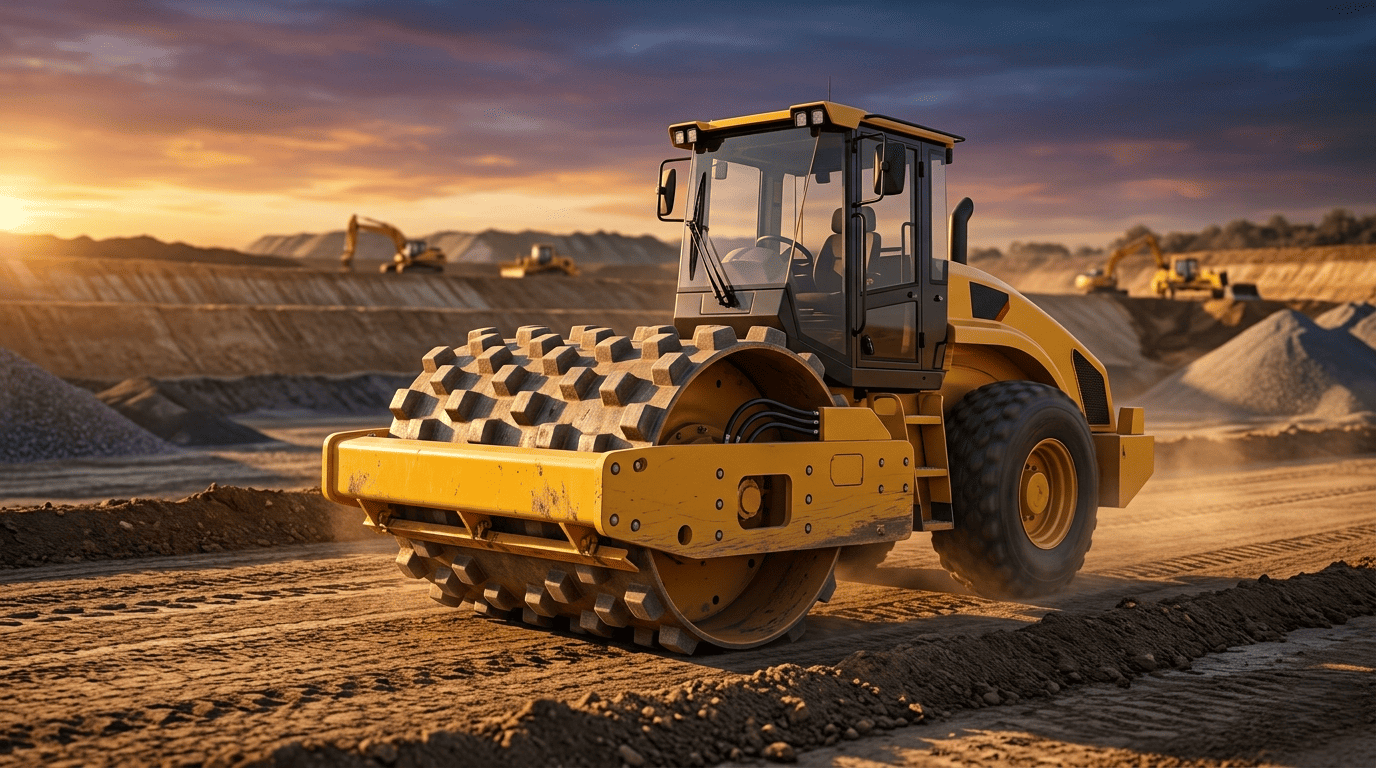
The vibratory tamping roller is a large-scale compaction equipment that has a steel drum with numerous “pads” or “feet” sticking out from its surface. In contrast to smooth drum rollers that depend on surface pressure, tamping rollers use these protrusions to deliver high-point pressure deep into the ground. Adding the “vibratory” factor gives a further force, which helps to compact soils layers (lifts) more effectively than static rollers.
- Working Principle: The tamping pads insert themselves into the soil and compact it from the inside out.
- Vibration: Fast pulses caused by mechanical eccentric weights inside the drum rearrange soil particles.
- Configurations: Both ride-on and walk-behind versions available for different site conditions.
Top Main Uses of Vibratory Tamping Rollers in Construction Today
Due to the multifunctionality of the vibratory tamping roller, it has become an essential tool in different areas of the construction industry. What makes it special and able to perform in the “most difficult” grounds, i.e. the ones with high moisture content or cohesive properties, has led to its differentiation from the traditional compaction machines.
At Machinery Online, we witness the deployment of these units in a variety of situations from dam constructions on rough terrains to the trenching of utilities in urban areas.
When using cohesive materials like clay, a smooth drum roller is most likely to “just skim” the surface, leaving areas that are still soft underneath. However, with the feet of the vibratory tamping roller, the soil is “kneaded” so as to have uniform density all through the depth of the material. It is a crucial aspect especially in embankments and dam cores where water impermeability and structural stability are non-negotiable.
- Road and Highway Bases: Building a stable sub-grade that can support multi-ton daily traffic loads.
- Embankment and Dam Construction: Clays are compacted to prevent the passage of water and failure of the structure.
- Building Pits and Pads: Ground beneath buildings is stabilized so as not to settle or shift over time.
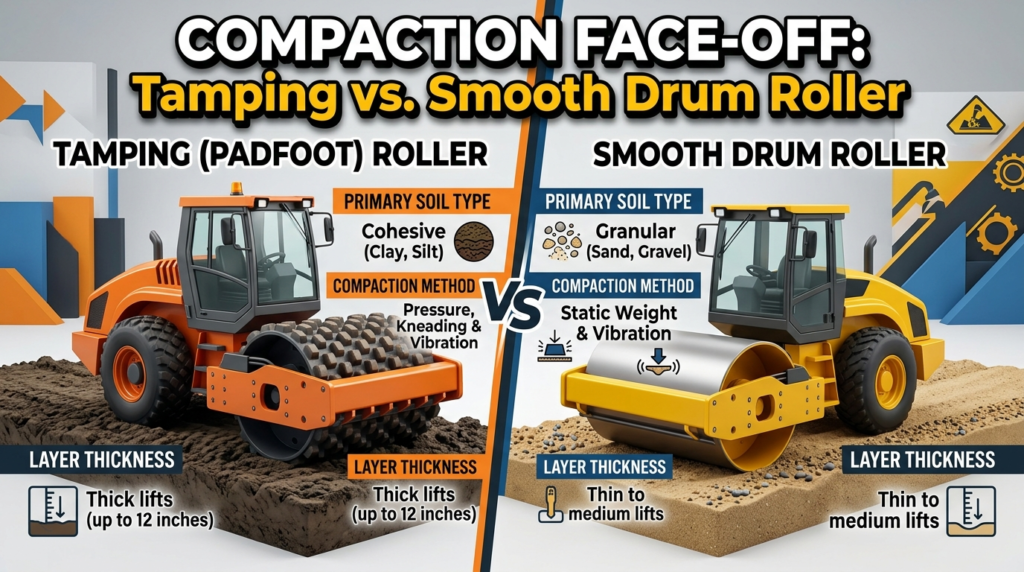
Table: Vibratory Tamping Roller Features
| Feature | Tamping (Padfoot) Roller | Smooth Drum Roller |
| Primary Soil Type | Cohesive (Clay, Silt) | Granular (Sand, Gravel) |
| Compaction Method | Pressure, Kneading & Vibration | Static Weight & Vibration |
| Layer Thickness | Thick lifts (up to 12 inches) | Thin to medium lifts |
Reasons to Use a High-Quality Vibratory Tamping Roller
Buying a vibratory tamping roller from Machinery Online, apart from giving you a compacted layer of soil, will also give you the confidence that you have made a good decision. If you reduce your passes to achieve the required soil Proctor density, then you are directly saving money by increasing machine efficiency.
Besides, the “kneading” of soil particles by the padded foot not only increases surface area but also helps in the evaporation of excess moisture, which is a major problem in wet-weather construction.
Another thing worth mentioning is that today, vibratory roller manufacturers take operator’s comfort and safety seriously. With ergonomically designed cabins, user-friendly controls, and new vibration-damping technologies, operators can work for extended periods with less tiredness, thereby leading to increased productivity and safer construction sites.
- Shortened Project Durations: Getting to the desired density with fewer passes as compared to static equipment.
- Superior Soil Stability: Avert “settlement” problems that lead to expensive repairs and road cracks.
- Moisture Management: The tamping action assists in aeration of wet soils and thus, speeds up drying during construction.
Technical Factors to Pay Attention to when Buying
While you are looking at the machines on machinery.online matching them to your project requirements is very important. Not all vibratory tamping rollers are the same, and therefore, the major ones like centrifugal force, vibration frequency and drum width determine the overall performance of the machine.
For example: Generally, higher amplitude = better for thick soil layers, while high frequency = preferred for finishing thinner layers.
The choice of power source is another important thing. Diesel-powered units have the torque that is needed for heavy-duty highway work, while gasoline or even electric walk-behind units are becoming popular for trench work and confined spaces where emissions and noise have to be kept at a minimum.
- Working Weight: A heavier machine can exert more static pressure to achieve deeper compaction.
- Centrifugal Force: It’s about the punch of the vibration; higher kN values represent more power.
- Drum Width: Decide a drum width that strikes a balance between coverage speed and the maneuverability required at your site.
How to Get the Most from Your Vibratory Tamping Roller Maintenance
In order that your vibratory tamping roller might stay your trustworthy tool for many years to come, you must have a regular maintenance schedule. This is because the way these machines work is by producing powerful vibrations which, in turn, put every bolt, hydraulic hose, and bearing under stress. If you do the regular check-ups, you will be able to prevent small problems from becoming major failures that could hold up your project.
We at Machinery Online advise checking the “scraper bars” regularly. These bars ensure that the tamping shoes remain clean by scraping off mud. When they become worn, the drum gets “blocked,” thus it behaves more like a smooth drum which drastically lowers the compaction efficiency.
- Lubrication on a daily basis: Do not forget that all grease points, especially those found around the drum bearings, need to be regularly serviced.
- Vibration Mounts: Take a look at the rubber shock mounts that serve to isolate the drum’s vibration from the rest of the machine.
- Hydraulic Fluid Integrity: Monitor fluid levels and look for leaks as the vibratory system relies heavily on hydraulic pressure.
Reasons for Going to Machinery Online for Compaction Equipment
Buying heavy equipment is difficult, but Machinery Online makes it easy by giving you honest and open pricing, complete data on the equipment, and a large stock of different brands.
We are committed to being the one-stop shop for a construction professional who needs reliable machinery. We have everything from mini, vibratory rollers used in landscaping to huge 20-ton tamping rollers for infrastructure. Besides that, we can also refer you to other high-quality equipment.
We are not merely sellers of equipment; our purpose is to offer solutions. Our knowledgeable team can help you determine the ROI of your purchase so that the vibratory tamping roller you select simultaneously meets your financial as well as technical needs.
- Verified Listings: We only have quality and accurate machines on our platform.
- Competitive Pricing: We provide the best market rates for both new and used equipment.
- Global Reach: Regardless of where your project is situated, we can help with the logistics of getting the machinery to your site.
Frequently Asked Questions: Vibratory Tamping Roller
What’s the difference between a smooth drum roller and a vibratory tamping roller?
A smooth drum roller is geared to work with granular soils, like sand and gravel, to supply a flat finish. On the other hand, a vibratory tamping roller (padfoot) is perfectly suited for working with cohesive soils (like clay), the padfoot roller uses pads that protrude to penetrate and compact the soil from within.
Can I use a vibratory tamping roller for asphalt?
Actually, no. The “feet” on a tamping roller would literally rip the asphalt surface apart. Smooth drum or pneumatic tire rollers are typically used for asphalt because they ensure a level and sealed final product.
How far below the surface can a vibratory tamping roller compact soil?
Depending on a machine’s weight and centrifugal force, it can effectively compact “lifts” or layers of soil ranging from 6 to 12 inches deep.
In relation to compaction, what is “padfoot”?
“Padfoot” is the term used for the rectangular or tapered protrusions on the roller’s drum. These “feet” produce a very high pressure over a very small surface area, which helps to break down lumps of soil or clumps.
What factors should I consider when deciding on the size of a vibratory roller?
The decision depends primarily on the extent of site and the depth of soil. Large projects, such as highways, call for 10-20 ton ride-on rollers, whereas minimum, narrow or confined spaces, e.g., trenches or sidewalks, require walk-behind mini rollers.
Is vibration helpful in compacting clay?
Yes, but the mechanical “kneading” of the tamping feet is the main factor for clay. Vibration helps to rearrange particles after the pads have broken down the internal cohesion of the soil.
Where can I find a reliable vibratory tamping roller on the internet?
You have an option to buy a large number of excellent new and used rollers at https://machinery.online/, where different brands and specifications are available to suit your project requirements.