

The Complete Heavy Equipment Maintenance Checklist
Let’s be honest for a second. There is absolutely nothing worse than kicking off a massive project on a Monday morning, only to have your primary excavator blow a hydraulic line ten minutes into the shift. We’ve all been there, and the financial hit is always brutal. Hence working on heavy equipment maintenance checklist and taking steps accordingly is the best way to handle critical issues.
Operating a successful construction or earthmoving business isn’t just about winning bids or hiring the best operators. It really comes down to whether your iron actually turns on and stays running when you need it to. When a bulldozer or skid steer goes down, you aren’t just paying for parts and a mechanic’s labor.
You’re bleeding money on idle crew wages, missing tight project deadlines, and potentially ticking off a major client. That’s exactly why flying by the seat of your pants just doesn’t cut it anymore. If you want to stop fighting fires and actually manage your fleet like a pro, you need a rock-solid heavy equipment maintenance checklist.
Having a proactive plan changes the whole game. Instead of waiting for things to break, you catch the tiny leaks and worn-out parts long before they sideline your operation. It’s about keeping your gear running smoothly so you can protect your bottom line and sleep a little better at night.
- Pushing the overall lifespan of your expensive iron way past the average mark and keeping that resale value high.
- Slashing those surprise repair bills and stopping project-killing downtime right in its tracks before it ruins your week.
- Making sure your operators and the folks on the ground get to go home safe at the end of every single shift.
Daily Walkaround and Fluid Inspections
The absolute most critical part of any heavy equipment maintenance checklist happens before the key ever turns in the ignition. Think of the daily walkaround as your fleet’s morning physical. Grab your coffee and physically walk a full 360 degrees around the machine.
You are looking for the obvious stuff that might have happened late yesterday—fresh puddles under the chassis, a cracked hydraulic hose weeping fluid, or a new dent that wasn’t there before. Fluids are the lifeblood of these beasts. If you skip checking the engine oil, coolant, hydraulic fluid, or diesel levels, you’re just asking for a blown engine.
Take the Typhon TX Series Mini Excavators over at Machinery Online, for example. They run incredibly reliable Kubota engines, but even the best Japanese engineering needs clean oil to survive a brutal 10-hour shift digging trenches.
You also need to get down and look at the tracks or tires. Mud packed tightly into the undercarriage can tear up your sprockets, and running on bald or under-inflated tires is going to cost you a fortune in uneven wear. It takes maybe ten minutes to do this right, but it saves days of massive headaches.
- Pulling dipsticks and checking sight glasses for engine oil, coolant, and hydraulics before anyone fires up the machine.
- Kicking the tires and inspecting track systems for missing bolts, deep cuts, or excessive mud buildup from the day before.
- Testing out the safety gear inside the cab—hit the horn, check the backup alarm, and make sure the emergency stops actually work.
Weekly and Monthly System Checks
Once you get past the daily grind, your equipment starts racking up serious hours. This is where your heavy equipment maintenance checklist needs to dig a little deeper, usually hitting those 50-hour and 250-hour marks.
At this stage, you’re basically going to war against dust, dirt, and friction. Construction sites are giant dust bowls, and airborne dirt is the ultimate enemy of heavy machinery. Your mechanics need to get in there and literally blow out the primary engine air filters.
While they’re at it, they should clean the radiator fins and hydraulic coolers. If those get choked up with debris, your machine is going to overheat fast. Then there’s the grease. Heavy friction points on booms and buckets take a massive beating every single day. But here is the kicker: over-greasing can be just as bad as under-greasing.
If you pump too much in, it just attracts abrasive sand and dirt, turning your grease into a nasty grinding paste. Stick strictly to the manufacturer’s grease chart for all those connecting pins and bushings. While you have the hood open, take a flashlight and check the electrical harnesses. You want to look for wires rubbing against metal or battery terminals covered in fuzzy green acid corrosion.
- Knocking the dust out of air filters and cabin filters so the engine and your operator can actually breathe clean air.
- Hitting every grease zerk on the bucket pins, boom pivots, and bushings exactly how the service manual tells you to.
- Looking over the battery connections to clean off acid corrosion and checking wiring harnesses for dangerous exposed copper.
Long-Term and Seasonal Heavy Machinery Upkeep
When your machinery starts crossing the 500-hour and 1,000-hour milestones, the maintenance game shifts to long-term survival and dealing with the changing seasons. These big annual services are messy, expensive, and absolutely mandatory.
You’re talking about dropping huge volumes of fluid. Transmission oils, differential gear lubes, and the main hydraulic fluid all break down over time. After months of running hot under heavy loads, hydraulic fluid loses its thickness and gets filled with microscopic metal shavings that act like sandpaper on your pumps.
You just have to drain it out and start fresh. You also need to think about the weather. Winterizing your fleet means swapping out summer fluids for winter-grade alternatives so they don’t turn to thick sludge in the freezing cold. You’ll also want to load-test all the batteries because cold weather kills weak batteries instantly.
On the flip side, prepping for a scorching summer means flushing the engine cooling system and making sure the cab’s AC is blowing ice cold so your operators don’t pass out from heat stroke. Finally, get under the machine and look closely at the major structural welds. A hairline crack on a heavy steel boom today will snap completely next month if you ignore it.
- Dumping out the old, burnt transmission and hydraulic fluids and replacing them to keep the internal gears happy and smooth.
- Gearing up for extreme weather by swapping to the right seasonal fluids and making sure the batteries can handle a hard freeze.
- Scouring the heavy steel chassis and load-bearing welds for hidden stress fractures before they turn into major structural failures on site.
The Role of Reliable Equipment from Machinery Online
Let’s be real for a minute: keeping up with a demanding heavy equipment maintenance checklist is a whole lot easier when you aren’t constantly trying to polish a piece of junk. Starting with solid, dependable iron makes all the difference in the world.
That’s exactly why so many contractors rely heavily on Machinery Online. It is honestly the best place to source your heavy gear, connecting buyers who mean business with verified sellers all over the country.
They have a massive live inventory—we’re talking over 2,400 active listings covering more than 50 different categories. Whether you are hunting for an American-made excavator, a nimble skid-steer loader, or a heavy-duty roller compactor, you can easily find machinery that is genuinely built to handle the abuse of a modern job site. The best part is how safe and easy they make the buying process. They use secure escrow payments so your money is perfectly safe, and they even help line up nationwide delivery.
If you’re looking to upgrade, their Typhon mini excavators are a fantastic choice, especially since they come loaded with essential digging mini excavator attachments right out of the gate. When you invest in quality machines, staying on top of your maintenance schedule feels like routine care rather than a constant, desperate rescue mission.
- Browsing through a massive, updated list of over 2,400 pieces of premium new and used construction gear ready to get to work.
- Buying with total peace of mind thanks to verified dealers and escrow-backed payments that keep your hard-earned cash secure.
- Getting your hands on top-tier gear like the Typhon TX Series Mini Excavators that deliver serious power and long-term reliability.
Heavy Equipment Maintenance Checklist Timeline
If you want your crew to actually stick to the plan, you need to write it down and make it dead simple to follow. Just telling the guys in the shop to “keep an eye on things” is a guaranteed way to end up with blown engines.
To keep everyone on the exact same page, we put together a straightforward heavy equipment maintenance checklist timeline. This table breaks down the essential mechanic tasks based strictly on engine hours, not calendar days.
Why hours? Because a bulldozer might sit idling on a job site all day, putting heavy wear on the engine without moving more than a few hundred feet. Tracking by the hour meter is the only true way to measure the real abuse the machine is taking. Print this out, stick it on the shop wall, and make sure your mechanics are checking the boxes. It takes the guesswork out of fleet management.
- Forcing the crew to use daily checklists so they catch the small leaks and loose bolts before they even start the shift.
- Setting up hard rules for the weekly 50-hour services to deal with job site dust and heavy joint friction.
- Planning ahead for those big, expensive annual fluid drops and deep component inspections so they don’t catch your budget off guard.
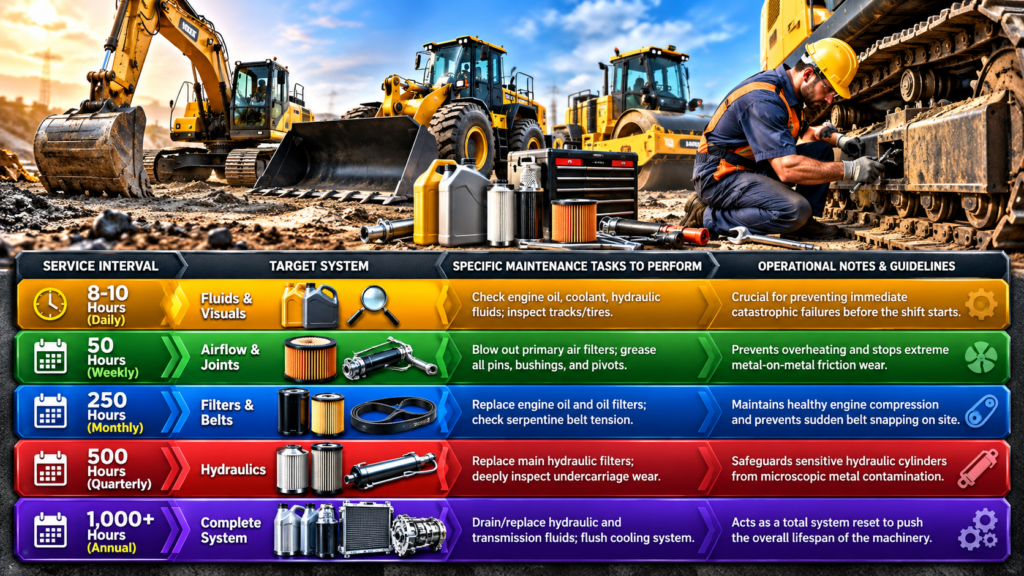
Table: Heavy Equipment Maintenance Checklist
| Service Interval | Target System | Specific Maintenance Tasks to Perform | Operational Notes & Guidelines |
| 8-10 Hours (Daily) | Fluids & Visuals | Check engine oil, coolant, hydraulic fluids; inspect tracks/tires. | Crucial for preventing immediate catastrophic failures before the shift starts. |
| 50 Hours (Weekly) | Airflow & Joints | Blow out primary air filters; grease all pins, bushings, and pivots. | Prevents overheating and stops extreme metal-on-metal friction wear. |
| 250 Hours (Monthly) | Filters & Belts | Replace engine oil and oil filters; check serpentine belt tension. | Maintains healthy engine compression and prevents sudden belt snapping on site. |
| 500 Hours (Quarterly) | Hydraulics | Replace main hydraulic filters; deeply inspect undercarriage wear. | Safeguards sensitive hydraulic cylinders from microscopic metal contamination. |
| 1,000+ Hours (Annual) | Complete System | Drain/replace hydraulic and transmission fluids; flush cooling system. | Acts as a total system reset to push the overall lifespan of the machinery. |
FAQs on Heavy Equipment Maintenance Checklist
What is preventive maintenance for construction equipment?
Think of preventative maintenance as going to the dentist for a cleaning instead of waiting until you need a root canal. It’s a proactive, strictly scheduled routine where you check fluids, change filters, grease joints, and inspect structural parts before they actually fail whether you bought fat mini excavator for sale or in market. Instead of waiting for a machine to break down on the job (which is called reactive maintenance), you use a heavy equipment maintenance checklist to catch the small stuff early. It maximizes your uptime and saves you from massive emergency repair bills.
How often should heavy equipment be serviced?
This really depends on the machine and how hard you’re running it, but the golden rule is to always go by the engine hour-meter, not the calendar. A standard rhythm looks like this: daily checks every 8-10 hours, minor servicing like air filters at 50 hours, oil changes at 250 hours, hydraulic filters at 500 hours, and a massive total-system fluid overhaul at 1,000 hours. If you are working in crazy dusty or harsh environments, you usually need to cut those intervals in half.
What are the key components to inspect during preventative maintenance?
You have to focus on the big three: the engine/drivetrain, the hydraulics, and the electrical systems. Mechanics should be looking closely at belts, air intakes, high-pressure hoses, rubber seals, and battery health. Beyond that, your heavy equipment maintenance checklist should always force you to look at the undercarriage, the brakes, and all the safety features inside the cab. If any of those fail, someone could get seriously hurt.
How can a heavy equipment maintenance checklist benefit my operations?
It brings order to the chaos. When you force your crew to use a checklist, nothing gets skipped just because someone was in a hurry. It stretches out the lifespan of your expensive machinery, drastically cuts down on unexpected downtime, and keeps your repair budgets predictable. Plus, it ensures your gear stays compliant with OSHA safety rules, which protects your workers and keeps your job sites running without expensive interruptions.
What is the most commonly skipped maintenance item?
Ask any veteran mechanic, and they will tell you the exact same thing: greasing the pivot points and cleaning out the radiator fins. Because getting under the machine with a grease gun is messy and annoying, operators tend to skip it. Same goes for blowing out the coolers. Ignoring these specific items on your heavy equipment maintenance checklist leads directly to destroyed bucket pins and blown, overheated engines. They are cheap to do, but incredibly expensive to ignore.
How can I track and document my heavy equipment maintenance?
While a lot of old-school shops still use paper binders or a whiteboard, it’s honestly a terrible way to manage a modern fleet. The best way to do this today is by using a digital fleet management software or a CMMS (Computerized Maintenance Management System). These apps hook up to your machine’s telematics, track the engine hours automatically, and send ping alerts to your phone when a service is due. It creates a permanent, legally backed history for every machine you own.
Should maintenance be tracked by hours or miles?
Always by hours. Period. Heavy machinery like excavators, bulldozers, and loaders might sit in one exact spot all day running at maximum RPMs, or they might move at a crawling pace while pushing insane amounts of weight. If you tried to track maintenance by miles driven, the odometer would barely move, but the engine and hydraulic pumps would be completely worn out. Tracking by the hour meter is the only accurate way to measure real mechanical stress.