Heavy Machinery Maintenance Software vs. Manual Logs: Time to Ditch the Clipboard?
Run a fleet of excavators, skid steers, or haul trucks for a week, and you’ll quickly realize something: keeping these heavy beasts running and out of the shop is half the battle. For years, fleet managers and guys in the shop have leaned heavily on grease-stained paper logs, whiteboards that never quite wipe clean, and thick three-ring binders to track oil changes or hydraulic system checks. But let’s be honest, there is always a struggle between the latest heavy machinery maintenance software vs. manual logs among operators and managers.
Preventative Maintenance Software vs. Manual Logs for Heavy Machinery Fleets
The construction and equipment rental games are changing fast, and the margin for screwing up is practically zero right now. Operating blind—without knowing exactly what’s going on under the hood of every machine in your fleet—means you’re just waiting for a catastrophic equipment failure. And those failures? They cost thousands of dollars in unexpected downtime and completely blow up client project deadlines.
So, you’re left with a choice: stick to the old-school clipboards, or step up to a digital platform. Honestly, making the jump to heavy machinery maintenance software isn’t just some flashy tech upgrade for the office anymore. If you want to keep your contracting business profitable in a highly competitive market, it’s how you survive.
The Hidden Costs of Relying on Manual Logs for Your Fleet
Relying on physical paperwork to track hundreds of thousands of dollars worth of iron is just asking for trouble, plain and simple. Picture this: an operator finishes a rough 10-hour shift out in the dirt.
He grabs a pen, scribbles down the current engine hours on a crumpled log sheet, and tosses it onto the dash of the truck. What happens next? Half the time, that piece of paper gets lost, the handwriting is totally unreadable, or it just sits there for a week without anyone in the maintenance department seeing it.
Manual tracking leans way too hard on human memory, and it demands perfect administrative discipline on job sites that are anything but disciplined. Because there are no flashing lights or pop-up notifications telling you a scissor lift needs a structural look, or that a loader is long overdue for fresh hydraulic fluid, you end up missing the maintenance window.
This throws your whole shop into what industry guys call “breakdown mode.” You’re no longer maintaining equipment; you’re just putting out fires and fixing broken stuff. That means overnighting expensive parts, paying the mechanics time-and-a-half to work through the weekend, and dealing with an angry client because your main excavator is sitting dead in the dirt.
- The ‘Lost in the Truck’ Factor: Paper logs get soaked in coffee, covered in hydraulic oil, or just blow out the window on the highway. When the paperwork vanishes, so does your entire compliance and service history.
- Zero Proactive Warnings: A piece of paper isn’t going to send you a text message when a machine hits the 500-hour mark. You usually only find out you missed a crucial service date when the engine starts knocking.
- Massive Communication Gaps: A sticky note left in a loader’s cab might take three days to make it to the shop manager’s desk. By the time he reads it, that minor fluid leak has already turned into a massive, expensive repair job.
How Heavy Machinery Maintenance Software Changes the Game
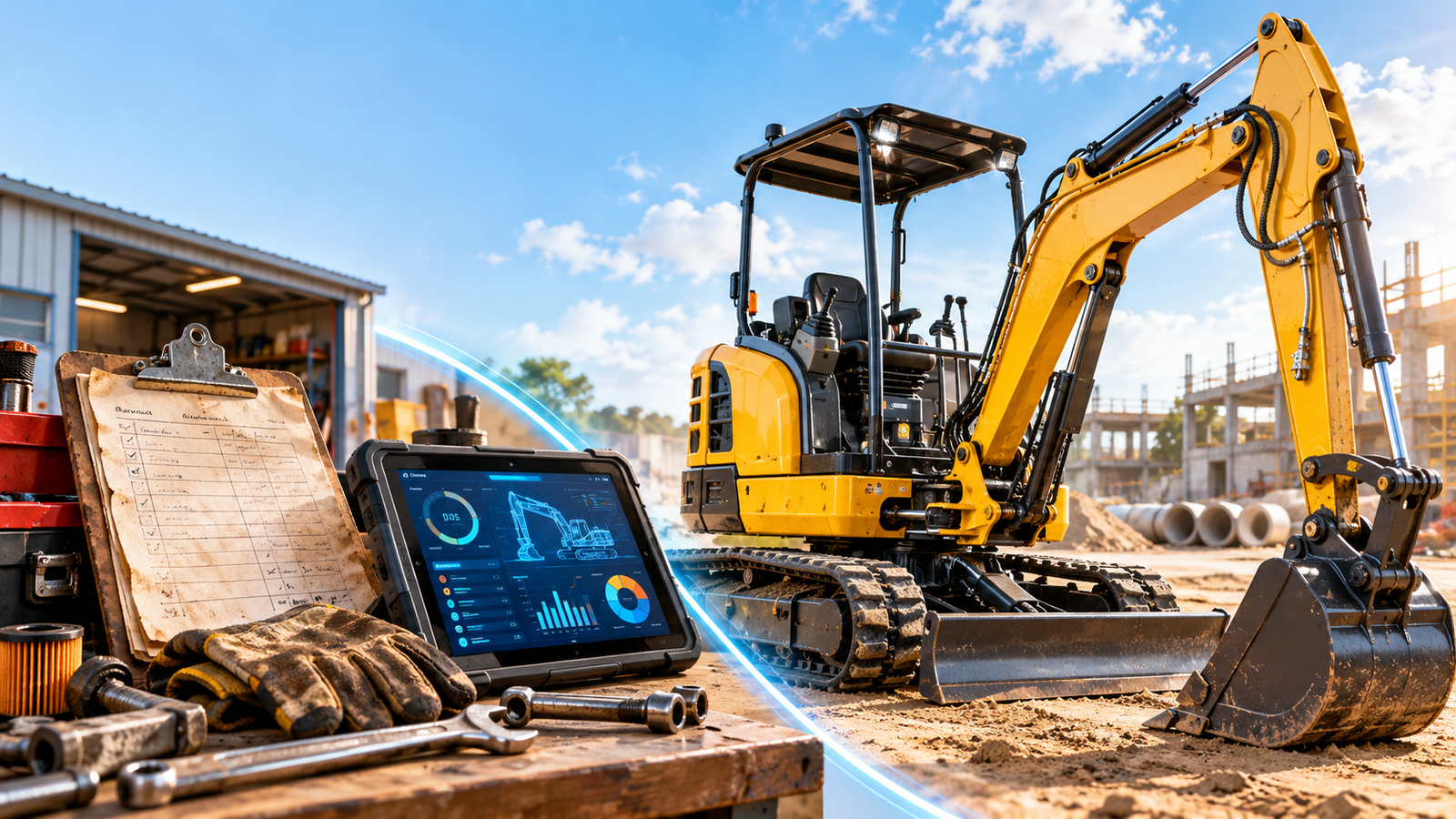
Getting specialized heavy machinery maintenance software set up flips your whole operation from a chaotic, stressful mess into something that actually runs smoothly. Think of these digital platforms as the brain of your fleet.
They connect the guys operating the machines, the mechanics turning the wrenches, and the folks in the office, all on one screen that you can pull up on a phone or an iPad. Instead of throwing a dart at a calendar to guess when a roller compactor needs to come into the shop, the software just tells you.
It hooks right into the machine’s onboard telematics to pull the actual engine hours, fuel burn rate, and engine fault codes in real-time. When a service date is creeping up, the system kicks out a digital work order all on its own.
It pings an available mechanic, checks your digital inventory to see if you have the right filters sitting on the shelf, and lines the whole job up. It takes the guessing totally out of the equation.
Mechanics can snap a quick picture of a busted track on their phone, upload it to the app, and get the boss to approve the fix right then and there. By giving every piece of iron exactly what it needs right when it needs it, you stretch the life of your equipment and keep it out on the dirt making money.
- Direct Telematics Syncing: The newer software talks directly to the computer inside your equipment. It pulls hours and fault codes instantly, so your operators don’t have to manually write anything down at the end of a shift.
- Work Orders That Actually Work: Instead of handing out paper tickets that get lost, the system pushes digital orders straight to your mechanic’s phone, complete with step-by-step checklists and the exact part numbers they need.
- A Cloud-Based Paper Trail: Every single oil change, swapped hydraulic hose, and safety inspection lives in the cloud forever. You get an audit-proof history for every single asset without needing a giant filing cabinet.
Software vs. Manual Tracking: The Direct Shop Comparison
If you really want to see the difference between the two ways of doing things, just look at a normal Tuesday morning in the shop. Sure, buying a clipboard and a pack of pens is cheap on day one.
But the headache of chasing down lost records, coupled with the massive bills from blown engines, will eat your profits alive. Imagine an OSHA inspector walks on-site and wants to see the maintenance file for a specific rough-terrain forklift.
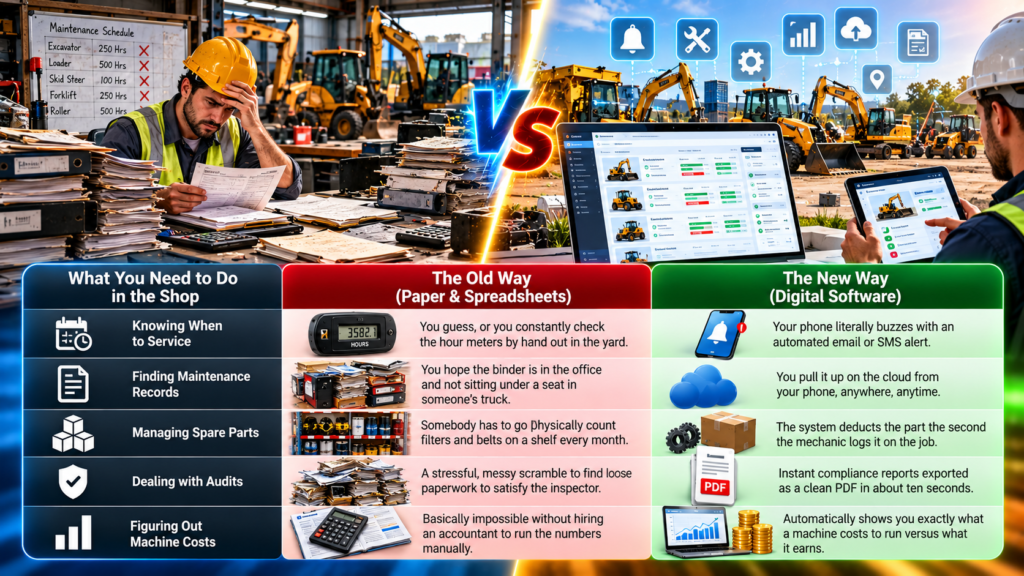
With paper logs, somebody is spending the next two hours digging through dusty folders, sweating over missing pages and smudged dates. With heavy machinery maintenance software, you tap your screen three times, filter by the machine, and hand them a perfect, time-stamped report. It’s night and day. Let’s break down exactly how the old way compares to the new way when it comes to the heavy lifting of daily fleet management.
Table: Heavy Machinery Maintenance Software vs. Manual Logs for Heavy Machinery Fleets
| What You Need to Do in the Shop | The Old Way (Paper & Spreadsheets) | The New Way (Digital Software) |
| Knowing When to Service | You guess, or you constantly check the hour meters by hand out in the yard. | Your phone literally buzzes with an automated email or SMS alert. |
| Finding Maintenance Records | You hope the binder is in the office and not sitting under a seat in someone’s truck. | You pull it up on the cloud from your phone, anywhere, anytime. |
| Managing Spare Parts | Somebody has to go physically count filters and belts on a shelf every month. | The system deducts the part the second the mechanic logs it on the job. |
| Dealing with Audits | A stressful, messy scramble to find loose paperwork to satisfy the inspector. | Instant compliance reports exported as a clean PDF in about ten seconds. |
| Figuring Out Machine Costs | Basically impossible without hiring an accountant to run the numbers manually. | Automatically shows you exactly what a machine costs to run versus what it earns. |
- Finding Data Instantly: You can look up the complete, ten-year repair history of an excavator in five seconds instead of wasting an entire afternoon digging in the archives.
- Growing Without the Growing Pains: You might be able to manage ten machines on a whiteboard. Try managing fifty. Digital software scales up no matter how big your fleet gets, without adding extra headaches to your day.
- Stopping the Money Leaks: The software tracks every dollar spent on parts and labor for specific machines, so you know exactly which skid steer is a money pit that needs to be sold off.
The Real Return on Investment (ROI) of Going Digital
- Paying for software subscriptions always feels like a hit to the wallet at first, but let me tell you, this stuff pays for itself faster than almost anything else you can buy for your business.
- The real money is made by killing unplanned downtime. When a dozer drops a transmission in the middle of a big site grading push, you aren’t just buying expensive replacement parts.
You’re paying a crew of guys to stand around doing nothing, you’re backing up the whole job schedule, and you might even eat a massive penalty fee from the general contractor for missing a deadline. Heavy machinery maintenance software stops that bleeding.
It catches the small stuff—a fraying belt or a weeping seal—during routine inspections before it turns into a massive teardown. Plus, keeping great records actually makes your equipment worth more.
When it’s time to cycle out an old wheel loader, handing the buyer a verified, digital service history proves the machine was treated right. You can ask for top dollar and actually get it. And let’s not forget fuel costs. Engines that get their filters and fluids changed exactly on time just run better and burn less diesel, which is a massive win for your bottom line with fuel prices doing what they do.
- Killing the Emergency Repair Bills: Finding a loose fitting during a routine, software-prompted inspection saves you from buying a whole new hydraulic pump three weeks later.
- Boosting Your Resale Value: Secondary buyers pay a premium for iron with a perfect, digital service record because they know they aren’t buying someone else’s neglected junk.
- Slashing the Fuel Bill: Machinery that is actually maintained on schedule runs highly efficiently, meaning you spend noticeably less on diesel every single month across the whole fleet.
Making the Switch Without Causing a Shop Mutiny
Look, trying to get a bunch of old-school mechanics to drop their paper logs and start using iPads sounds like an absolute nightmare. But it really doesn’t have to be. The trick is to not force everything all at once.
Don’t try to digitize the entire company on a Monday morning. Start small. Pick a few of your most important machines—maybe the primary excavators and a couple of busy loaders—and get them set up in the system first. You also have to pick heavy machinery maintenance software that is stupidly easy to use on a smartphone. If the mobile app feels like extra homework for your mechanics, they will fight you on it tooth and nail.
Sit down with them, show them how the app means they never have to decipher terrible operator handwriting anymore, and show them how easy it is to just tap a screen to order a part. Once the guys in the shop realize the software actually gets them home on time instead of staying late to fill out paperwork, they’ll be totally on board.
- Roll It Out Slowly: Grab a small group of your best mechanics and a few machines to test the waters. Work out the kinks in your workflow before you push it to the whole crew.
- Focus on the Phone App: Your guys are out in the field and under machines, not sitting at a desk. Make sure they know exactly how to use the mobile version to submit inspections fast.
- Hook Up the GPS: Connect the new software to the telematics trackers you already have running on the equipment so the meter data just flows automatically without anyone lifting a finger.
FAQs on Heavy machinery maintenance software Vs Manual Entry
What actually is preventative maintenance software for heavy machinery?
Think of it as a digital command center for your equipment fleet. It replaces the old paper logs and whiteboards, tracking equipment data to automatically alert you when it’s time for a service. The whole goal is to fix things before they break, saving you a ton of cash on unexpected downtime.
Are my mechanics actually going to be able to use this?
Yeah, they will. The good platforms out there are built for guys with grease on their hands, not IT nerds. They work right on smartphones and use simple buttons, dropdowns, and checklists so your team can close out a work order in a few seconds.
Is this software really going to save me money?
Most fleets see their overall maintenance costs drop by about 15% to 25% once they get settled in. You buy way fewer emergency parts, your machines last years longer, and you aren’t paying operators to sit in the dirt waiting for a broken excavator to get wrenched on.
Will this connect to the GPS already on my equipment?
Definitely. Most modern fleet management tools plug right into OEM telematics from major brands like CAT, John Deere, or Volvo. They pull the engine hours, machine location, and fault codes automatically through the cloud.
Why can’t I just keep using paper logs and clipboards?
Because paper gets lost in trucks, ruined by coffee, or just flat-out ignored. A piece of paper can’t send you a text message when a loader is 50 hours overdue for an oil change. In today’s fast-paced construction world, relying on paper just leaves way too much room for expensive mistakes.
Does going digital help with OSHA or safety audits?
Big time. It creates a permanent, searchable record in the cloud. If a safety inspector shows up asking for the daily checks on a specific crane, you just hit print on your computer instead of tearing apart your office filing cabinets.
How long does it take to get a fleet switched over?
For a normal-sized operation, you can usually get the initial data imported in a couple of weeks. If you roll it out in phases like you should, the whole team is usually fully up to speed and comfortable within a month or two.