The Rise of Electric Construction Machinery: Are Electric Forklifts the Future?
If you have spent any time around loading docks at six in the morning, you already know the routine by heart. There is the persistent smell of cold diesel exhaust hanging in the damp air, a driver cursing at an engine that hates starting in forty-degree weather, and enough clatter from cooling fans and clunky hydraulic pumps that nobody hears you coming unless you lay on the horn. For decades, running iron on a job site just meant living with the mess, the headaches, and the fuel bills which can solved by the electric forklift.
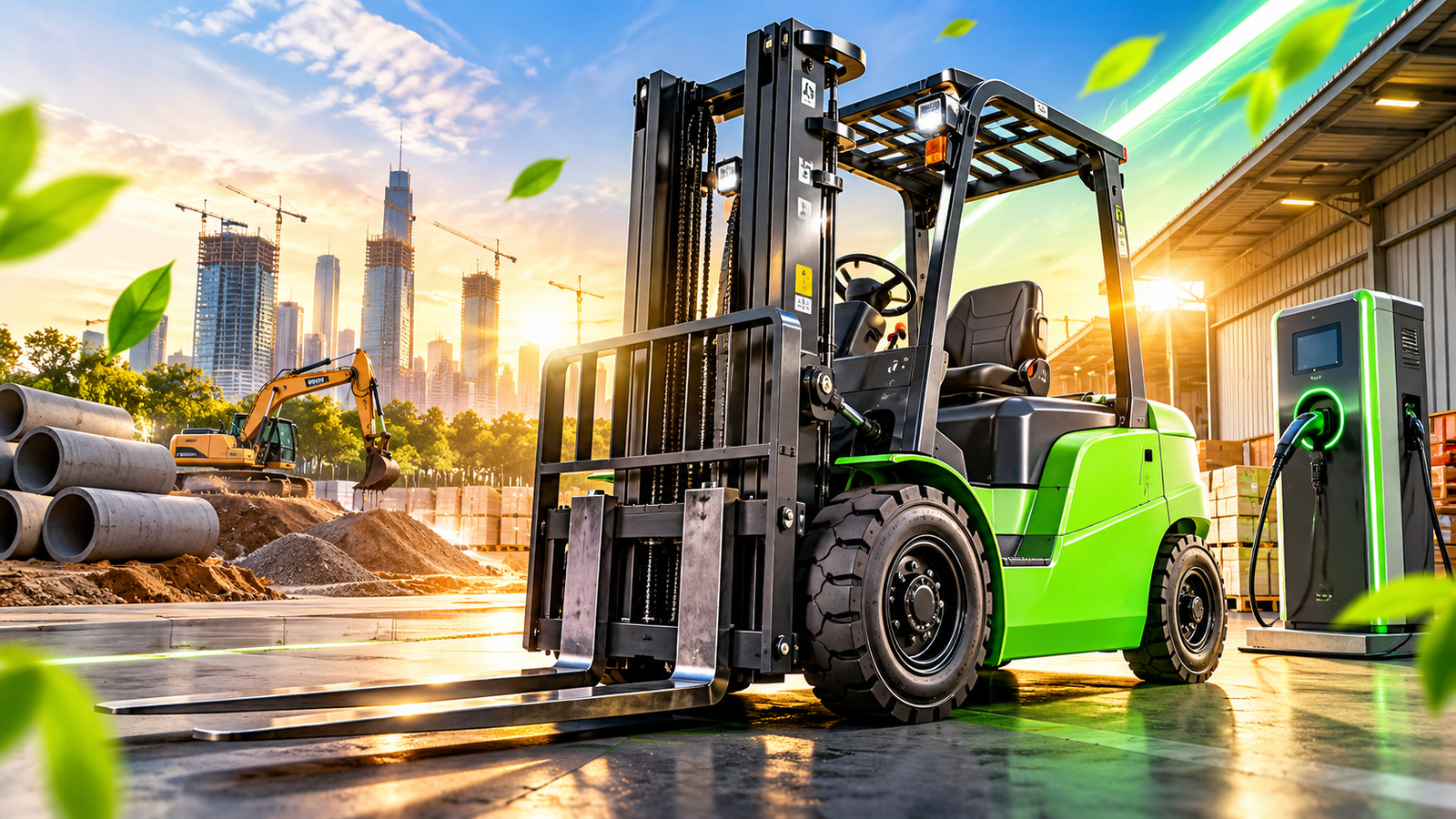
If you had to pull ten thousand pounds of structural steel or pallets of wet sod off a flatbed, you ran internal combustion because nothing else had the backbone to do it. But walk through those same staging yards today, and the atmosphere feels completely different. You hear tires crunching on gravel and the low whine of an AC traction motor pulling away with a full load—no cloud of smoke, no revving engine, and no puddle of oil left on the concrete. That shift is why so many yard supervisors are taking a hard look at the modern electric forklift.
This change isn’t happening because equipment buyers suddenly fell in love with green slogans or corporate sustainability brochures. It is happening because the math on diesel and propane simply stopped making sense. Between rising fuel surcharges, endless shop visits for basic engine upkeep, and cities cracking down on noisy, smoking equipment near residential neighborhoods, contractors have to find ways to protect their margins.
Online equipment hubs like Machinery Online are seeing a flood of interest from operators who used to be die-hard diesel fans. Once you put a driver in a cab that delivers full pulling power the split second their boot hits the pedal, they rarely want to go back to an old fuel burner.
The Evolution of Clean Energy Across Heavy Construction and Material Handling
Not too long ago, bringing up battery-powered gear on a rough civil site would get you laughed right out of the job trailer. Early battery rigs were built strictly for dead-flat indoor floors, and the moment one of them hit a patch of mud or a steep gravel ramp, the drive wheels would bog down and the battery gauge would drop like a stone. They were indoor toys for moving cardboard boxes, not serious construction tools.
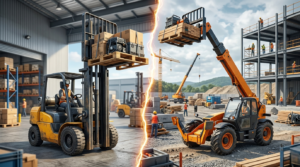
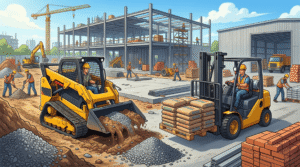
But over the last few years, heavy equipment manufacturers have completely re-engineered their power packages. What started as small electric mini-excavators and tight-aisle reach trucks has quietly spilled out into rough-terrain telehandlers, tracked loaders, and high-capacity counterbalance trucks that spend all day working outside in the dirt.
A huge part of this shift comes down to local regulations that have caught a lot of builders off guard. Plenty of metropolitan areas and mixed-use commercial projects now enforce strict low-emission zones and tight noise limits. If you show up with an older Tier 3 diesel machine that idles all morning next to a hospital wing or an apartment block, you can expect an inspector with a clipboard and a fine before noon.
Having zero-emission machinery in your lineup isn’t a luxury anymore; it is the ticket that lets you bid on high-margin urban work. Digital marketplaces like Machinery Online have made tracking down these clean machines a lot simpler, letting buyers bypass regional dealership markups and locate verified stock from established dealers nationwide.
- Tighter job site rules: Stricter municipal noise codes and low-exhaust zones make conventional diesel equipment an expensive liability on urban projects.
- Expanded machine classes: Heavy electrification has moved way past lightweight warehouse tools, spreading into all-weather rough-terrain loaders and high-tonnage yard trucks.
- Direct sourcing channels: Commercial platforms like Machinery Online let fleet owners view inspected, ready-to-work battery equipment from real dealers without wasting weeks on phone calls.
Performance Dynamics: Why Modern Industrial Fleets Are Making the Switch
To really get why so many yards are putting an electric forklift on their front line, talk to the mechanics who keep those yards running. Internal combustion machinery is packed with parts that hate each other: pistons scraping against cylinder walls, belts drying out, torque converters overheating, and radiators clogging with blowing dust.
On a freezing Monday morning, you lose half an hour just getting a diesel fleet warmed up and ready to work. An electric drive unit, on the other hand, doesn’t care if it’s freezing or eighty degrees out. You sit down, turn the key, step on the throttle, and you get every ounce of rated torque instantly, right off the line.
That kind of throttle control completely changes how an operator handles heavy freight on uneven ramps or tight loading docks. Trying to ease a top-heavy, off-center five-ton crate up an icy ramp on an old diesel truck meant balancing the brake, feathering the inching pedal, and praying the engine wouldn’t bog down and stall mid-lift.
A modern battery rig handles that move with steady, predictable power that won’t jerk or lurch. Modern machines also carry sealed, water-resistant enclosures that shield their wiring and controllers from driving rain, road salt, and job site grit, putting an end to the old idea that electric gear can’t survive working in bad weather.
- Instant torque off the bottom: Brushless AC drive motors deliver full pulling muscle from a dead stop, keeping heavy loads stable on steep grades.
- Sealed, weather-tight builds: High-grade IP-rated enclosures protect sensitive electronics from water, mud, and dust, so the machine stays reliable in rough conditions.
- True heavy-payload muscle: Today’s battery-driven trucks handle everything from standard 3,000-lb warehouse pallets up to 40,000-lb structural loads without breaking a sweat.
Battery Innovations: Lithium-Ion vs. Legacy Lead-Acid Systems
The real turning point for commercial adoption was getting rid of the old battery room. Anyone who ran a warehouse fifteen years ago remembers the endless hassle of industrial lead-acid batteries. They were massive, dangerous iron tubs filled with sulfuric acid that demanded constant babysitting.
You had to have dedicated ventilation hoods to vent off hydrogen gas, keep an eye on distilled water levels every week, and deal with the strict “eight hours working, eight hours charging, eight hours cooling” rule. If you ran two or three shifts back-to-back, you had to buy multiple spare batteries per truck and keep an overhead gantry crane just to swap them out without crushing someone.
Sealed Lithium-Iron-Phosphate (LiFePO4) packs changed that equation overnight. A modern lithium-powered electric forklift never needs watering, doesn’t release toxic fumes while charging, and handles what operators call “opportunity charging” without any trouble. When your driver takes fifteen minutes for coffee or half an hour for lunch, they plug the truck into a fast-charger right by the break area.
That quick boost keeps the machine running steady for the rest of the shift. In huge multi-shift logistics hubs where every minute of downtime costs money, hydrogen fuel cells are also stepping in as an option, filling a tank with pressurized gas in three minutes flat and leaving behind nothing more than a puddle of clean water.
- Zero maintenance headaches: Sealed lithium packs put an end to acid spills, corroded battery terminals, and dangerous weekly watering routines.
- Fast opportunity charging: Drivers can plug in during short breaks, keeping the truck running through back-to-back shifts without needing battery swaps.
- Years of reliable service: Industrial lithium batteries regularly survive 3,500 to 5,000 charge cycles before losing noticeable capacity, lasting eight to twelve years under normal shop use.
Total Cost of Ownership: Comparing Electric and Internal Combustion Lifters
Sticker shock is usually the first roadblock when an equipment manager looks at buying an electric rig. There is no point in sugarcoating it: buying a brand-new electric machine with a high-capacity lithium pack and an industrial charging station costs more on day one than buying a standard diesel or propane truck. But looking only at the initial purchase price is an easy way to burn through your operating budget over the life of an asset. The real test is what that machine costs you over five or seven years of hard, daily use.
Once you add up fuel deliveries, propane tank rentals, engine oil, filters, coolant flushes, and rebuilt transmissions, combustion trucks get expensive very quickly. With an electric forklift, your hourly running costs plummet because utility electricity is much cheaper and more predictable than the retail fuel market. Mechanically, you are working with a tiny fraction of the moving parts found in a combustion engine.
There are no spark plugs to foul, no timing belts to snap, and no clogged exhaust filters to replace. Even your brake pads last far longer because regenerative braking turns the drive motor into a generator to slow the truck down, feeding power back into the pack every time the driver lets off the gas. Most busy yards recover that initial price difference within two years on fuel and maintenance savings alone.
- Cheaper energy per hour: Charging an industrial battery from the commercial grid costs roughly 65% to 75% less per running hour than burning liquid fuels or propane.
- Much lighter maintenance schedules: With no engine oil, radiators, or complex exhaust systems to service, scheduled downtime drops by nearly half.
- Higher resale value: With clean-air rules spreading fast, clean-running battery machines listed on marketplaces like Machinery Online hold their value well on the secondary market.
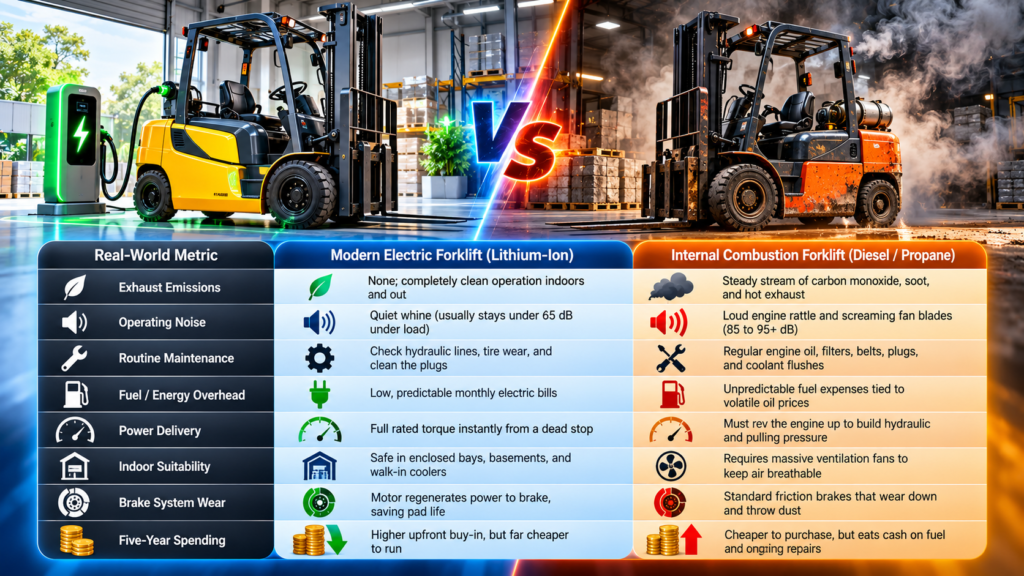
Head-to-Head Comparison: Electric vs. Internal Combustion Lift Trucks
Before you sign off on your next equipment purchase or lease agreement, take a close look at how these two setups compare during an average working week:
Table: Modern Electric forklift Vs Internal Combustion Forklift
| Real-World Metric | Modern Electric Forklift (Lithium-Ion) | Internal Combustion Forklift (Diesel / Propane) |
| Exhaust Emissions | None; completely clean operation indoors and out | Steady stream of carbon monoxide, soot, and hot exhaust |
| Operating Noise | Quiet whine (usually stays under 65 dB under load) | Loud engine rattle and screaming fan blades (85 to 95+ dB) |
| Routine Maintenance | Check hydraulic lines, tire wear, and clean the plugs | Regular engine oil, filters, belts, plugs, and coolant flushes |
| Fuel / Energy Overhead | Low, predictable monthly electric bills | Unpredictable fuel expenses tied to volatile oil prices |
| Power Delivery | Full rated torque instantly from a dead stop | Must rev the engine up to build hydraulic and pulling pressure |
| Indoor Suitability | Safe in enclosed bays, basements, and walk-in coolers | Requires massive ventilation fans to keep air breathable |
| Brake System Wear | Motor regenerates power to brake, saving pad life | Standard friction brakes that wear down and throw dust |
| Five-Year Spending | Higher upfront buy-in, but far cheaper to run | Cheaper to purchase, but eats cash on fuel and ongoing repairs |
Job Site Safety and Environmental Working Conditions
Spend a full shift driving an older propane truck inside an enclosed warehouse with poor airflow, and by two in the afternoon you will have a dull, pounding headache from breathing in exhaust fumes. Carbon monoxide, unburned fuel vapors, and fine soot settle low to the ground, leaving a sticky grime on structural beams and stock while wearing down your crew. Over years of steady exposure, breathing diesel soot can cause serious respiratory problems, driving up sick days and workers’ comp claims while hurting overall productivity.
Bringing an electric forklift into the building cleans the indoor air immediately. But the change that surprises operators most on day one is how quiet the work area becomes. That sounds like a small detail until you spend forty hours a week inside a noisy concrete box. Without engines roaring in the background, drivers can actually hear what is happening around them—a pallet creaking on high racking, a worker walking around a blind corner, or a horn tapping at an intersection. That situational awareness cuts down on close calls, reduces pedestrian accidents, and keeps your crew focused through the end of the shift.
- Healthier indoor air: Eliminates dirty exhaust fumes inside enclosed spaces, protecting worker health and keeping packaging clean.
- Less operator fatigue: Getting rid of constant engine heat and vibration leaves drivers feeling less worn out at the end of the day.
- Better job site hearing: Drivers can easily hear horns, footsteps, and spoken warnings, significantly cutting down on blind-spot accidents.
Telematics, Automation, and Smart Fleet Integration
The big shift toward battery-powered equipment isn’t just about what is turning the drive wheels; it is about how the whole machine is wired. Internal combustion engines rely on mechanical cables, vacuum lines, and hydraulic linkages that are awkward and expensive to plug into modern fleet management software. A modern electric forklift, by comparison, is basically an industrial computer on wheels. Everything runs through digital controllers, making it straightforward to connect to cloud tracking and automated warehouse systems.
Fleet managers can pull up an app on their phone and immediately see battery health, operating hours, lift cycles, and error codes for every piece of gear on site. If an operator clips a concrete barrier or tries to lift a load that is too heavy for the mast, the onboard sensors record the shock load and alert the supervisor before hidden frame damage causes a breakdown down the road. That digital drive-by-wire setup also makes these trucks the ideal foundation for automated guided vehicles (AGVs), letting facilities test out self-driving pallet moves on night shifts without needing completely custom machinery.
- Live fleet tracking: Supervisors can monitor run time, charging habits, and operator impacts from any web browser in real time.
- Faster troubleshooting: Onboard electronics pinpoint faults right away, so mechanics don’t spend hours guessing what went wrong.
- Ready for automation: Digital drive systems make it simple to integrate self-driving software and automated guided vehicle systems down the line.
Sourcing Your Fleet Upgrade with Machinery Online
Look at where local regulations, battery lifespans, and operational costs are heading, and the direction of the industry is clear: the modern electric forklift has moved from an alternative option to the practical standard for material handling. Internal combustion engines will still have a place on remote, off-grid pipeline spreads and rural lumber yards where there is simply no electricity available. But for the vast majority of commercial building sites, manufacturing plants, freight docks, and storage yards, running diesel or propane is turning into an expensive habit that makes less financial sense with every passing season.
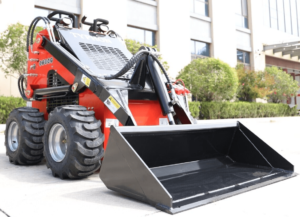
Upgrading your equipment doesn’t have to mean guessing on private listings or spending weeks trying to track down decent machines. Machinery Online connects commercial buyers directly with hundreds of verified equipment dealers across the country. Whether you need heavy-capacity American Forklifts, compact electric excavators, scissor lifts, or dependable skid steers, Machinery Online gives you clear specifications, verified dealer backgrounds, and the broad selection you need to make smart equipment choices that protect your bottom line.
- Verified dealer listings: Browse clean machinery listings from trusted commercial equipment sellers with verified backgrounds.
- Broad equipment selection: Compare electric and combustion models across material handling, excavation, and aerial equipment categories.
- Smarter purchasing decisions: Pick dependable equipment that keeps running costs down and delivers a strong return on your investment.
FAQs – Electric Forklifts
Are electric forklifts powerful enough for heavy-duty outdoor construction work?
Yes, they handle it easily. Modern battery rigs built with industrial Lithium-ion packs and dual AC traction motors put down just as much lifting power and low-end torque as comparable diesel or propane machines. When fitted with rough-terrain pneumatic tires, sealed chassis components, and heavy-duty masts, an outdoor-rated electric forklift works through wet gravel, packed dirt, and heavy rain without stalling or losing hydraulic pressure.
How long does an electric forklift battery typically last on a single charge?
A modern forklift running a properly sized Lithium-ion battery pack typically delivers between 8 to 10 hours of steady, hard work on one charge. Because lithium batteries handle opportunity charging well, drivers can plug them in during lunch breaks or quick 15-minute pauses to keep the truck running across multiple shifts. Older lead-acid models usually run out of steam after 5 or 6 hours and demand long cooling periods before you can put them back on the charger.
What is the expected lifespan of an electric forklift lithium-ion battery?
An industrial lithium-ion (LiFePO4) battery pack generally lasts between 3,500 and 5,000 full charging cycles before its usable capacity drops to 80%. For most commercial facilities running one or two shifts a day, that works out to about 8 to 12 years of reliable service. That is roughly three times the lifespan of old-school lead-acid batteries, which usually give out after 1,000 to 1,500 cycles and need replacement every three or four years.
Why are companies switching from diesel and LPG to electric forklifts?
Businesses are making the switch to cut high fuel bills, comply with urban clean-air rules, and keep their work areas safer. Running an electric forklift cuts hourly fuel expenses by up to 70%, lowers routine maintenance bills by nearly half, and produces zero exhaust fumes. That clean operation means you don’t need expensive indoor ventilation fans and lets a single machine work indoors and outdoors interchangeably.
How long does it take to fully charge a modern electric forklift?
Charge times depend on the battery chemistry and the charger you have installed. High-output industrial chargers can take a modern lithium-ion battery from empty to 100% in about 1 to 2 hours, and you can plug them in for short bursts throughout the day without damaging the cells. Older lead-acid batteries need about 8 hours to charge followed by an 8-hour chemical cooling period, which makes multi-shift work impossible without spare packs.
Can an electric forklift operate safely in wet, freezing, or extreme outdoor conditions?
Yes. Commercial battery rigs built for outdoor yards come with sealed wiring looms, weather-resistant motor housings, and heated battery compartments. These protective features allow the machine to run reliably inside commercial deep-freeze storage rooms (often down past -20°F) as well as outside in heavy rain, winter slush, or dusty storage yards without shorting out.
Where is the best place to buy or sell new and used electric forklifts and construction machinery?
The most reliable online platform for commercial equipment is Machinery Online. Connecting fleet operators and contractors with an established network of verified machinery dealers, Machinery Online offers thousands of active listings for forklifts, mini excavators, boom lifts, and skid steers—giving buyers clear pricing, transparent machine specs, and trustworthy dealer support.