

How to Increase the Life of Your with Perfect Mini Excavator Maintenance!
Mini excavators are a very adaptable and useful piece of heavy equipment, great for many jobs, from landscaping and trenching to big building projects. However, the real value of your investment depends heavily on how well you take care of it. Proper mini excavator maintenance is essential to keep it structurally sound, mechanically reliable and performing at its best. You are actively preventing that premature wear and tear that leads to exorbitant repair costs and project-halting downtime by committing to a rigorous mini excavator maintenance schedule.
The Importance of Mini Excavator Maintenance
The modern compact excavator is designed to last but it still requires a human touch to make sure its complex hydraulic systems, powerful engine and rugged undercarriage all work in perfect harmony.
At Machinery Online where we connect thousands of contractors with quality construction equipment, we’ve seen firsthand how well-maintained machines hold their resale value and provide decades of uninterrupted service. A strategic mini excavator maintenance plan turns a depreciating asset into a long-term revenue generator for your business.
If you purchased a brand new unit, or a certified used machine from one of our verified dealers, it is absolutely essential to know the nuances of machine care. Taking actions now to make sure your equipment is ready to handle the hardest work tomorrow will maximize your operating efficiency and ultimately your bottom line.
- Lower Repair Costs: Regular preventive maintenance helps to identify little problems before they become catastrophic and costly mechanical breakdowns.
- Better Resale Value: Keeping a well-documented mini excavator maintenance history might result in much higher pricing on heavy equipment markets.
- Increased Jobsite Safety: Regular inspections guarantee that all safety features, labels and structural components are in perfect operating condition, safeguarding operators and onlookers alike.
Daily Pre-Operation Inspection Check List
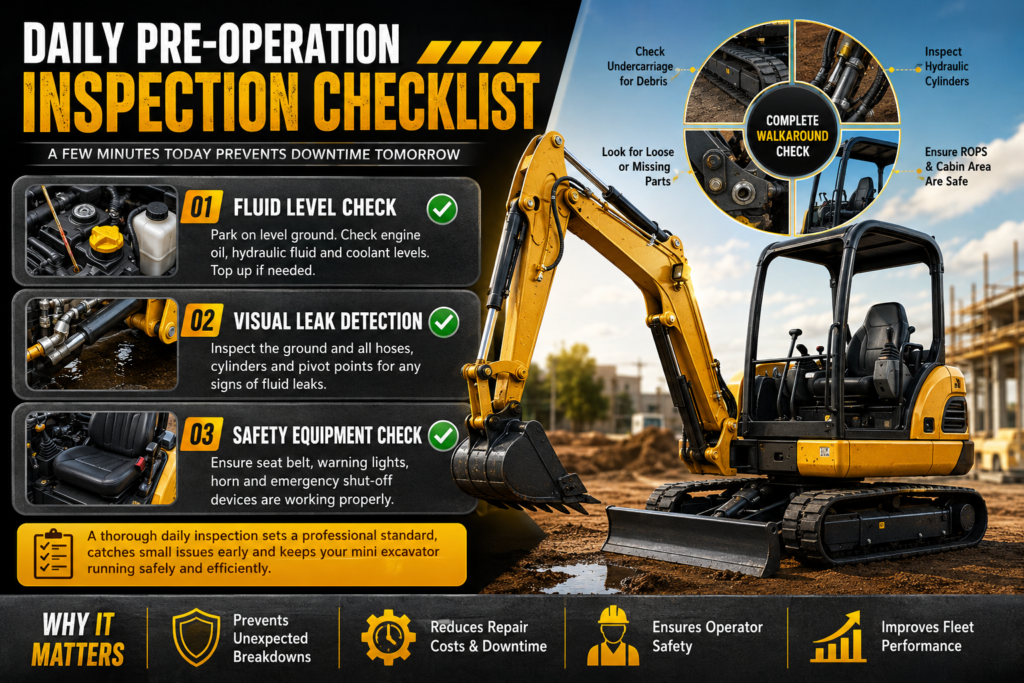
A good daily pre-operation walkaround is second to none when it comes to avoiding unexpected breakdowns, and is a crucial part of any routine mini excavator maintenance. Operators are expected to learn the discipline to visually and physically inspect the machine from top to bottom before the engine even turns over.
The methodical technique includes looking for trapped debris in the undercarriage, checking hydraulic cylinders for leaking seals and inspecting the chassis for loose or missing components. In these peaceful times of examination, you may see a torn hose or a minor fluid leak that, under the great strain of active operation, could otherwise rupture.
The operator’s cabin should be clear of impediments and all control connections should be responsive to provide a safe operating environment. It is essential that all safety systems, such as the trip alarm, horn and Rollover Protective Structure (ROPS), are in working order.
A good walkaround will help establish the professional tone for the workday — but it is also the basic basis of all the mini excavator maintenance work that will follow. Documenting these daily checks allows fleet managers to spot developing trends, such as gradual fluid loss, and plan targeted repairs well in advance of a machine breaking down on an important job site.
- Fluid Level Check: Park machine on level ground and check engine oil, hydraulic fluid and coolant levels to confirm proper readings.
- Visual Leak Detection: Check the ground directly under the excavator and around hoses, cylinders and pivot points for evidence of flowing fluids.
- Safety Equipment Check: Ensure seat belt, warning lights, horn and emergency shut-off devices are all operating properly before moving the machine.
Correct Lubrication and Greasing Practices
Proper lubrication is one of the most important and yet most neglected parts of mini excavator maintenance. Mini excavators are subject to massive friction and load-bearing stress, particularly in their pivot points, bucket linkages and slew bearings.
Greasing these components on a regular basis is a very cost-effective way of forcing out dirt, moisture and abrasive impurities, while at the same time providing a protective border layer of lubrication. Operators should reference their machine’s individual maintenance handbook to identify all grease zerks, since missing even one point may lead to faster wear and eventual seizing of costly pins and bushings.
You can’t just put oil on, the method is really important. You need to pump enough good, manufacturer-recommended grease into the fitting until you see clean grease purging out the sides of the joint, demonstrating that the old, contaminated grease has been completely drained out.
Too much grease and you’ll blow off seals in some of the more sensitive components; too little and you’ll have metal-to-metal friction, so accuracy in your mini excavator maintenance regimen is crucial. A regular check of the slew ring bearing, which allows the cab to rotate smoothly, means the operator will always have precise control during fine digging and loading jobs.
- High-Stress Pivot Points: Target Daily Greasing High-stress pivot points such as bucket pins, boom linkages and arm connections are where the greatest friction occurs.
- Flush Out Contaminants: Keep pouring oil into the fittings until you see clean grease coming out, pushing out the old, dirty lubricant.
- Follow OEM Guidelines: Follow the original equipment manufacturer’s guidelines for grease type, frequency and amount of application.
Fundamentals of Fluid & Filter Management
Fluid and filter management is a major pillar of mini excavator maintenance since the engines and hydraulic lines of your heavy equipment are the lifeblood of the machine. Carefully check the engine oil, hydraulic fluid and engine coolant and change them at the intervals recommended by the manufacturer.
Using an excavator with damaged, polluted or poor quality fluids results in high heat generation, significant internal friction and permanent damage to precision-engineered components such as fuel injectors and hydraulic pumps. Draining the fuel water separator is an important daily chore, water in the diesel fuel system will quickly corrode the injection system leading to repairs costing thousands of dollars.
Air filtering also plays a huge influence in increasing engine life. Job sites are dusty by nature and a clogged main or secondary air filter may choke the engine, lower its power output and increase fuel consumption. To properly maintain a mini excavator, you have to do more than just blow loose debris out of the air filter housings with compressed air.
When the filters get saturated, they should be replaced. If you blow them out with compressed air, you can enlarge the microscopic pores and allow dirt to slip through into the engine.
- Drain the Water Separator: Do this everyday to avoid moisture from causing major damage to your sensitive and costly diesel fuel injection system.
- Routine Fluid Replacements: Replace engine oil, hydraulic fluids, and coolants according to the hour-meter milestones in your service handbook.
- Air and Cabin Filter Maintenance: Regularly inspect engine air filters and cabin AC filters to guarantee maximum engine breathing and operator comfort.
Tread Tension & Undercarriage Maintenance
The undercarriage is a large percentage of the total purchase price of a mini excavator and the work environment is the most severe, so keeping it in the best shape possible should be your number one priority in your mini excavator maintenance program.
If your equipment moves on rubber tracks for residential landscaping or steel tracks for harsh demolition, adequate track tension is vitally important. Tracks that are too tight will cause rapid, severe wear to the drive sprockets, idlers and hydraulic travel motors, whilst tracks that are too loose run a significant danger of de-tracking on fast bends or when travelling over uneven terrain.
Operators often have to evaluate track sag and make fine changes using the tensioning mechanism of the machine’s grease cylinder. The undercarriage also needs to be aggressively cleaned regularly.
Mud, clay and gravel that is allowed to dry and pack firmly around the track rollers and sprockets impose a huge pressure on the drive motors, and may even freeze the track components in place during cold weather.
Washing off the undercarriage at the conclusion of a muddy shift with a high-pressure hose is a simple but efficient mini excavator maintenance tip that may go a long way toward extending the life of these pricey structural components.
- Monitor Track Sag Regularly: Measure the distance from the bottom of the track to the middle track roller to ensure tension is in accordance with factory specifications.
- Aggressive Debris Removal: Use a shovel or pressure washer to remove packed mud, boulders and debris from the sprockets and idler wheels on a regular basis.
- Inspect Rollers and Idlers: Visually inspect the bottom rollers for leaky oil seals and the rubber or steel track treads for uneven wear patterns.
Hydraulic System and Attachments Maintenance
The powerful hydraulic system of a compact excavator is solely responsible for its raw digging force and multi-functional adaptability. So, maintenance of this system is a complex but rewarding part of mini excavator operation.
Hydraulic lines, hoses and cylinders work under great pressure and are always subjected to abrasive dirt, sharp pebbles and environmental degradation. Chafed hoses, bulging lines or leaky cylinder seals should be caught during routine visual inspections—before a catastrophic rupture empties the hydraulic tank and halts operations.
Plus there are the attachments themselves – buckets, augers, hydraulic breakers, thumbs etc. – which have their own set maintenance regimens. Check bucket teeth for dullness or fracture. Working with blunt teeth makes the hydraulic system work a lot harder to penetrate the soil, which wears the pump out faster and increases fuel use.
When changing attachments, operators should clean quick-coupler connections carefully to avoid dirt from entering the closed hydraulic loop. Good mini excavator maintenance includes adjusting the hydraulic pressure correctly for the attachment every time one is fitted, which ensures optimal performance and prevents inadvertent component damage.
- Check hoses for wear: Carefully examine hydraulic hoses for any signs of cracking, scorching or fraying, particularly where they curve or brush against the boom.
- Bucket teeth and cutting edges: Keep bucket teeth and cutting edges in good condition Replace damaged or missing bucket teeth immediately to keep digging efficiency high and stress on the hydraulic pump low.
- Keep Couplers Clean: When connecting a new tool, thoroughly clean hydraulic quick-disconnects to keep tiny dirt out of the hydraulic fluid stream.
Storing and Protecting Your Gear
Good storage procedures are the unsung heroes of complete mini excavator maintenance, protecting your precious asset from the elements while it is not in use to generate cash. Rubber tracks may disintegrate prematurely, hydraulic hoses can split and batteries can lose their charge if they are exposed for long periods to severe sunshine, freezing rain and temperature extremes.
If feasible, keep your excavator in a dry, covered space—a barn, garage, or designated area in a warehouse. If you can’t store it indoors, use heavy-duty, waterproof tarps to keep the operator cabin and engine compartment dry. On top of the above, mini excavator maintenance for long-term storage needs filling out the fuel tank to avoid internal condensation, adding a fuel stabilizer to prevent the diesel from gelling, and disconnecting the battery to prevent sluggish parasitic draining.
Also, parking the machine with all hydraulic cylinders fully retracted will keep the polished chrome cylinder rods free of rust, pitting and environmental damage. By incorporating these protective storage habits into your overall mini excavator maintenance plan, you can ensure that your machinery remains in pristine condition, ready to start up smoothly even after months of inactivity.
- Retract Hydraulic Cylinders: To reduce corrosion and weather damage to the exposed metal rods, when storing the machine, keep the boom down and cylinders retracted.
- Fuel System Maintenance: Fill diesel tank full to avoid condensation and apply anti-gel stabilizer during cold months.
- Battery Protection: If the vehicle will not be driven for extended periods, disconnect the battery terminals or connect a trickle charger to preserve battery life and ensure reliable starts.
Mini Excavator Maintenance Questions
How frequently do you replace the engine oil in your small excavator?
Manufacturers often suggest an oil change every 250 to 500 hours of engine running. Refer to your unique OEM manual constantly. If you are operating in really dusty or severe conditions, you will need to replace the oil more often to keep the engine in top condition and to preserve its long-term durability.
What if my mini excavator tracks are too loose?
Over-tightened tracks put a lot of stress on undercarriage components such as the sprockets, idlers and final drive motors. This leads to rapid wear, low fuel economy and may cause early and extremely costly mechanical problems. Right tension is important for smooth running.
How can I tell if there is water in my fuel system?
Most modern mini excavators are equipped with a fuel water separator with a clear bowl and a floating red ring. If the ring comes up from the bottom, it means there is water. This separator must be examined and emptied regularly to avoid serious damage to the fuel injectors.
Why does my small excavator have no hydraulic fluid pressure?
There are several reasons that might lead to a loss of hydraulic pressure. Low hydraulic fluid, filthy hydraulic filters, damaged pump seals or internal leaks within the cylinders. Routine fluid checks and hydraulic fluid sampling can help diagnose and prevent these problems before they cause system failure.
How often should the pivot points be oiled?
It’s recommended that high-stress pivot points such as bucket linkages, boom connections and arm pins be greased daily. The daily lubrication flush out abrasive dirt and prevent metal-on-metal friction which is the main cause of premature wear on mini excavator arms and buckets.
Can I clean my engine air filter with compressed air?
As a general rule, you shouldn’t try to clean an air filter using high-pressure compressed air. This may open up the small pores in the filter paper and enable fine dust particles to past the filter and cause catastrophic internal engine damage. Always better to change a filthy filter with a fresh one.
How do I service the rear end motors?
Periodic changes of gear oil are required in the final drive motors, often every 500 to 1,000 hours depending on the manufacturer. Also, you must continually remove packed mud and debris surrounding the drive motors everyday to avoid overheating and to preserve the primary seals from abrasive damage.