Electric vs Diesel Forklifts : Total Cost of Ownership (TCO) Breakdown
As you grow your material handling fleet, the optimal purchase choice means going far beyond the initial sticker price. Warehouse managers, building site managers and logistics coordinators continually balance the pros and disadvantages of numerous power sources to optimize their operating budget. Understanding the Electric vs Diesel Forklifts TCO (Total Cost of Ownership) is the first and the most important step in determining which equipment will provide the maximum return on investment during its lifetime.
A diesel forklift sounds like a beast of a machine that can handle the toughest outside terrain, but an electric forklift is the quiet, emission-free, and very efficient option that is changing the face of contemporary interior warehousing. This is a conundrum that buyers face every day at machines Online, where we link contractors with excellent machines. If you’re exploring our huge live inventory for a classic heavy-duty diesel workhorse, or you’re looking up the latest Typhon Vigor 3.0 Blue Electric Forklift, it’s vital to consider the long-term financial implications of your decision.
The Total Cost of Ownership idea is every single dollar you will spend on the equipment from the time it is delivered to your location until the time you sell it or retire it. This comprises the purchase price, daily fuel/energy usage, regular and unexpected repairs, operator ergonomics and resale value.
Companies often make the error of selecting a forklift on the basis of the initial capital needed, and entirely neglecting the ongoing costs that will progressively eat away at their profitability month after month. An in-depth TCO analysis of Electric vs Diesel Forklifts will allow you to tactically match your equipment decisions with your company environment, sustainability objectives and budgetary limitations.
Let’s have a look at the precise cost categories that make up the real cost of operating these vital devices.
Initial Purchase Price & Upfront Investment
The first financial obstacle that each corporation has to overcome when purchasing new equipment is the initial capital expenditure, and this is where the Electric vs Diesel Forklifts TCO assessment starts. Historically, the initial purchase price for ICE forklifts, especially diesel forklifts, has been much cheaper than that of electric forklifts.
The price difference makes diesel forklifts very appealing to enterprises who are tight on capital expenditures in the short term, or have the need to acquire numerous units at one time. A diesel forklift is really just one complete machine and engine that’s ready to go as soon as you fill the fuel tank. With an electric forklift, in contrast, you purchase the equipment, and you buy the very costly industrial battery (lead-acid or sophisticated lithium-ion) and infrastructure needed to charge it.
But the heavy equipment business is changing fast. The battery and charger are what make the initial cost of an electric vehicle so high, but advances in lithium-ion technology and improved production scale are steadily driving these costs down.
It also benefits from low pricing for new and used equipment available on sites such as Machinery Online and helps to cushion the first financial shock. For example, you may choose the Typhon Vigor 3.0, a high-end electric vehicle we sell on our marketplace; you might have to pay a little more now, but it paves the way for enormous savings down the road. When considering this step of the Total Cost of Ownership for Electric versus Diesel Forklifts, it’s important to note that the purchase price is merely the tip of the iceberg.
- Upfront Cost Gap: Diesel forklifts are often much cheaper upfront, providing companies with upfront capital savings over expensive electric batteries and charging infrastructure.
- Investment in Infrastructure: Electric forklifts need a specific charging room and the electrical infrastructure should be assessed. If you use standard lead-acid batteries, you may need special ventilation.
- Financing & Marketplace Options: A reliable marketplace like Machinery Online can help you locate amazing prices on new and used machines, balancing out the limitations of the original expenditure.
Costs of Consumption of Fuel and Energy
The most apparent recurring cost after the forklift is in operation on the warehouse floor or construction site is the daily energy expenditure. In the Electric vs Diesel Forklifts TCO debate, energy consumption is usually the point when electric forklifts begin shining tremendously above their diesel counterparts.
Diesel fuel costs are famously variable, influenced by worldwide market changes, geopolitical tensions and local taxation. If you run a fleet of diesel forklifts, your operational budget is always at the mercy of the pump, with these fuel expenses adding up at an alarming pace, particularly in high-usage, multi-shift operations. Also, diesel engines burn fuel even while they are idle, wasting energy during normal operating stops.
Electricity however is often significantly cheaper and its cost is much more constant over time. An electric forklift may be charged overnight during times when electricity rates are at a low level, thereby cutting the cost per hour of operation considerably.
Industry studies often demonstrate that the energy cost to operate an electric forklift may be a fraction of the cost of the fuel needed to accomplish the same amount of work.
The energy savings are obvious, but electric versions do need charging on a schedule that might stop your production if you don’t have fast-charging lithium-ion batteries or backup batteries to hot-swap in. This consistent and reduced cost of power is a primary driver of the transition to electric equipment in the current logistics scene.
- Price Volatility: Diesel fuel prices vary widely depending on the global energy market. This may make long-term budgeting difficult and frequently costly.
- Less Expensive Energy Source: Electricity is far less expensive and more predictable, allowing for substantial operating savings throughout the life of the device.
- Idling Waste: Electric forklifts use almost no power when stopped, whereas diesel engines keep burning fuel and wasting money when idling at the work site.
Maintenance and Repair Costs
When considering the TCO of Electric vs Diesel Forklifts, maintenance and repair costs are a huge difference between the two technologies. Diesel Forklifts are complicated mechanical creatures.
They use internal combustion engines with hundreds of moving parts . All of which create great heat and friction . So, they must be maintained rigorously and often on a preventive maintenance program.
You will have to pay periodically for engine oil changes, transmission fluid flushes, spark plug changes, air filters, fuel filters and cooling system maintenance. If you neglect these maintenance plans, you risk a catastrophic and very costly engine failure that will cause long downtimes and affect your bottom line.
By comparison, electric forklifts are marvels of mechanical simplicity. Compared to an internal combustion engine, an electric motor has comparatively few moving parts. No engine oil to replace, no radiator to clean, no exhaust system to fix.
The primary aspects of electric forklift maintenance include doing regular inspections, lubricating the mast, inspecting the hydraulics and maintaining the battery. Maintenance Unlike old lead-acid batteries, which need frequent watering and equalization, new lithium-ion batteries are almost maintenance free.
Electric forklifts have significantly fewer parts that wear out and are subject to wear and tear, which means that they spend much less time in the mechanic’s bay and much more time carrying pallets.
- Mechanical Complexity: Diesel engines include hundreds of moving parts that need continuous maintenance, filter replacements and intense mechanical monitoring.
- Easier Maintenance: Electric motors do not have the usual engine fluids and exhaust systems, which may save regular maintenance expenses by as much as 50% in various operating circumstances.
- Reduced Downtime: Less moving parts, means less unexpected malfunctions that might otherwise affect electric forklifts to ensure better operational uptime on the warehouse floor.
Lifespan, Depreciation And Resale Price
The amount of time a forklift can work effectively before it costs more to repair than to replace is a key component of the Electric vs Diesel Forklifts TCO. Generally, electric forklifts have a longer operational lifetime than diesel versions.
A diesel forklift is known for its strong vibrations and intense heat and throughout the years, the chassis and other surrounding components take a lot of physical stress. This constant wear and tear ages the unit quicker, therefore an electric forklift may not last as long as a diesel one economically.
When it’s time to modernize your fleet, the resale value of your equipment on sites like Machinery Online is a key part of recuperating your investment. Electric forklifts tend to depreciate quite well as long as the battery is in excellent shape or the new owner knows they are buying for the chassis and engine.
Global environmental restrictions are tightening, and the demand for emission-free equipment in the secondary market is soaring. Diesel forklifts are still quite popular in heavy outdoor applications but are subject to more and more regulations which might hurt their long-term depreciation curve. To make a sensible buy now, you need to know how these equipment mature.
- Vibration and Wear: Diesel engines’ severe vibrations and extreme heat cause quicker depreciation of the overall machine body and interior components.
- Longer Operating Hours: Electric forklifts often have longer operating hours in their lifespan because of the smooth and low-stress functioning of electric motors.
- Strong Resale Market: The rising inclination towards green logistics means that well-maintained electric forklifts earn good resale values on secondary equipment markets.
Operational Environment and Unseen Costs
Trying to correctly evaluate the Electric vs Diesel Forklifts TCO doesn’t take into account the hidden expenses of your surroundings. Diesel forklifts release harmful exhaust emissions such as carbon monoxide and nitrogen oxides.
Running a diesel forklift inside without enormous, costly industrial ventilation equipment is a serious health danger to your staff and might mean significant penalties from workplace safety officials. Diesel engines are also quite noisy, which may cause operator fatigue and make it difficult to communicate in a warehouse, leading to expensive accidents.
Electric forklifts run quietly and have no point-of-use emissions. This makes them the gold standard for interior areas, cold storage and establishments that deal with food or medicines.
The hidden financial advantages of electric vehicles include higher employee morale, fewer sick days and no need to buy costly warehouse HVAC exhaust systems. However, if you’re working outside in the mud, rain, and uneven terrain, you will appreciate the tough durability and high ground clearance of a diesel forklift, which will save you the hidden expenses of continuously fixing an electric forklift that’s not designed for adverse weather conditions.
- Zero emissions: Zero emissions electric versions maintain the interior air quality and eliminate the need for costly warehouse ventilation renovations for diesel smells.
- Reduce Noise Pollution: Electric motors are quiet, which minimizes operator fatigue and improves ambient communication, thereby enhancing overall workplace safety.
- Terrain Suitability: Electric versions’ Achilles’ heel is their susceptibility to extreme outside conditions; diesel is the king of tough, damp and uneven construction yards.
The Final TCO Comparison
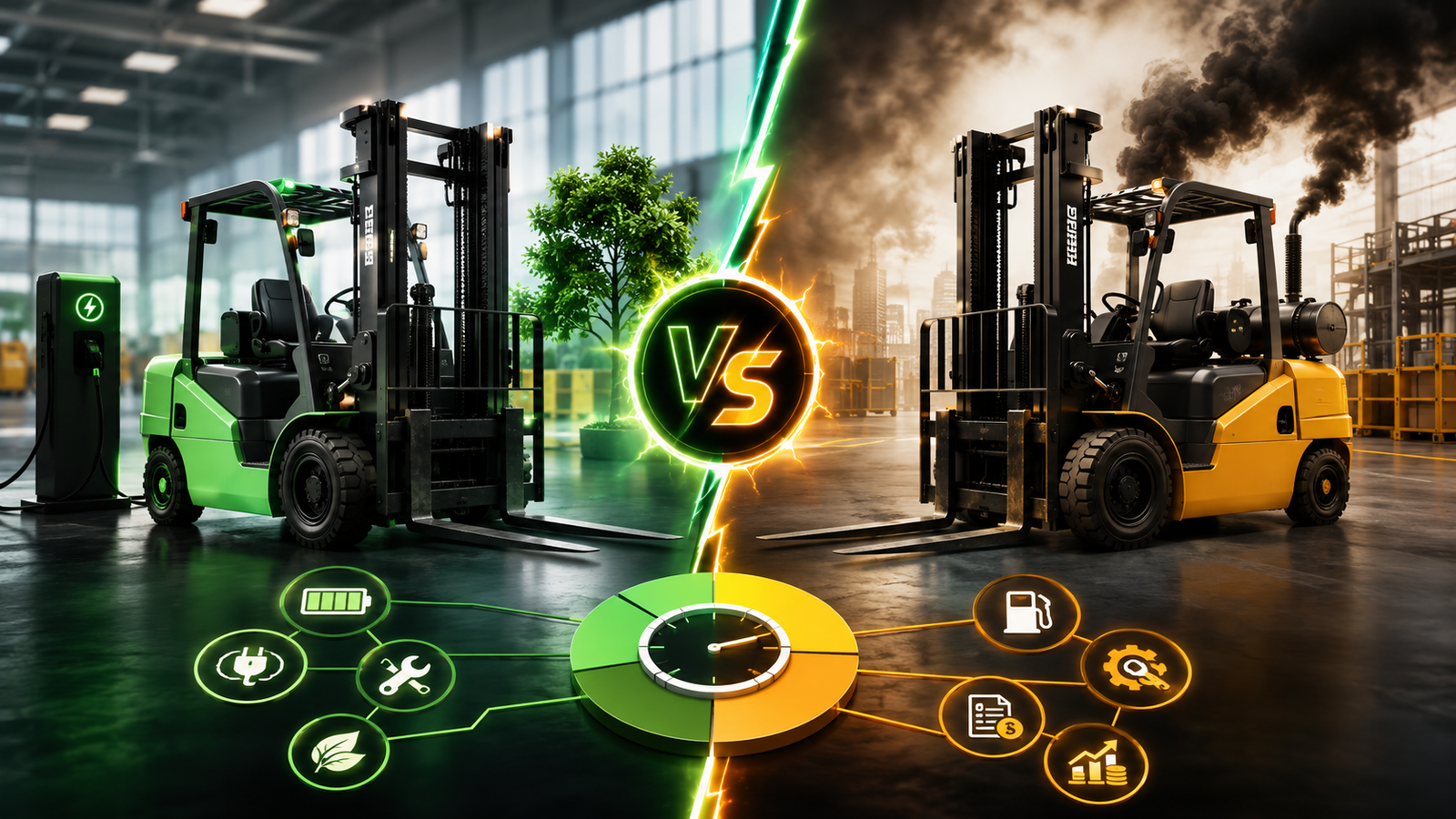
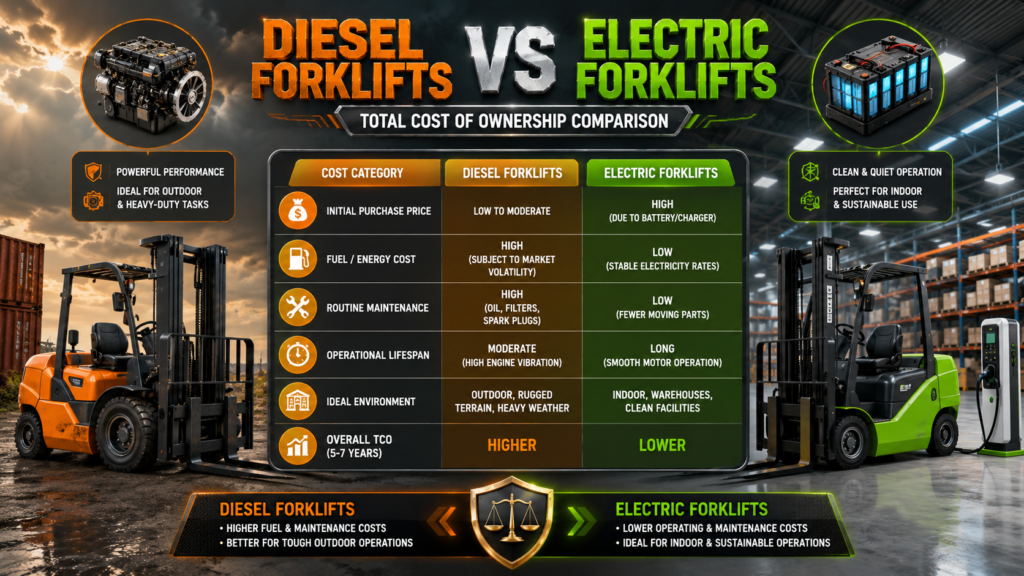
To get a true picture of the Electric vs Diesel Forklifts TCO it’s helpful to see the facts side-by-side. The financial trajectory of both forms of power throughout their life-cycle is summarized in the table below. Considering these elements in detail, customers on equipment Online are able to make well-informed decisions on the equipment that best suits their fiscal goals.
- Upfront Cost versus Long-term Savings: Discover how the initial pain of the power purchase is countered by green signs in recurring costs.
- Maintenance Divergence: The mechanical simplicity of electric is directly associated with the low maintenance rating.
- Application is Key: You can see from the chart that cost varies greatly based on whether the machine is utilized inside or outside.
| Cost Category | Diesel Forklifts | Electric Forklifts |
| Initial Purchase Price | Low to Moderate | High (Due to Battery/Charger) |
| Fuel / Energy Cost | High (Subject to market volatility) | Low (Stable electricity rates) |
| Routine Maintenance | High (Oil, filters, spark plugs) | Low (Fewer moving parts) |
| Operational Lifespan | Moderate (High engine vibration) | Long (Smooth motor operation) |
| Ideal Environment | Outdoor, rugged terrain, heavy weather | Indoor, warehouses, clean facilities |
| Overall TCO (5-7 Years) | Higher | Lower |
FAQs – Electric vs Diesel Forklifts
Which forklift has lower running costs?
The Total Cost of Ownership of Electric Forklifts is always cheaper over 5 to 7 years. The big savings from lower power, less maintenance and fewer replacement parts readily balance the higher initial purchase price of the battery and charger.
Are Electric Forklifts Best for Small Indoor Warehouses
Of course. Electric forklifts are the best option for inside locations because to their lack of exhaust emissions, tight turning radiuses, and quiet operation. They guarantee the best indoor air quality and the safety of workers in restricted spaces.
What is the charging time for an electric forklift battery?
Traditional lead-acid batteries often need 8 hours to charge and then 8 hours to cool down. Modern lithium ion batteries, however, may be “opportunity charged” during lunch breaks and returned to full charge in just 1 to 2 hours, dramatically enhancing operational up time.
Are diesel forklifts more powerful than electric?
Yes historically. Diesel engines provide tremendous amounts of torque , which is suitable for moving very big loads ( frequently more than 10 tons ) over rough ground outside . But in the present market heavy-duty electric versions are quickly reducing this performance disparity.
Are diesel forklifts more affordable to buy?
Yes The initial capital necessary to acquire a diesel forklift is much cheaper since you don’t have to purchase a pricey industrial battery and charging station. This appeals to firms with constrained immediate finances.
Are electric forklifts safe for outdoor usage?
Electric forklifts are generally meant for indoor operation however many newer versions are sealed and approved for light outside use on paved surfaces. However, diesel is a safer and more durable solution for prolonged running in muck, severe weather or tough construction terrain.
What is the difference in maintenance between lithium-ion and lead-acid batteries?
Lead-acid batteries need to be watered regularly, terminals cleaned and equalizing charges applied to avoid degeneration. Lithium-ion batteries need less maintenance and provide a “plug and play” solution and longer overall lifetime.
Conclusion: Choosing the Right Option for Your Fleet
Ultimately, the decision between the two comes down to knowing the Electric vs Diesel Forklifts TCO in relation to your individual company operations. If your regular work involves a dirty, rainy and rough outdoor setting, with constant heavy lifting, the sheer power, durability and cheap initial cost of a diesel forklift make it the practical option.
If your organization is in a warehouse, distribution center or clean manufacturing facility, however, the electric forklift is definitely the better investment.
The initial expense of an electric model may be a shock to the wallet at first, but the big savings on energy costs, lack of expensive engine maintenance and the development of a safer, quieter working environment make it a wonderful long-term asset.
At Machinery Online we are passionate about matching you with the best quality heavy equipment to fit your specific requirements. Whether you’re seeking a dependable old diesel workhorse or transitioning to the clean efficiency of a Typhon electric vehicle, taking the time to analyze your total cost of ownership will ensure that your fleet pushes your company ahead, financially and sustainably.