It’s Not Just a Shovel on Tracks.
If you ask the average person what a mini digger does, they’ll probably shrug and say, “It digs holes.” And they aren’t wrong. But if you ask a seasoned contractor or a landscaper, you’ll receive a very different answer.
The reality of modern construction and property maintenance is that labor is expensive and backs are fragile. The mini digger solves both problems. It fits through a garden gate, runs all day on a few gallons of diesel, and does the work of ten men with shovels.
In this guide, we’re going to break down exactly what this machine is capable of. We aren’t just listing “digging.” We are looking at the specific, real-world applications that make this machine the MVP of the job site.
Sector 1: Residential Construction & Renovation
For most mini diggers, this is their primary function. The footprint of a machine like the Typhon Stomp X1300 allows it to work in tight backyards where a full-sized backhoe would crush the driveway and ruin the lawn.
1. Foundation and Footing excavations
You can’t build an extension without a solid base. A mini digger is precise enough to cut footings for a garage or home addition without over-excavating. You can cut a clean, square trench that saves you money on concrete later (because you aren’t filling a sloppy, oversized hole).
2. Demolition of Small Structures
Need to take down a rotting detached garage or an old porch?
- The Old Way: Sledgehammers, pry bars, and three days of sweat.
- The Mini Digger Way: Use the bucket (or a thumb attachment) to pull the roof structure down safely. You can push walls over, crush the debris into manageable pieces, and load it straight into the skip.
3. Utility Trenching
Whether it’s running a new sewer line, a water main, or an electrical conduit to a workshop, trenching is what these machines were born to do. With a narrow “trenching bucket” (usually 12 inches or less), you minimize the mess. You dig exactly what you need, lay the pipe, and backfill.
Sector 2: Landscaping and Garden Design
Landscapers are probably the biggest users of mini diggers today. It’s not just about moving dirt; it’s about sculpting the land.
4. Grading and Leveling
Creating a flat pad for a patio or a new lawn is an art form. Using a grading bucket (a wide bucket with a smooth edge), you can shave off high spots and fill in low spots. The machine allows you to spread topsoil evenly in minutes, a job that takes hours by hand.
5. Rock Walls and Hardscaping
If you are building a retaining wall with large boulders or heavy limestone blocks, you cannot lift them by hand.
- The Hydraulic Thumb Advantage: With a thumb attachment, the mini digger acts like a giant hand. You can pick up a 500lb rock, rotate it, and place it gently into position. It turns backbreaking labor into a game of Tetris.
6. Stump Removal
Anyone who has tried to dig out a tree stump with a mattock knows it is misery. A mini digger makes short work of it.
- Technique: You dig a trench around the perimeter to sever the roots, then reach under the stump with the bucket teeth and pop it out like a loose tooth.
7. Pool and Pond Excavation
Digging a swimming pool or a koi pond requires moving serious volume. A mini digger can navigate the tight access routes of a suburban backyard, dig the complex shapes and shelves required for a pond, and load the spoil into a dumper.
Sector 3: Agriculture and Farming
Farmers are masters of efficiency. If a machine doesn’t pay for itself, it’s gone. Mini diggers have found a permanent home on many farms.
8. Fence Post Installation
Fencing is a never-ending job on a farm.
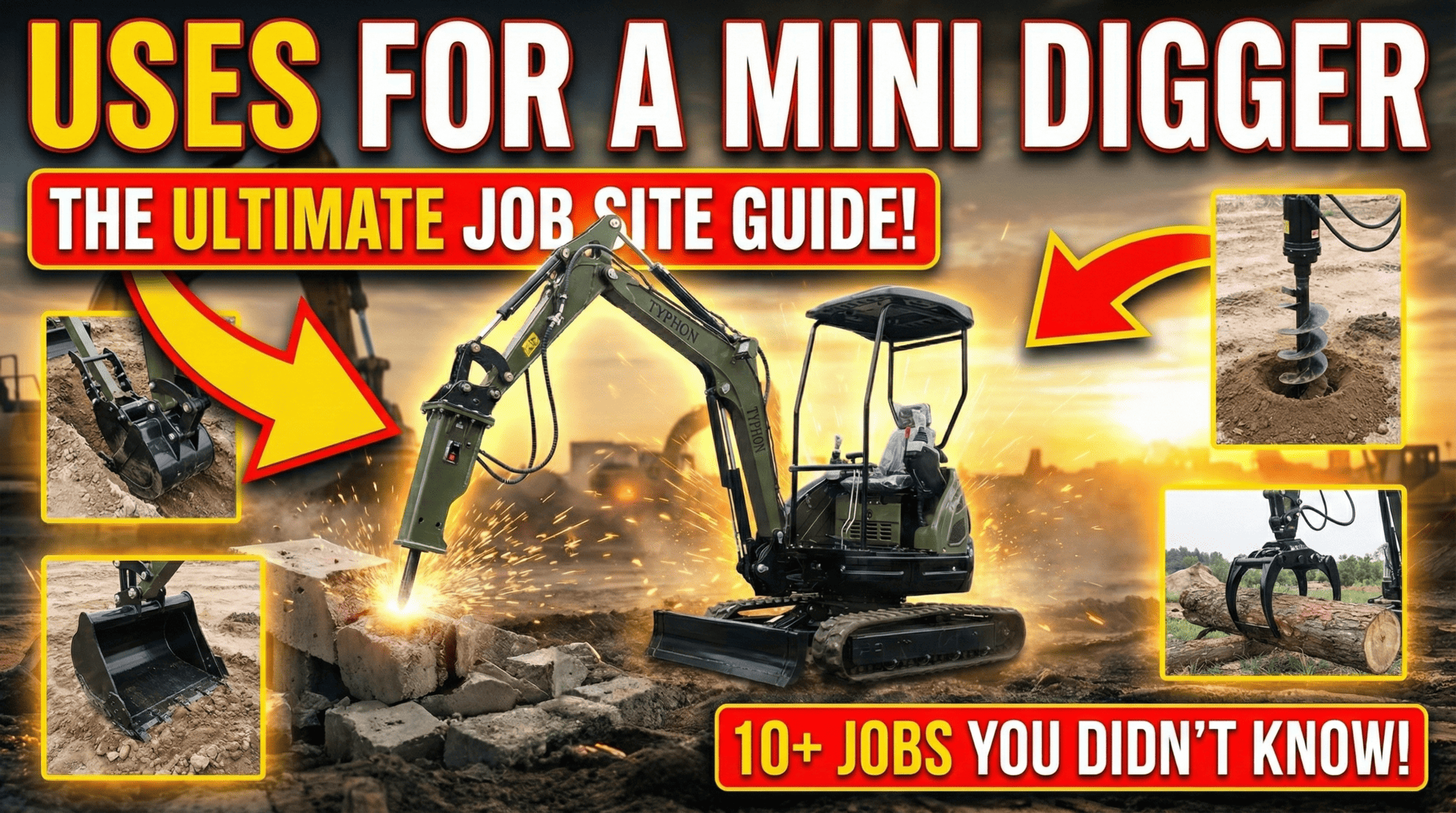
- The Auger Attachment: Instead of digging, you swap the bucket for an auger drive. You can drill perfect, plumb holes for fence posts through clay and rocky soil. A single operator can drill hundreds of holes in a day.
9. Ditch Cleaning
Drainage ditches get clogged with silt and weeds. A mini digger can straddle the ditch (or sit on one side) and use a bucket to scoop out the muck, restoring water flow to the fields.
10. Brush -clearing
With a flail mower or a rake attachment, a mini digger becomes a land-clearing machine. It can reach over fences or down steep embankments to clear brambles and invasive brush that a tractor can’t reach safely.
Analysis: Manpower vs. Machine Power
Let’s look at the numbers. Why does it make financial sense to use a mini digger for these jobs?
Efficiency Comparison Table
| Task | Manual Labor (2 Workers) | Mini Digger (1 Operator) | The “Why” |
| Digging a 50ft Trench (3ft deep) | 8 – 10 Hours | 1 Hour | Humans tire out; hydraulics don’t. |
| Removing a Tree Stump (12″ dia) | 4 Hours (Mattocks/Axes) | 20 Minutes | Leverage breaks roots instantly. |
| Loading 5 Tons of Rubble | 5 Hours (Wheelbarrows) | 45 Minutes | Lifting power vs. shovel capacity. |
| Drilling 20 Fence Post Holes | 6 Hours (Hand Auger) | 1 Hour (Hydraulic Auger) | Down-pressure drills through hardpan. |
The “Typhon” Factor: Choosing the Right Tool
Not all mini diggers are the same. When looking at models like the Typhon Terror XIX or Stomp, you are looking at specific features that enable these uses.
- Zero Tail Swing: This is critical for residential work. It means the back of the cab doesn’t stick out beyond the tracks when you rotate. You can work right up against a house wall without worrying about swinging into the brickwork.
- Retractable Tracks: Some Typhon models allow you to suck the tracks in to fit through a narrow gate (sometimes as narrow as 28 inches) and then expand them back out for stability once you are in the work zone.
Advanced Uses: Things You Didn’t Know It Could Do
Here are a few “pro tips” for uses that often get overlooked.
Concrete Mixing
You can buy a mixing bucket attachment. You scoop up the sand and gravel, add the cement and water, and the bucket mixes it for you. You then drive to the pour site and dump the wet concrete exactly where you need it. No wheelbarrows required.
Driving Posts
Just as you can drill holes, you can also use a post pounder attachment (or sometimes just the bottom of the bucket if you are careful) to drive wooden stakes or metal T-posts into the ground.
Snow Removal
In the winter, the mini digger doesn’t have to hibernate. With a simple blade attachment or just the grading bucket, it is excellent for clearing snow from long driveways or parking lots, especially where the snow is piled high and needs to be lifted and moved, not just pushed.
Conclusion: The Ultimate Investment
When you look at the list of uses—from digging foundations to clearing snow, from planting trees to demolishing sheds—it becomes clear why the mini digger is the fastest-growing segment in construction machinery.
It empowers a single person to do the work of a crew. It turns “impossible” weekend projects into manageable afternoon tasks. Whether you are running a business or managing a large property, a mini digger isn’t a luxury; it’s a force multiplier.
Ready to start digging?
Don’t just buy a machine; buy a solution. Look for a mini excavator that supports the attachments you need for your specific jobs. Check out the Typhon Machinery lineup to see how affordable professional-grade power can be.
Frequently Asked Questions (FAQ)
Q: Do I need a license to operate a mini digger on my own property? A: Generally, no. If you are on private land, you can operate it yourself. However, if you are working on public roads or commercial sites, you may need operator certification or a hoisting license depending on your local laws.
Q: Can a mini digger lift heavy objects? A: Yes, but you must respect the “tipping load.” A 1.5-ton machine can usually lift around 500-800 lbs close to the tracks. However, as you extend the boom further out, that capacity drops significantly. Always check the load chart on your specific machine (like the sticker inside the Typhon cab).
Q: How deep can a mini digger dig? A: It depends on the size. A micro digger (0.8 ton) might dig 5-6 feet deep. A standard 2-ton mini (like the Typhon Terror) can usually dig around 7-8 feet deep. Larger 3.5-ton machines can go 10-11 feet.
Q: Rubber tracks vs. Steel tracks? A: For 90% of mini digger uses, rubber tracks are superior. They don’t damage pavement or lawns, they are quieter, and they provide a smoother ride. Steel tracks are only really needed for jagged rock work or demolition sites with sharp rebar.
Q: Is it hard to learn? A: The controls (ISO pattern) are intuitive. The left joystick controls the swing and the stick (forearm), and the right joystick controls the boom (up/down) and the bucket (curl/dump). most people can dig a hole within an hour of practice. Becoming smooth and fast takes time, but basic proficiency is quick to pick up