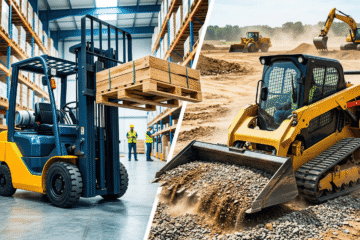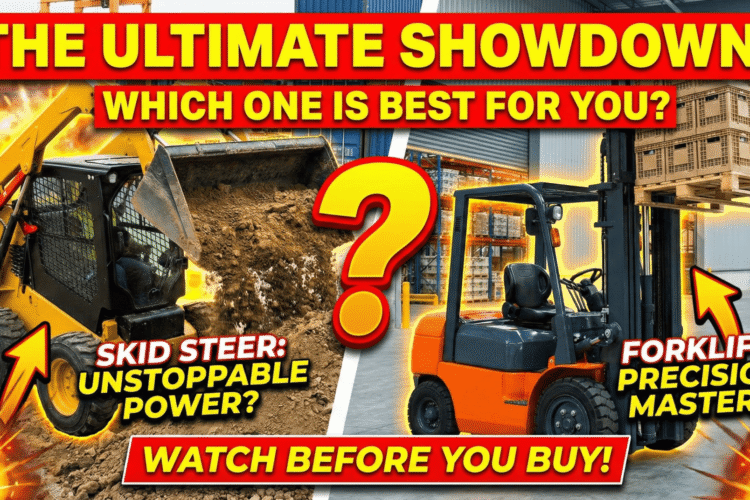
Skid Steer and Forklift: Discover the key differences between these powerful machines!
What is the Difference Between Skid Steer and Forklift?
Whether you are running an industrial site or a construction project, building your business starts with choosing the right heavy machinery. Material handling machinery is a crucial component in this context. Among the most popular choices for such equipment are skid steers and forklifts. Although, their functionality may appear to be the same, these are in fact two different machines designed for different types of locations.
At Machinery.online, we realize that choosing between a skid steer and forklift might be a factor that changes your operational efficiency and even the financial side of your business. Therefore, in this article, we will be discussing “skid steer vs forklift” and looking at their different features, main application areas, and how to pick the right one for your location.
Difference Between Skid Steer and Forklift:
Skid Steer Loader: A Small but Mighty Machine
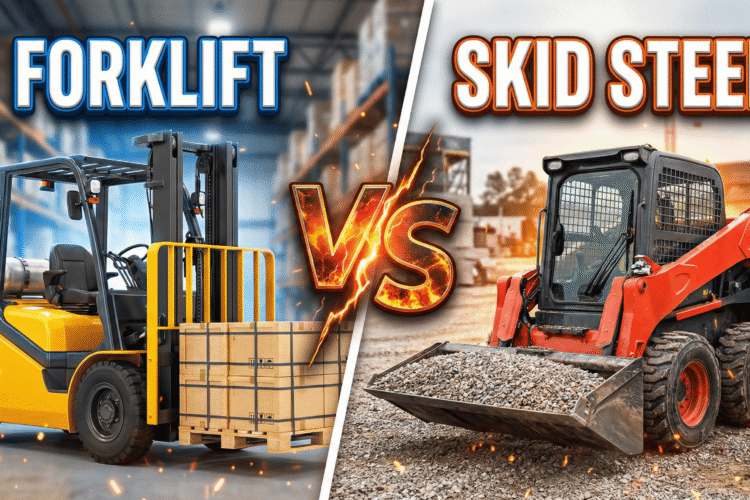
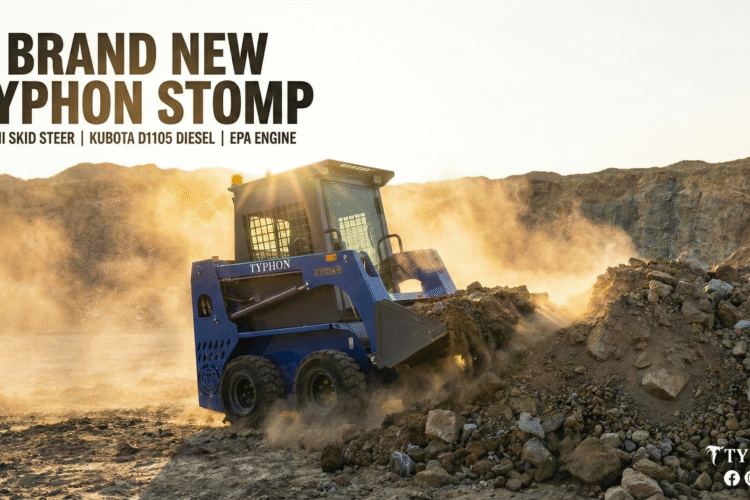
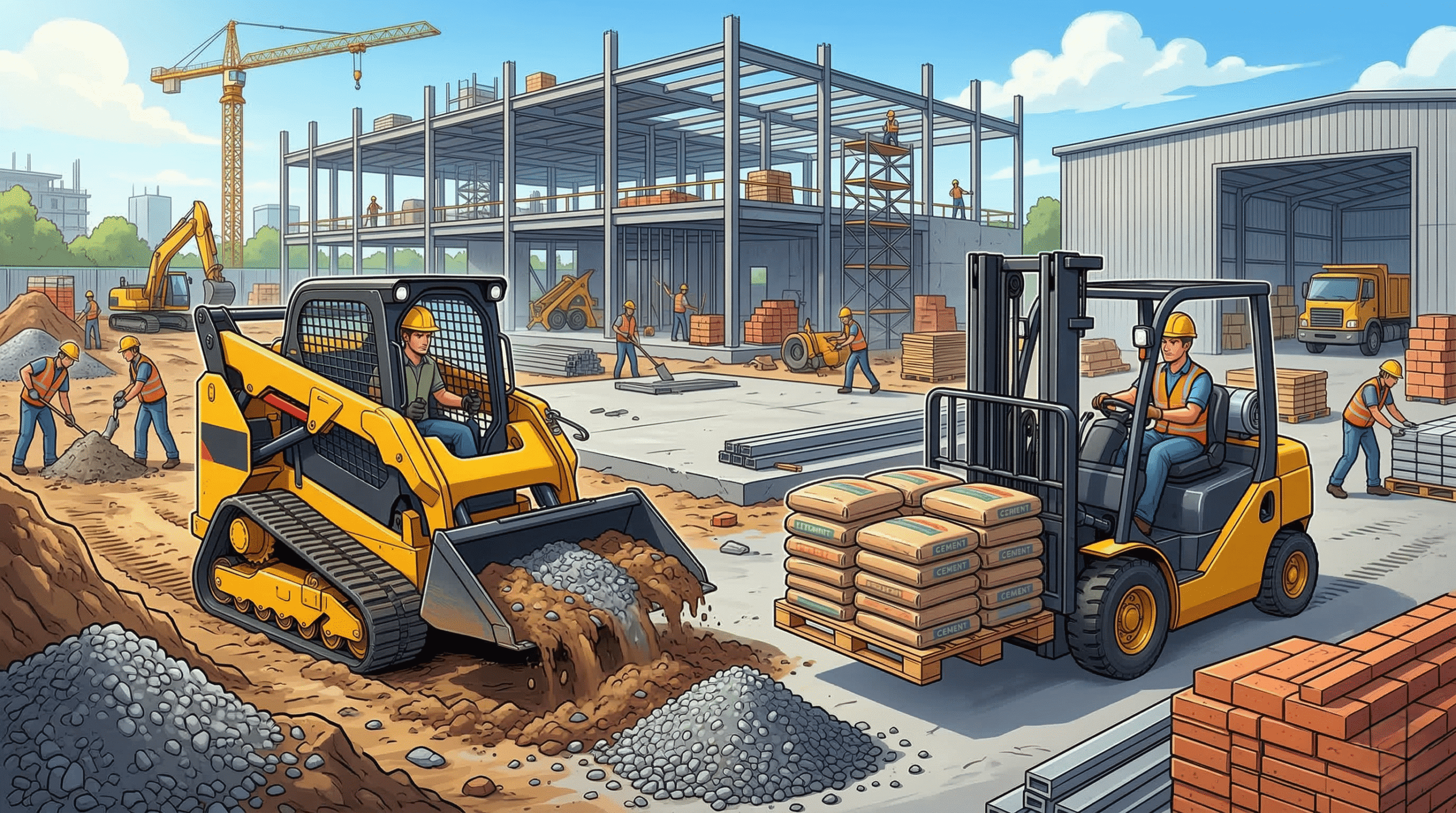
The skid steer loader is a small, engine-driven vehicle which features lift arms that can be adapted with a large number of labor-saving appliances. The term “skid steer” is derived from its unusual steering system.
The wheels or tracks on each side are locked together to move in synchronization, but at the same time, they can be controlled independently. To make the machine turn, the operator will turn up the speed of the wheels on one side and at the same time, the machine is “skidded” towards the opposite direction.
Some of the main features of Skid Steers:
- Zero-Radius Turning: Since the wheels can rotate in opposite directions, a skid steer can even turn within its own footprint, which is incredibly useful in very limited spaces.
- Attachment Versatility: The capability of a skid steer extends way beyond simply lifting; with the suitable attachment, it can be transformed into a digger, a sweeper, a snow blower, or even a concrete breaker.
- All-Terrain Capabilities: Skid steers come in both wheeled and tracked versions, and consequently, they perform better than regular wheeled ones when the surface is uneven, muddy, or sandy.
The Forklift: Vertical Precision Master
On the other hand, a forklift is a kind of industrial truck that is commonly utilized for lifting and transporting materials in short distances. The main recognizable features of a forklift are the vertical mast and the fork attachment with two prongs.
Although there are some models that are built for rough terrain, most of them are made for flat and stable surfaces, such as warehouse floors or paved shipping yards.
Highlights of Forklifts are:
- High Vertical Lift: Forklifts are capable of lifting and stacking loads to very high levels, which is way beyond the reach of most skid steers. This provides a very efficient use of vertical storage space.
- Precision Handling: Rear-wheel steering (usual) coupled with hydraulic controls offers the operator great accuracy in positioning the palletized goods.
- Higher Lift Capacities: Regular forklifts generally have lifting capacities that at least match the top performance of skid steers, and the heavy-duty models can lift tens of thousands of pounds.
Direct Comparison: Skid Steer vs Forklift
It might help you visualize the differences between these two machines if you first see how they stack up against each other in big-picture terms:
Table: Difference Between Skid Steer and Forklift
| Feature | Skid Steer Loader | Industrial Forklift |
| Primary Function | Multi-purpose / Earthmoving | Lifting / Stacking Pallets |
| Best Terrain | Rough, uneven, mud, or snow | Flat, level, concrete, or asphalt |
| Maneuverability | Zero-turn radius (pivots in place) | Wide turning circle (rear-steer) |
| Lift Mechanism | Radial or Vertical lift arms | Telescoping vertical mast |
| Versatility | Extremely high (30+ attachments) | Low (primarily forks/extensions) |
| Operator Visibility | Good (but limited by lift arms) | Excellent (clear view of forks) |

Space Constraints and Maneuverability
While you are walking through the difference between skid steer and forklift for your project, remember that layout is the first factor to consider.
- Tight Indoor Aisles: Forklifts are a must in warehouse environments especially if the aisles are tight. It is true they have a wider turning circle than skid steers but their slim profiles are made precisely for moving between racking systems.
- Confined Outdoor Sites: If you are working in a small backyard or a very tight construction area where there are many obstacles, the skid steer is unbeatable in that situation because of its 360-degree on-the-spot pivoting ability.
- Surface Impact: Skidding on surfaces can cause damage to finished ones. If your working environment is a pristine warehouse floor, it is better to choose a forklift that has smooth steering so that tire marks and floor damages are not caused.
Terrain and Environmental Suitability
More often than not, the type of surface located under your machine’s tires (or tracks) will be the deciding factor for you.
- Outdoor Construction: A typical construction site is not level. A skid steer, especially the tracked one, is engineered in such a way that it can work on slopes, rocks, and mud without losing stability.
- Indoor Warehousing: Forklifts generally perform best on “hardened” surfaces. The main type of tires used for indoor forklifts is cushion tires which provide excellent grip on smooth concrete but would get stuck right away if the surface happens to be soft soil.
- Weather Conditions: A skid steer is a machine which can be used all year round. With the attachment of a snow blower or blade, it becomes something which everyone counts on during the winter season. Forklifts are basically meant for indoor use only or dry, paved areas outdoors when the weather is not good.
Load Handling: Pallets vs. Loose Materials
The type of operation is as important as the location.
- The Pallet Specialist: Forklifts are the best option when it comes to handling palletized goods 100% of the time. The mast remains vertical all the time which means that the load is still stable when it is lifted up.
- The Bulk Material Specialist: Moving dirt, gravel, mulch, or scrap will need a skid steer equipped with a bucket. Although a skid steer is able to utilize pallet forks, it is not as stable at heights as a dedicated forklift.
- Lift Height Requirements: A typical skid steer has a lifting range between 8 and 12 feet. In case your pallet racks are 20 feet high, then a forklift (or a reach truck) is your only safe bet.
Cost Analysis: Upfront vs. Long-Term Value
Heavy equipment budgeting means going beyond the initial price.
- Initial Investment: Generally, industrial forklifts have a lower price at the entry point than mid-sized skid steers. But at the same time, the price of a skid steer is a reflection of its hydraulic complexity and the power it possesses.
- Operational Savings: There is a good chance that a skid steer could replace several different machines at once (a small excavator, a sweeper, and a light forklift). The “one-machine” option could be very beneficial for you in terms of maintenance and transport costs.
- Maintenance: Forklifts consist of fewer moving parts and if they are used on clean and flat floors, their maintenance costs are generally low. Due to their exposure to elements and the stress caused to tires/tracks by ”skidding,” skid steers need to have the tracks/tires replaced more often and they also require hydraulic checks, etc., more frequently.
FAQs – Skid Steer and Forklift
Can a skid steer replace a forklift?
For few areas only, a skid steer can replace a forklift. If you attach the pallet fork to a skid steer, it is capable of moving pallets. Yet, it is not equipped with the vertical reaching frame, the accuracy, and the high-capacity stability that a dedicated forklift offers, at least indoors in a warehouse setting.
What is easier to operate between a skid steer and forklift?
You cannot operate them without training and certification. Considering their vehicle controls, forklifts are seen as more intuitive by most. In comparison, skid steers use joysticks or levers for the separate sides, so this takes a bit more ‘practice’ to get used to.
Do I need a license to operate these machines?
You will need to provide documented safety training to all your operators, as per OSHA (or similar body) requirements. To work on private property, a driver’s license is not required, but a certification is definitely required.
Are tracked skid steers better than wheeled ones?
CTLs (Compact Track Loaders) have better flotation and traction for mud or sand. Wheeled models are more rapid, less costly to maintain, and better for hard surfaces like asphalt or gravel.
How much can a skid steer lift on average?
Generally, small-frame skid steers lift around 1,500 pounds and large-frame ones can exceed 3,500 pounds. This means that even small forklifts start at lifting capacities of 3,000-5,000 pounds.
Can forklifts work on gravel or dirt?
No, that is not the case for standard warehouse forklifts. “Rough Terrain Forklifts”, however, have relatively large pneumatic tires and higher ground clearance. They are mainly intended for outdoor use on dirt surfaces or gravel that has been stabilized.
Why is it called a “skid” steer?
Because it does not have a steering rack like in a traditional car. Turning is achieved by the fact that the wheels of one side are skidded across the ground, while the other side’s wheels are moving forwards or backwards.
Making the Final Decision – Choose between Skid Steer and Forklift:
Choosing between these two machines — and what makes them different is mainly their primary function — is what goes on your job site. Forklifts are an essential partner if you are in a warehouse business and rely on pallets.
However, if your job takes you outdoors and you not only work in dirt but also need to dig, grade, and lift various materials in tight spots, then the skid steer will be your better choice.
At Machinery.online, we equip you not only with the right machine but also the right information to manage your business. Regardless of whether you are after the brute force of a forklift or the versatile skid steer, this will lead you on the journey towards a productive job site.