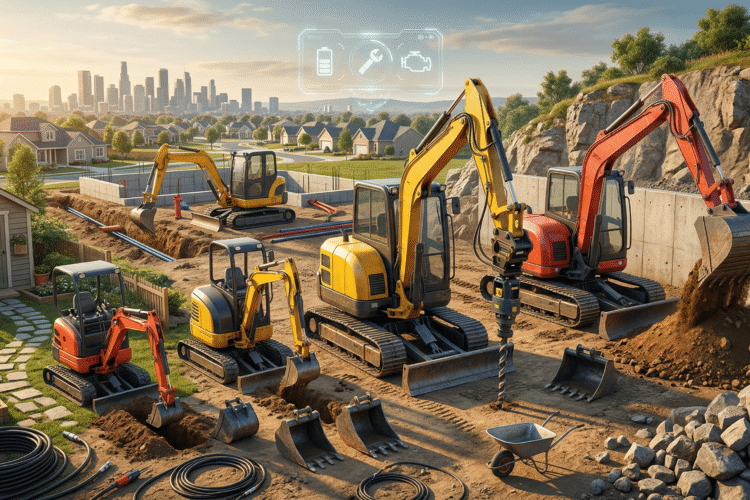
Top 7 Types of Mini Excavators: Discover the best options for your next project!
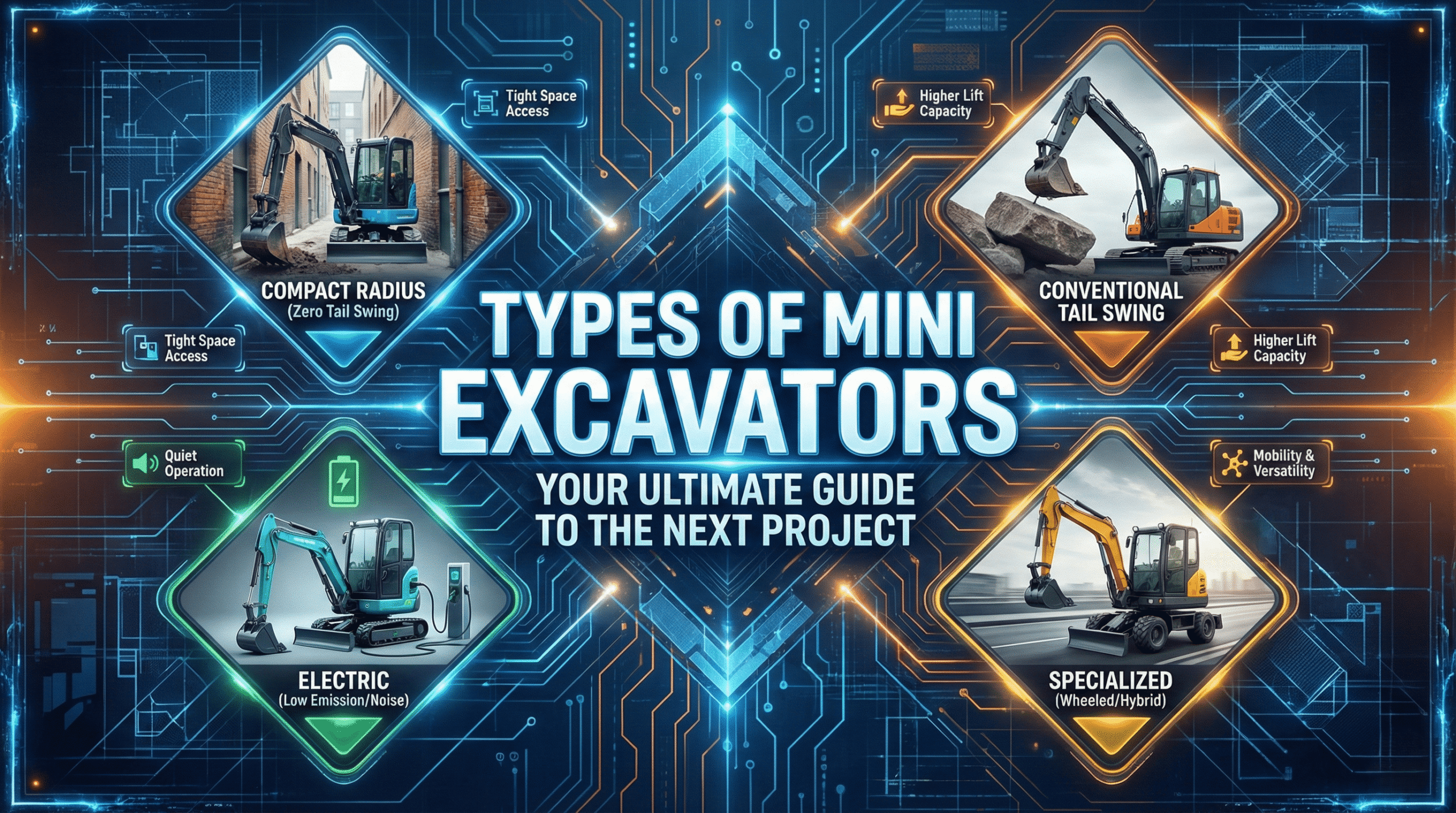
Top 7 Types of Mini Excavators: Your Ultimate Guide to the Next Project
In the world of construction and landscaping that keeps changing, the necessity of efficiency and versatility has kept growing. The compact machinery has totally changed the way we tackle tight spaces and complicated kind of job sites. Whether you are a professional contractor or a new buyer in the equipment market, it is very important to understand the different types of mini excavators for making the best use of your time and to be sure of project success.
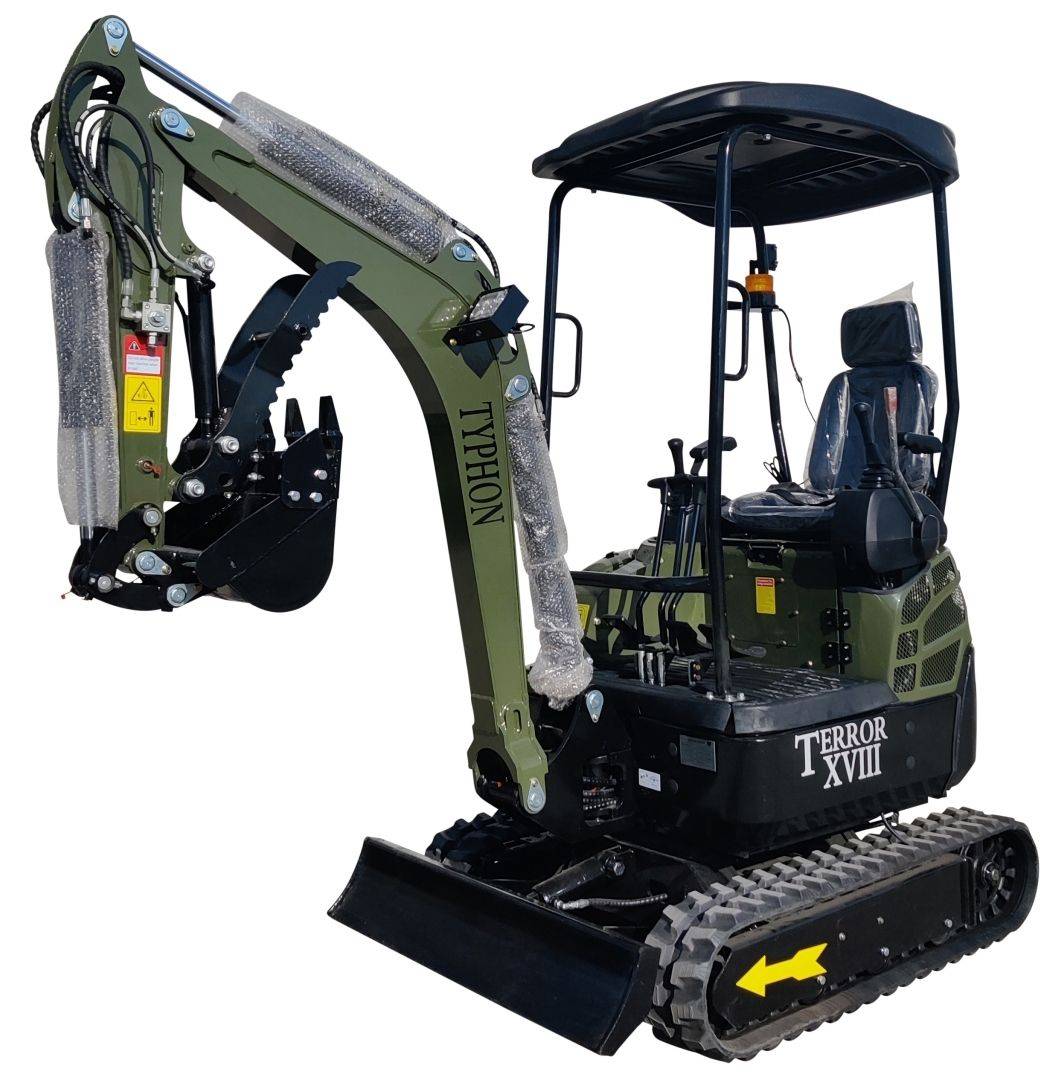
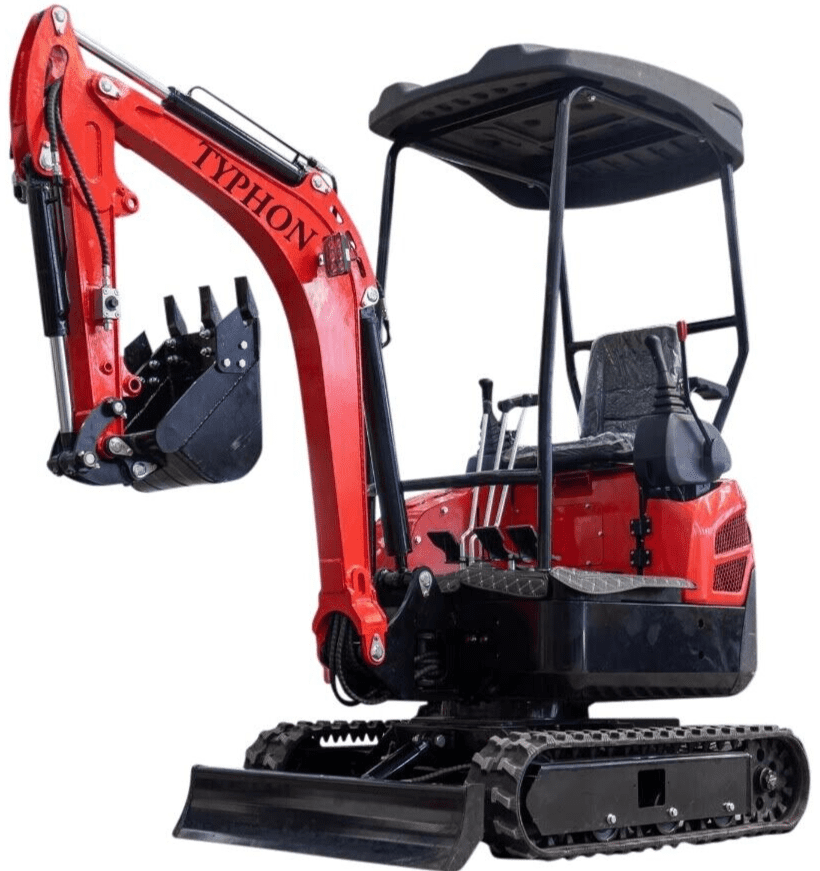
Here at Machinery Online agreement, we provide an excellent range of top-of-the-line machinery to our clients like, TYPHON TERROR series of the machines. This series is created to deliver the power of a large excavator with mobility required for urban development, residential landscaping, and utility repairs.
Picking the right mini excavator is not only a question of the size; it is a very important aspect to get an excellent match between the engine power, tail swing positioning, and attachment compatibility with your very specific job.
Top 7 Types of Mini Excavators:
1. Zero Tail Swing Mini Excavators
Among the many types of mini excavators, one of the most attractive and that ZTS or Zero Tail Swing models are something contractors who work in very limited environments. The design is made in such a way that the machine during rotation the upper body does not extend beyond the width of its tracks.
This feature makes it possible that there is almost no risk that you will hit a wall, a fence, or any other such thing while the operator is thus concentrated on the trench or where to dig.
- The highest possible level of safety: This is one of the best solutions for street road works and also for very narrow alleys in residential areas where space is a problem.
- Greatly improved Visibility: The operators have the facility of being able to turn the cab a full circle without being concerned about the rear of the machine.
- Stable: Although this is a compact model, the designer has still managed to incorporate a lower center of gravity to enhance the balance of the machine.
2. Conventional Tail Swing Models
Conventional mini excavators are built so that the rear of the machine the counterweight protrudes slightly beyond the tracks. So, operating which literally means moving here and there takes more room for them, but they usually offer that have better capacity of lifting and bucket digging force these machines are considered to be the compact world of the workhorse, the reason being, the kind heavy-duty digging work they is space that is not the primary constraint.
- Greater Lift Capacity: The extended tail serves as a natural counterweight for heavier loads.
- Increased Reach: Often comes with a longer boom arm for deeper excavation tasks.
- Cost-Effective: It usually offers a better power-to-price ratio than the zero-swing models specially made for this purpose.
3. Ultra-Compact and Micro Excavators
Micro excavators are usually the machines that one would think of to be used in the context of the smallest jobs such as indoor remodeling or gardening in the backyard. One or two of these machines would be enough to get the job done.
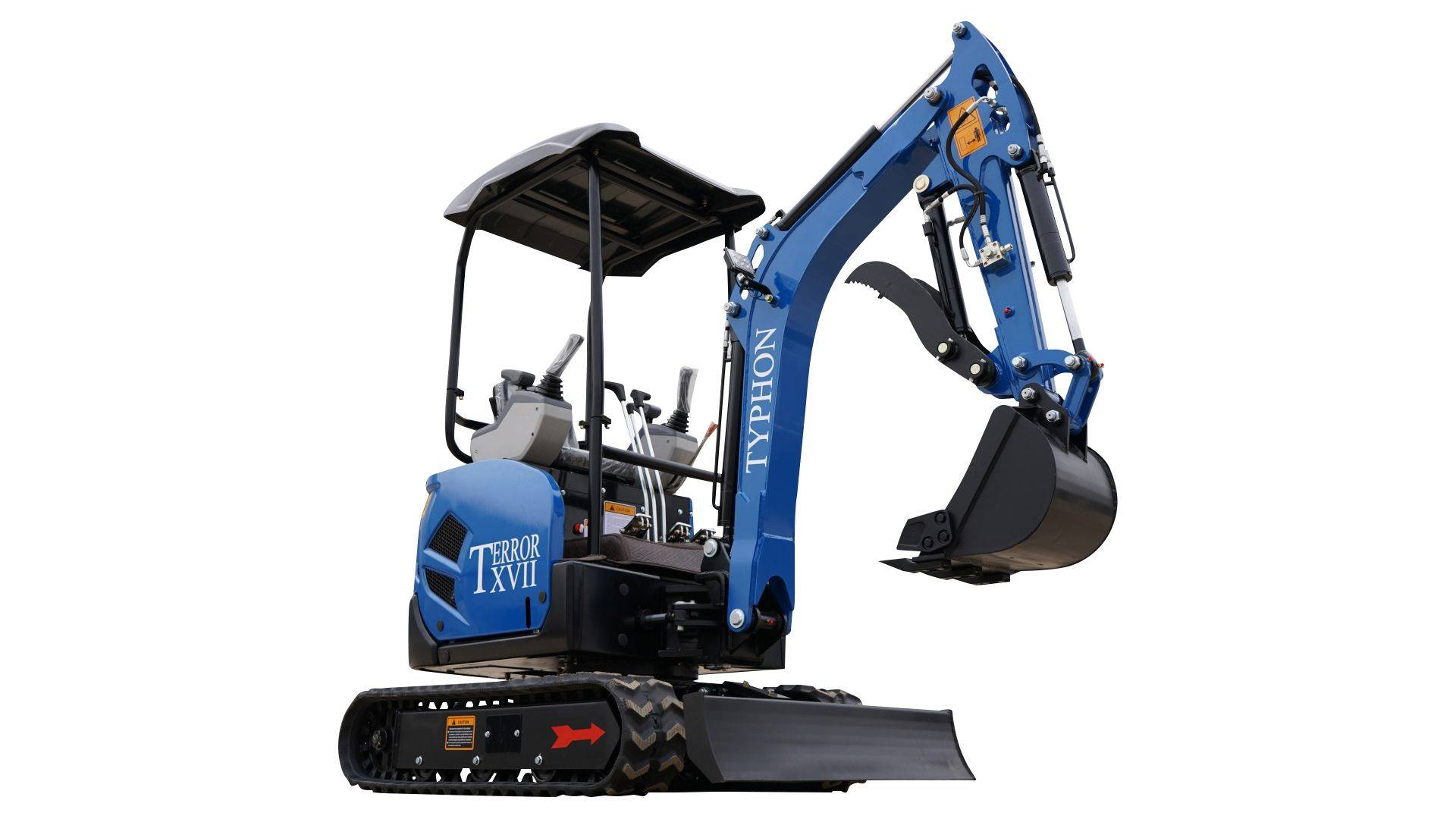
Most of them are so small that they can easily fit through a doorway or a garden gate. At Machinery Online, our TYPHON TERROR XVII and XVIII models are great examples of this type offering a lot of power in a chassis of less than 4000 pounds weight.
- The width of the doorway: Due to the retractable tracks these kinds of machines can be forced through a hole as small as 30 inches in diameter.
- Less Damage to the Surface: By virtue of being very light, the frames will thus not harm your lawn or flooring, either of which may be very delicate.
- Electric/Low Emission Options: Nowadays lots of micro models’ engines are designed to operate indoors.
Mini Excavator Specifications Comparison Table
If you wish to enhance your company’s fleet of machines by getting one or more of the types of mini excavators, then you should familiarize yourself with the comparison of the common weight classes available for purchase in our store shown below:
| Model Series | Operating Weight | Engine Type | Ideal Application |
| TYPHON TERROR XVII | 3,800 lbs | Kubota Diesel | Residential Landscaping |
| TYPHON TERROR XVIII | 4,000 lbs | Kubota Diesel | Utility & Trenching |
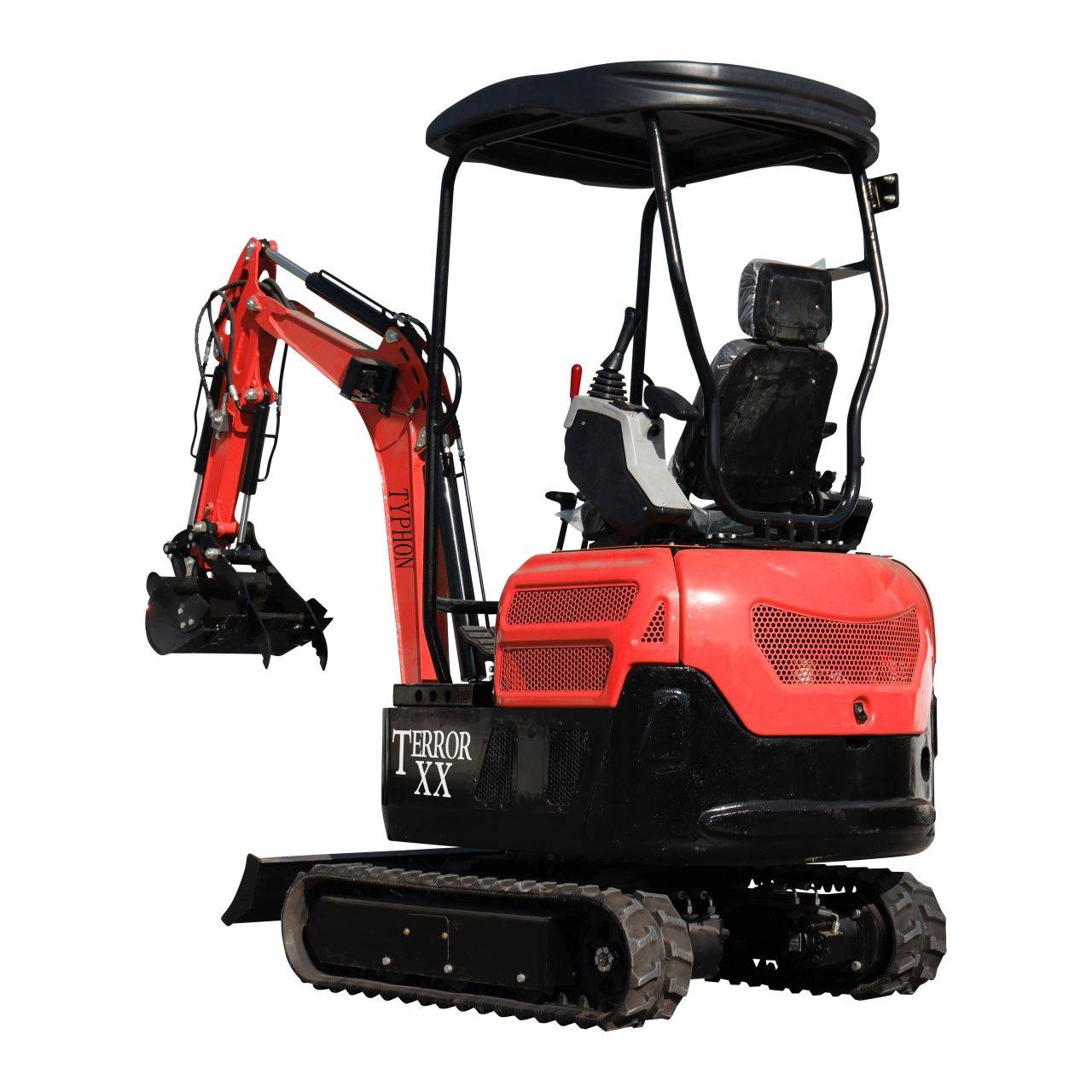
| TYPHON TERROR XX | 4,000 lbs (High Performance) | Kubota Diesel | Heavy Construction |
| Standard Compact | 6,000 – 10,000 lbs | Tier 4 Final | Site Preparation |

4. Specialized Long-Reach Mini Excavators
If part of your job include very deep trenching or the working over water hazards, then it will be impossible to do without long-reach types of mini excavators. These types of machines have become very popular lately with the boom and the arm being lengthened to allow the operator to reach much farther and to dig deeper without the need to move the machine’s tracks.
- Dredging Capabilities: They are very good at cleaning the pond as well as doing maintenance to the banks of the pond.
- Deep Trenching: Lines for utilities are very much below the surface of the earth thus heavy machinery in which operator can dig easily with any burden of moving the machine.
- Precision Placement: Having more reach allows for more exactly placing the filling material during backfilling.
5. Crawler vs. Wheeled Mini Excavators
The mini excavator’s undercarriage decides the type of travel it can accomplish and the relationship with the ground. Generally, the track (crawler) versions are what most people visualize when thinking about such machines, but the wheeled ones have their own set of advantages for particular industries.
- Traction and Floatation: Crawler tracks distribute weight evenly, which makes them suitable for muddy or uneven terrain.
- Mobility: Wheeled mini excavators can travel on paved roads without causing damage, which means there is no need for a trailer on short distances.
- Stability: Tracks give a strong platform for heavy digging, while wheels give faster traveling speeds over large sites.
6. Attachment-Ready Multi-Purpose Excavators
Contemporary mini excavators more than just tools for digging as they can be considered power platforms that could be used in a variety of ways. By means of quick-coupler systems, the operator does not need to be away from the machine for long to become a new attachment such as augers, breakers, or grapples.
This feature that increasing the range of types of mini excavators which are critical for business growth.
- Hydraulic Versatility: Heavy-duty attachment like flail mowers is allowed by high-flow hydraulic systems.
- Year-Round Utility: During winters, change the bucket to a snow blade or a salt spreader.
- Efficiency: It takes one machine to do the job of three specially designed tools and thus cuts down the capital expenditure.
7. Canopy vs. Enclosed Cab Excavators
One’s degree of comfort while operating is the most vital factor which will have a great impact on their productivity. So based on your climatic conditions and also hazards present at the work site, is it a good decision if you consider first the pros and cons of both options, i.e., an open canopy or a fully enclosed, climate-controlled cab?
- Open Canopy: Here, you can easily see and talk with the ground creatures and also enjoy the fair weather.
- Climate Control: Having a climate-controlled system in the enclosed cab is a necessity under the conditions of extreme heat or cold.
- Safety Standards: It is a must that both the canopy and cab meet the minimum certification requirements ROPS (Roll-Over Protective Structure) and FOPS (Falling Object Protective Structure).
FAQs – Types of Mini Excavators
What are the types of mini excavators?
The main types are Zero Tail Swing, Conventional Tail Swing, Micro/Ultra-Compact and Long-Reach. The deciding factor is the extent of your work area and the dig requirement.
Which mini excavator model is suitable for residential landscaping?
A Zero Tail Swing model from the TYPHON TERROR series is the perfect choice for residential work. It is ideal for working beside house foundations and fences without backing into anything rear-end collision-wise.
What is the difference between a mini excavator and a standard excavator?
Mostly Mini excavators weigh less than 12,000 lbs, and their design features are very suitable for tight spaces and light tasks. Similarly, standard excavators are the equipment of choice when the job involves high-volume earthmoving and large-scale demolition.
Is it possible to use a mini excavator indoors?
The answer is yes. Micro excavators have been designed with the dimensions in mind to be able to fit through a door. Most of them are equipped with low-emission engines or are electrically powered to be safe for indoor demolitions and renovations.
What is the maximum digging depth of a mini excavator?
Each model has its own digging depth. A micro model usually digs between 5-7 ft, while a larger 5-ton mini excavators can go as deep as 10-12 ft.
Are there any formalities and requirements in order to be allowed to operate a mini excavator?
Usually, in most regions just having a regular driver’s license is enough for private use. As for commercial sites, they generally require specific safety certifications or “competent person” training.
Where can mini excavators of good quality be bought online?
You will be able to get loads of good products via our website Machinery Online. Not only that, but we will also make available the TYPHON TERROR range to you, it is a range that is fitted with Kubota engines as well as that is built to last.