
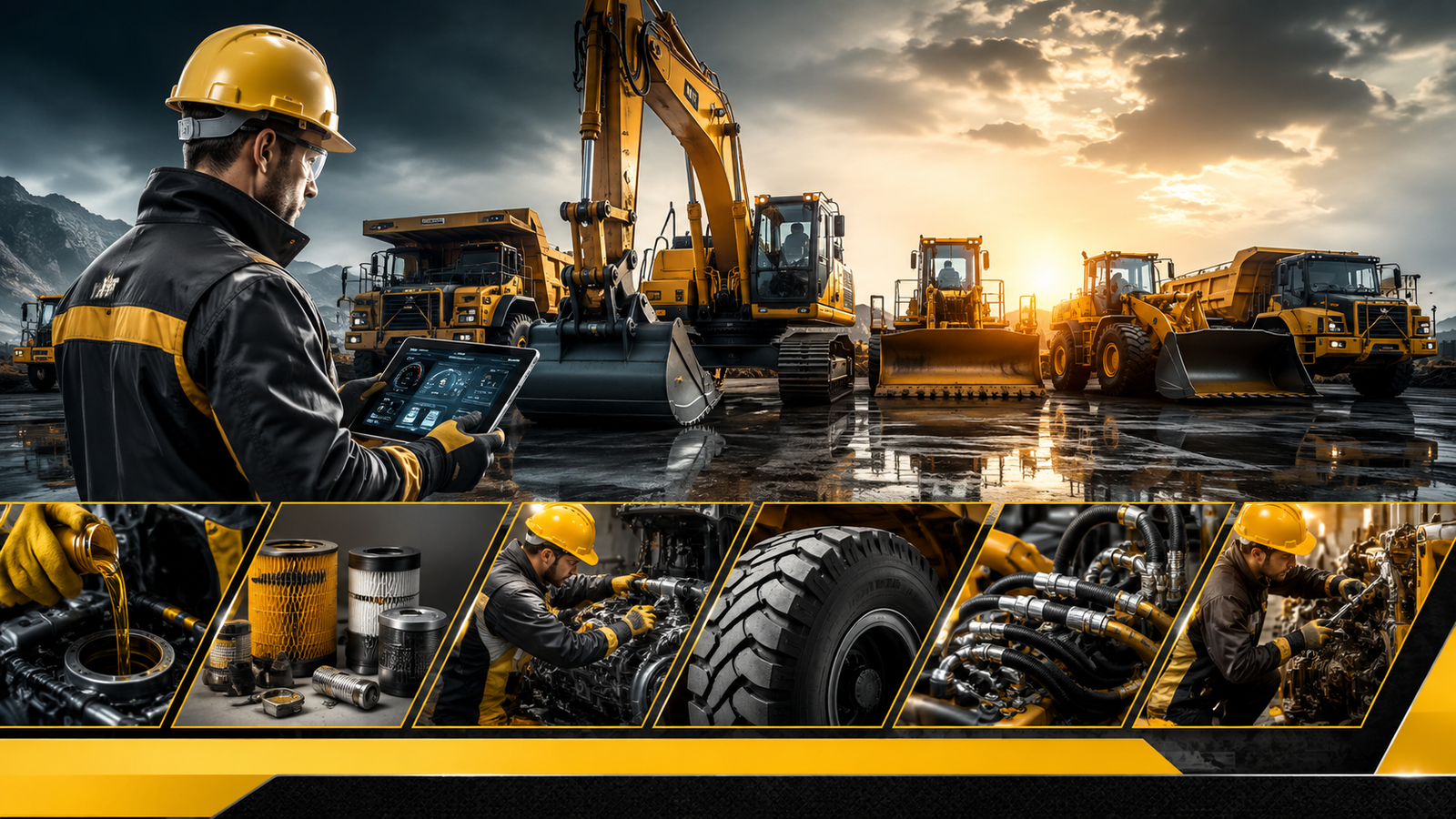
Uncover 12 essential strategies to ensure your machinery fleet operates efficiently!
Running a project on a large scale necessitates that your tools operate flawlessly the whole time from sunrise to sunset. Managing a wide variety of tools—from small excavators and skid-steer loaders to heavy-duty roller compactors and forklifts—breakdowns happen from time to time and most times cause your work to stop entirely. Keeping the fleet in good working order is more than just repairing machinery after breakdowns; it’s about creating a system that is proactive and enhances your project’s financial stability.
Applying a regular and organized method for preserving equipment not only lengthens their operational life but also helps ensure safety for your personnel at the workplace. The resale value of your equipment depends entirely on how well you maintain your assets at present whether you are buying or selling equipment. Here are 12 tips that will establish a strong foundation for your industrial fleet to run at optimum efficiency through effective heavy equipment maintenance.
Top 12 Essential Tips for Maintaining Heavy Machinery Fleets
1. Create a Scheduled Maintenance Program That Is Very Strict
Scheduled maintenance is the fundamental part of any effective asset preservation plan. The practice of waiting for a machine to become non-functional before dealing with it will not only cause significant delays in scheduling but also result in surprisingly high repair bills for the emergencies. By drawing up service intervals based on actual equipment usage and manufacturer recommendations, you are repairing the small faults before they develop into major machinery breakdowns.
- Endless tracking of engine hours: keep an eye on all machines while they are in operation to be able to change fluids and filters on time.
- Stick to OEM instructions: OEM manufacturer’s detailed service schedule to be followed for heavy equipment maintenance supporting items such as timing belts and valves.
- Record every service procedure: Make it a point to retain clear, digital recording of the parts replaced, who carried out the changes, and when the next maintenance is scheduled.
2. Get Operators Empowered to Do Thorough Pre-Operation and Post-Operation Checks
Your operators should be your first line of defense against the sudden machine downtime. They can detect simple faults like loosened bolts, cracks in structures, or fluid reservoirs that are low in the first hand by the inspection of the immobilization of the machine situations (either before starting the machine or right after it being turned off).
- Use standardization: Prepare a uniformized, tangible or digital task list for each unit of equipment so that inspectors will not fail to heavy equipment maintenance check points that are crucial.
- Look into the main structural elements: Pay a special attention to those parts that are under a high stress in the cases such as fractures found in welds of chassis, bucket teeth and booms of excavators.
- Take a look at ground contact components: Daily checkups should be done on the rubber track systems on mini excavators, tire pressure on forklifts, and drum surfaces on roller compactors.
3. Give Heavy Equipment Maintenance Focus on Proper Systematic Fluid Handling and Analysis
Heavy-duty industrial machinery is highly dependent on specialized internal fluids that enable them to comprimise power, limit thermal stresses, and shield the lubricated wear of steel by the embrittlement. Through give the fluid continues to be checked, topped and analyzed you are capable of finding out wear patterns that are hidden inside the engines and gearboxes long before the symptoms become visible.
- Perform regular fluid analysis: Forward samples of oil, hydraulic fluid, and coolant to certified laboratories for detection of tiny metal debris or presence of soot contaminant.
- Keep storage conditions clean and tidy: Environment where bulk oil, grease, and hydraulic fluids are stored should be climate controlled in order to keep moisture and dirt out.
- Hydraulic pressures must be carefully watched: As a fundamental element of your heavy equipment maintenance program, system pressures need to be constantly monitored in order to identify failing internal seals at an early stage.
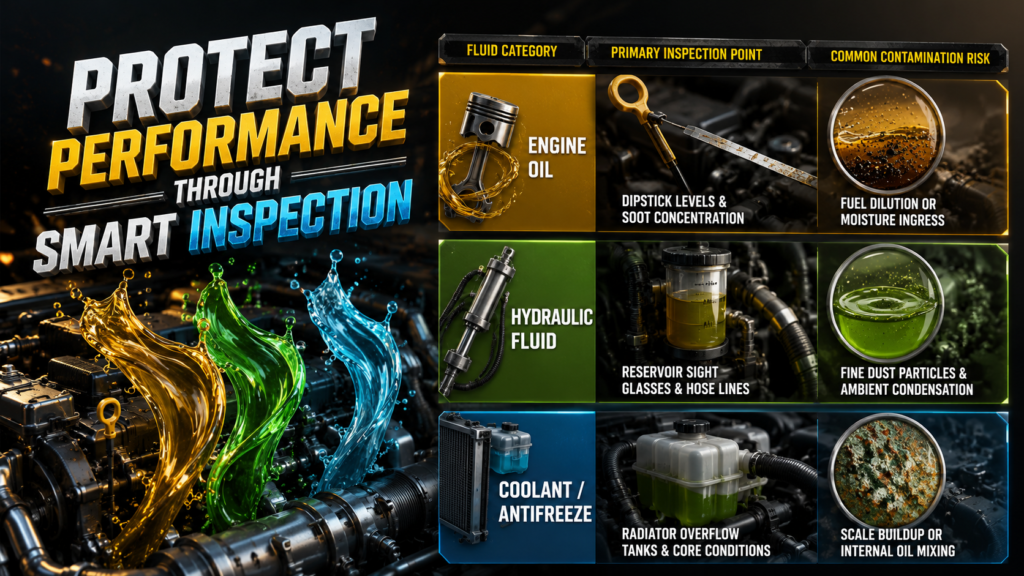
Table: Heavy Equipment Maintenance Fluid Category
| Fluid Category | Primary Inspection Point | Common Contamination Risk |
| Engine Oil | Dipstick levels & soot concentration | Fuel dilution or moisture ingress |
| Hydraulic Fluid | Reservoir sight glasses & hose lines | Fine dust particles & ambient condensation |
| Coolant / Antifreeze | Radiator overflow tanks & core conditions | Scale buildup or internal oil mixing |
4. Become Skilled in Proper System Lubrication
At the end of the day, friction is the worst enemy of heavy machinery. Parts which are moving against each other all the time under the weight of the machines – pins, bushings, bearings and heavy gear assemblies – need regular re-lubrication with high-quality materials to stop the progression of mechanical wear.
- Use the correct grease specification: Identify the proper type of grease based on your working conditions, and when it is necessary for heavy equipment maintenance, choose high-temp or water-resistant versions.
- Old greases should be removed regularly: Pump fresh grease into the points until the dirty grease is expelled and carries the trapped dirt away.
- Over-lubrication of assemblies should be avoided at all times: Over-greasing the components leads to the blowing out of delicate grease seals and trapping abrasive dirt against the parts that are moving.
5. Create Customized Operator Training Sessions
No doubt, instead of relying on preventive maintenance ones, operators are the one who are in direct contact with field conditions that can cause misuse or abuse. If you will educate your team how to properly use the equipment, you will lessen unnecessary heavy physical strain on the structure, reduce your fuel consumption, and even lower the number of safety incidents in the workplace.
- Enforce start-up warm-up routines: Operators should be required to allow diesel engines to idle for a few minutes in order to circulate engine oil thoroughly before they are put under heavy loads.
- Teach operators how to handle attachments properly: Ensure that operators are trained to pick the right attachments for their tasks so as to prevent hydraulic pump overheating that, in turn, would reduce heavy equipment maintenance requirements.
- Discourage excessive engine idling: Field employees should be made aware of the mechanical disadvantages of engine idling that can cause build-up of heavy carbon inside exhaust systems.
6. Keep a Watch on and Safeguard the Most Important Electrical Systems of Machines
If you do a bit of thinking, modern industrial equipment is significantly dependent on sophisticated electrical networks, computer modules, and fragile sensor arrays. Barely visible vibrations of rough worksites combined with water exposure or loose wiring connections can even lead to electrical gremlins appearing for a short time in that equipment which are hard to diagnose and, in fact, irritating.
- Battery terminals should be cleaned and tightened: Regularly clean away corrosion scaling around battery terminals and check that hold-down brackets are secure.
- Vulnerable wiring harnesses should be safeguarded: Wiring lines must be routed and anchored safely away from sharp metal edges, hot exhaust pipes, and pinch points.
- Alternator output metrics must be verified: Test charging system voltages periodically to ensure your onboard electronics receive steady, reliable power, which prevents unexpected heavy equipment maintenance issues.
7. Apply Different Machinery Maintenance Based on Seasons
Different components are affected by different functions in the outer environment. Hence, preparation of the machinery for those aspects would be worthwhile and result in freeze start failures and fluid thickening avoided and engines that would not overheat being maintained.
- Do thorough winterization: Change to winter oils that are of low viscosity and test glow plugs, meanwhile checking the level of your antifreeze protection.
- Get rid of heat problems in the summer: Remove packed dirt by blowing compressed air through radiator fins and make sure that the cooling fan clutches are properly engaging.
- Store in clean, sheltered places: If not able to use machines for a long time, it is best to keep them indoors or at least covered with industrial grade tarps during bad weather.
8. Protect and Maintain at a High Level Your Machine’s Undercarriages and Tires
These parts, which are in contact with the ground, take the brunt of abuse day in day out without breaks. You shouldn’t continue running on damaged, underinflated tires if you don’t want the risk of increased fuel consumption and unsafe, unstable working conditions. Also, at the very least, daily cleaning of mud and rocks packed into the machine tracks should be carried out so as not to impede free rotation of the rollers and add to the heavy equipment maintenance costs.
- Keep the correct track tensions: Measure and then adjust the track sagging distances to conform to the OEM specs in order to prevent roller wear from occurring prematurely.
- Scrape off compacted debris from worksites: Remove daily the dirt from the tracks and mud, clay, and rocks that have become packed in to keep rollers working freely and to minimize heavy equipment maintenance cost.
- Tire tread and inflation should be audited: Examine tires for heavy use, such as cuts to the tread, bubbles in the sidewalls, and correct inflation pressures on a weekly basis.
9. Open-mindedly Maintaining Complete Component Replacement Histories
Mechanical components are all born to die much sooner or later. Keeping detailed records of parts’ replacement dates, you can create a dependable model for forecasting and therefore purchase your spare parts ahead of time and reduce your total time for repairs to as low as possible.
- Keep accurate component replacement milestones: Make a note of the exact engine hour at which point high wear items like batteries, belts, or hydraulic hoses are replaced.
- Determine premature part failures: Utilize heavy equipment maintenance records to identify cases where particular machines are using parts at a faster rate than the average, which could be indicative of other underlying problems requiring targeted maintenance.
- Keep essential parts in stock: Using your replacement history data, you should be able to keep your stock of parts up-to-date, particularly the ones that have a high turnover rate.
10. Get the Most Out of Your Fleet Logistics and Machine Deployment
Deployment and movement of industrial machinery in your case would have a direct influence on the wear and tear of the machines. Lack of coordination may result in some machines idling without purpose at one site while another team is overworking a single machine somewhere else.
- Fleet operating hours should be balanced: Rotate assets having similar functions on different projects so that the engine hours accumulated in your whole fleet inventory get stabilized, thereby regularizing your heavy equipment maintenance schedules.
- Keep in mind good procedures for loading equipment: Make sure that the machinery is properly secured on trailers while in transit so as to prevent damages to such components as wheel bearings or structural bending of parts.
- Take advantage of modern telematics systems: Get real-time GPS locations, idling times and fuel burn rates and use them to improve overall scheduling of your fleet.
11. Immediately Follow Up on any Mechanical Wear Signs
Small mechanical issues – like a faint hydraulic hiss, a sluggish response to lever movement, or a bit of oil on the floor – are first warning signs of a problem that is not going to be far off. Ignoring the signals is a mistake that will lead to the final overhaul of a major system.
- Encourage operators to report issues: Make a blame-free and simple reporting system for operators to flag weird noises or odd machine behavior to heavy equipment maintenance team.
- Trace any detected leak back to its cause: Even very small fluid damp spots should be tracked to their source, whether they be loose fittings, worn gaskets etc.
- Never ignore active dash lights: If a critical warning such as low oil pressure comes up during running, the machine should be grounded immediately.
12. Team Up With a Trusted Machinery Marketplace
Fleet management for the long haul includes knowing when you should spend money on repairing a wear and tear one, or when it’s more profitable to get a new one. It helps a lot to have an active, professional online marketplace to rely on when you wish to check out new and verified inventory, or even sell your old equipment to get maximum returns.
- Keep an eye on real market valuations: Keep yourself updated by checking active online listings frequently so you can accurately recall the real market value of your present fleet assets over time.
- Obtain Equipment from Verified Sellers: Engage with platforms that only work with genuine sellers to increase your chances of buying reliable machinery backed by excellent heavy equipment maintenance records.
- Use modern inventory to facilitate upgrades: If you have older and/or high-maintenance machines, converting them to working capital by listing on prominent online platforms.
Frequently Asked Questions (FAQ)
1. What are the main advantages of implementing a preventive maintenance program for heavy equipment?
A strong preventive maintenance program can drastically cut down your equipment breakdown times, improve safety for your operators, and go a long way into saving your company huge repair bills. Small failures of parts should be repaired immediately as they are discovered so as to prevent your machinery from being out of order for long periods.
2. How often should the levels of fluids in heavy equipment be checked?
There are some exceptions e.g. lubrications and hydraulic fluids. In general, fluid levels should be checked at every beginning of operation after each shift. Ideal time will be during walk around when a situation is checked before usage of equipment to ensure items do not get dry and cause a total failure.
3. What is the primary reason for heavy equipment malfunction?
The number one cause of industrial machinery failures in most cases is the lack of regular maintenance. It shows itself typically as poor lubrication or neglected fluid contamination. Neglecting grease points or letting dirt into the internal hydraulic systems leads to accelerated wear by friction which may be first material failure component.
4. What measures should I take to maximize the lifespan of my heavy equipment undercarriage?
The lifespan of your undercarriage can be considerably increased by daily cleaning of the mud and dirt that clings to it, as well as by keeping it properly tensioned according to OEM specifications and also by training operators not to make sharp turns on rough surfaces. Proper handling of these parts that are in contact with the ground reduces friction and wear to rollers, idlers and tracks.
5. What role does hydraulic fluid analysis play in the maintenance of heavy construction fleets?
Hydraulic fluid analysis can be thought of as health screening for a machine’s internal systems. As a result of lab tests on the fluid samples, you are able to spot very small metal flakes as well as water ingress or chemical breakdown among others, which in turn allows you to work on identified components before the triggering of a system failure occurs.
6. In terms of older fleet assets, how should I decide whether to repair them or replace them?
The decision is based on your overall cost of ownership as compared to the machine’s actual productivity. A piece of equipment that spends more time in the repair shop than doing its job site work, or whoever has maintenance costs that exceed its market value on an annual basis, will likely be sold and upgraded.
7. What items are included in a heavy equipment daily inspection checklist?
Checking all fluid levels, looking for visible leaks, examining tires or tracks for damage, testing safety lights and brakes, and checking high-stress structural areas for any signs of cracking or loose pins would typically make up a daily inspection checklist.